Back When Daily
The artwork behind the memories
Our stories combine rights-cleared photographs, original explanatory diagrams and selected illustrations. Captions identify the actual subject and distinguish photograph dates from the age of an object. The records below identify the photographs and diagrams currently used; historical research is linked within each article.
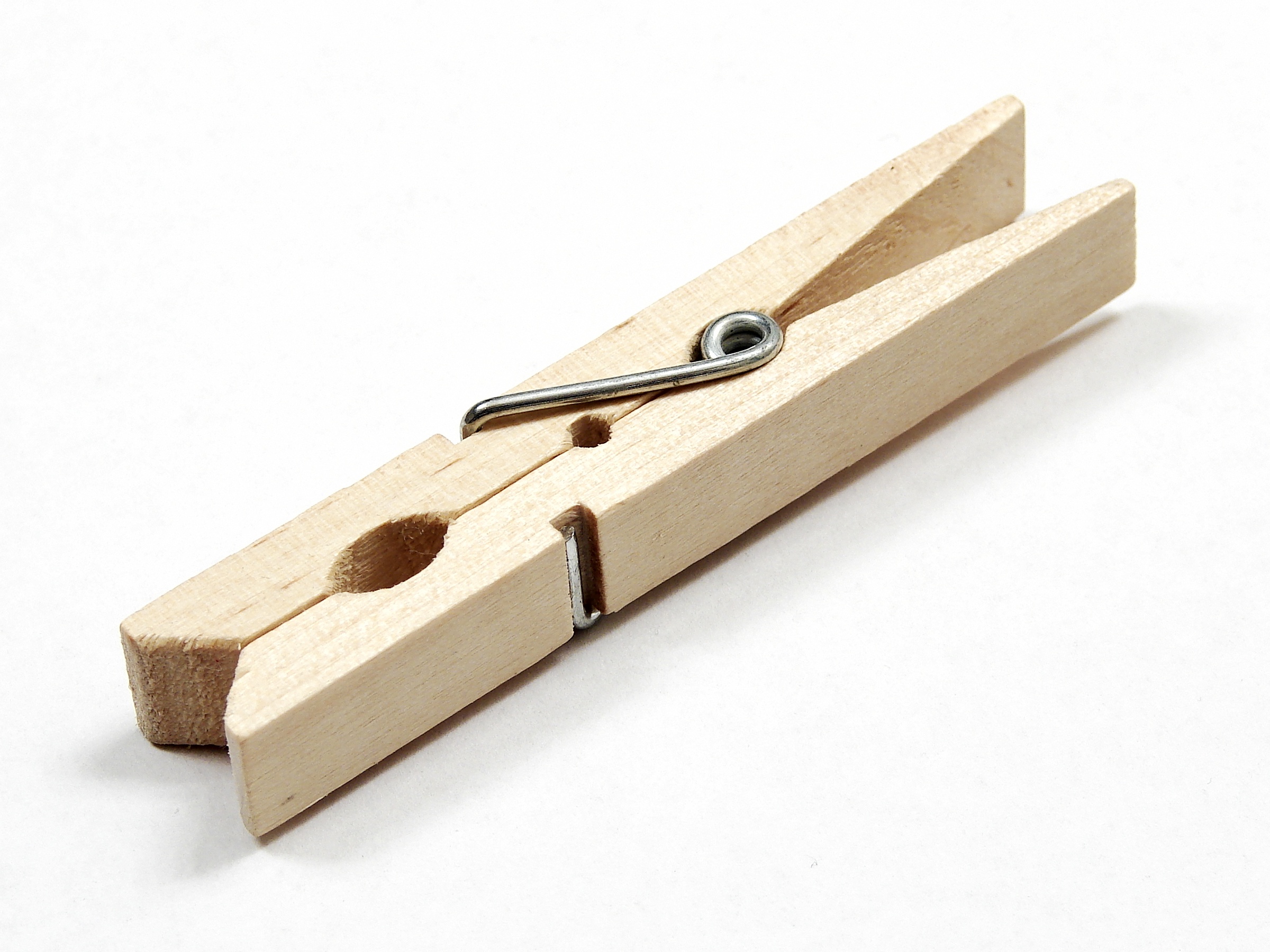
Why does squeezing a clothespin make it open?
David R. Tribble (Loadmaster). CC BY-SA 3.0. Unaltered source image; proportional responsive derivatives under the same license. Original metadata retained.

A spring clothespin photographed in 2010 by David R. Tribble (Loadmaster), CC BY-SA 3.0. This later example is not an authenticated specimen of either nineteenth-century patent.
Read the story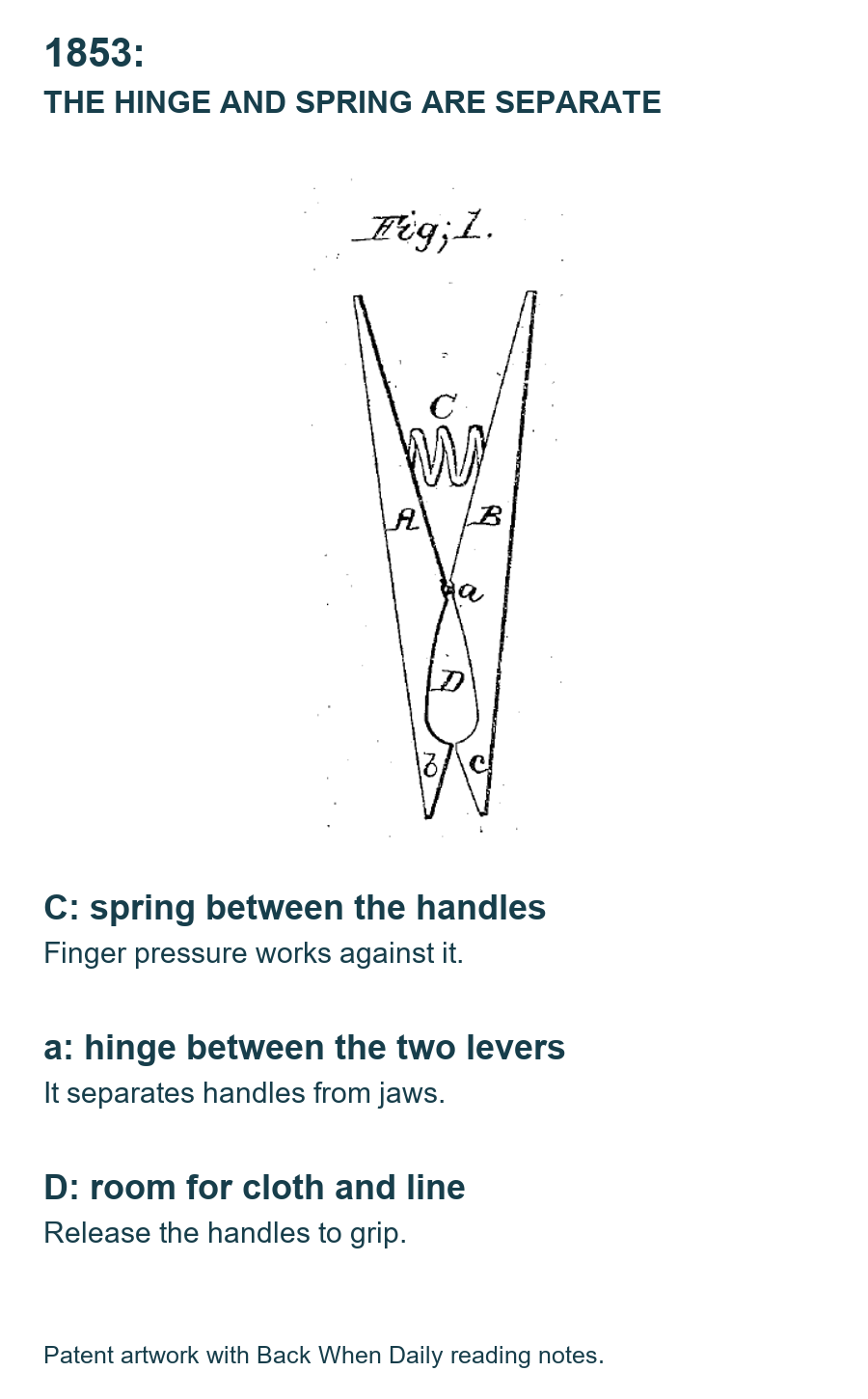
Why does squeezing a clothespin make it open?
David M. Smith / U.S. Patent Office. Public domain (published 1853). Original patent drawing sheet rendered, cropped and enlarged; new explanatory notes added conventionally by Back When Daily. Not a photograph or newly invented historical drawing.
Figure 1 from Smith’s 1853 patent, cropped and enlarged with new reading notes. Public-domain patent artwork; original lettering retained.
Read the story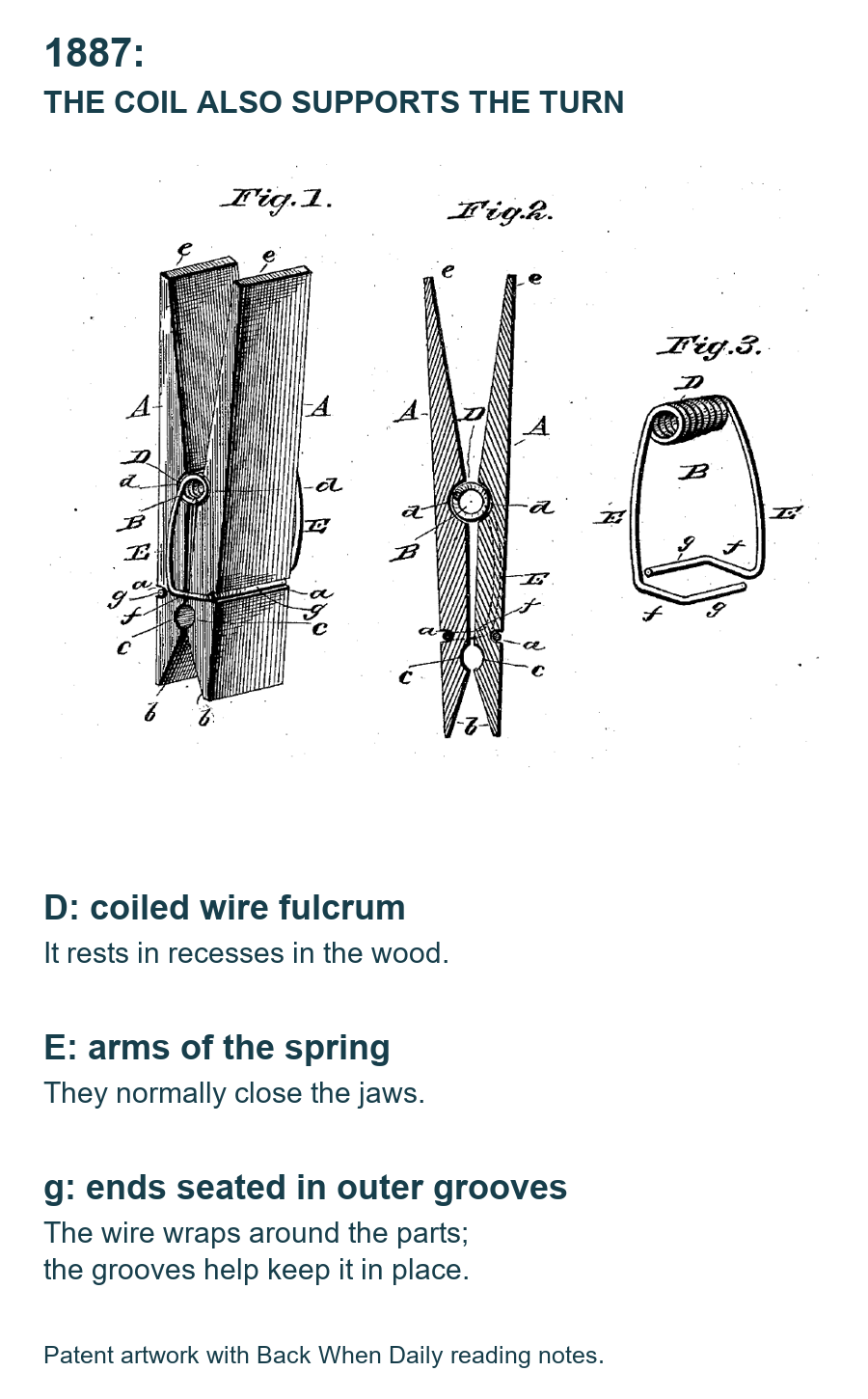
Why does squeezing a clothespin make it open?
Solon E. Moore / U.S. Patent Office. Public domain (published 1887). Original patent drawing sheet rendered, cropped and enlarged; new explanatory notes added conventionally by Back When Daily. Not a photograph or newly invented historical drawing.
Moore’s 1887 patent figures, cropped and enlarged with new reading notes. Public-domain patent artwork; the detached spring makes its several jobs visible.
Read the story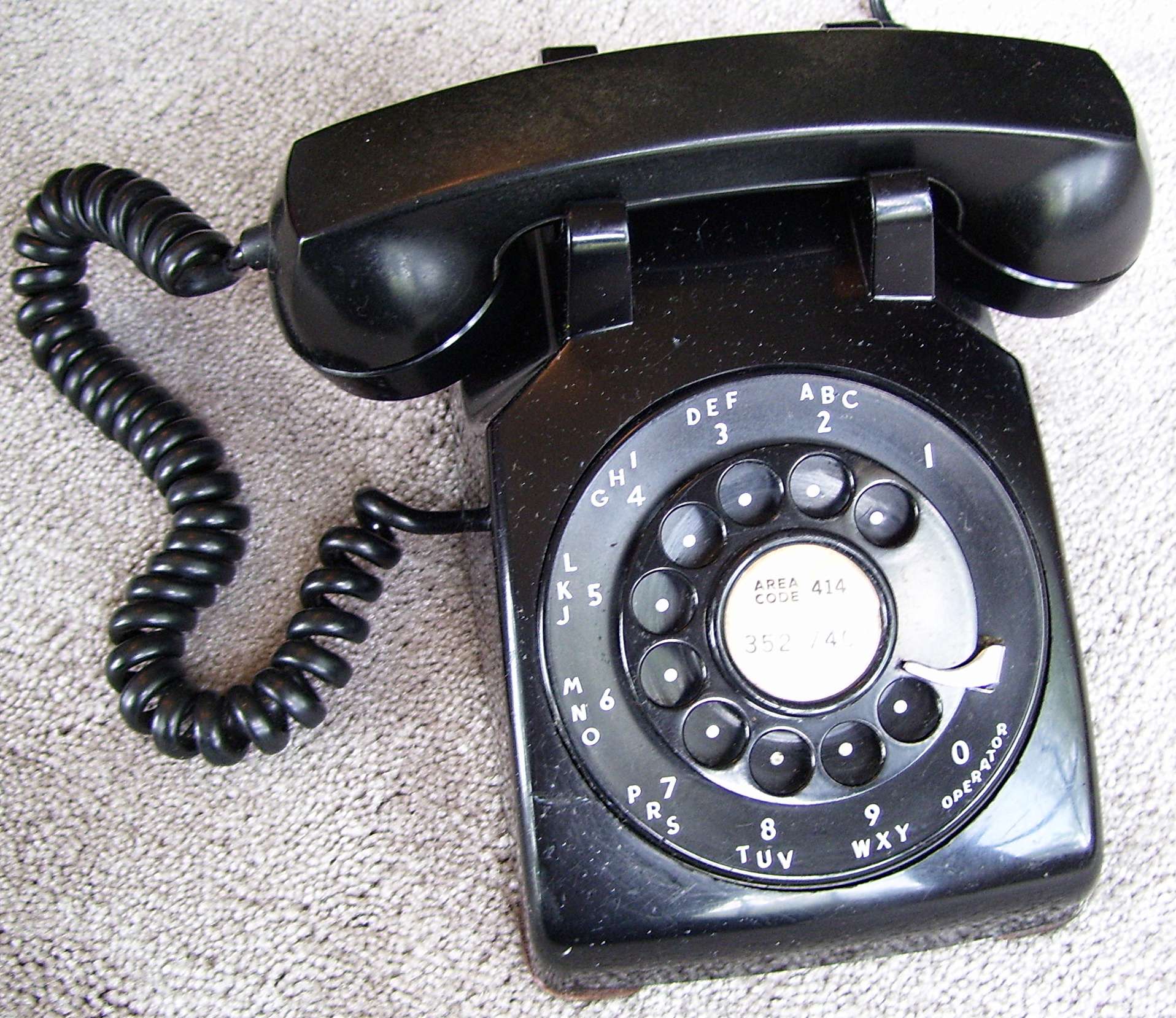
Why did a rotary telephone dial have to return on its own?
ProhibitOnions. Public domain author release. Full-frame reproduction; no generative edit.

A collector’s Model 500, identified as a 1951 telephone and photographed by ProhibitOnions in 2007. Public domain. Its exterior does not establish which internal dial parts survive.
Read the story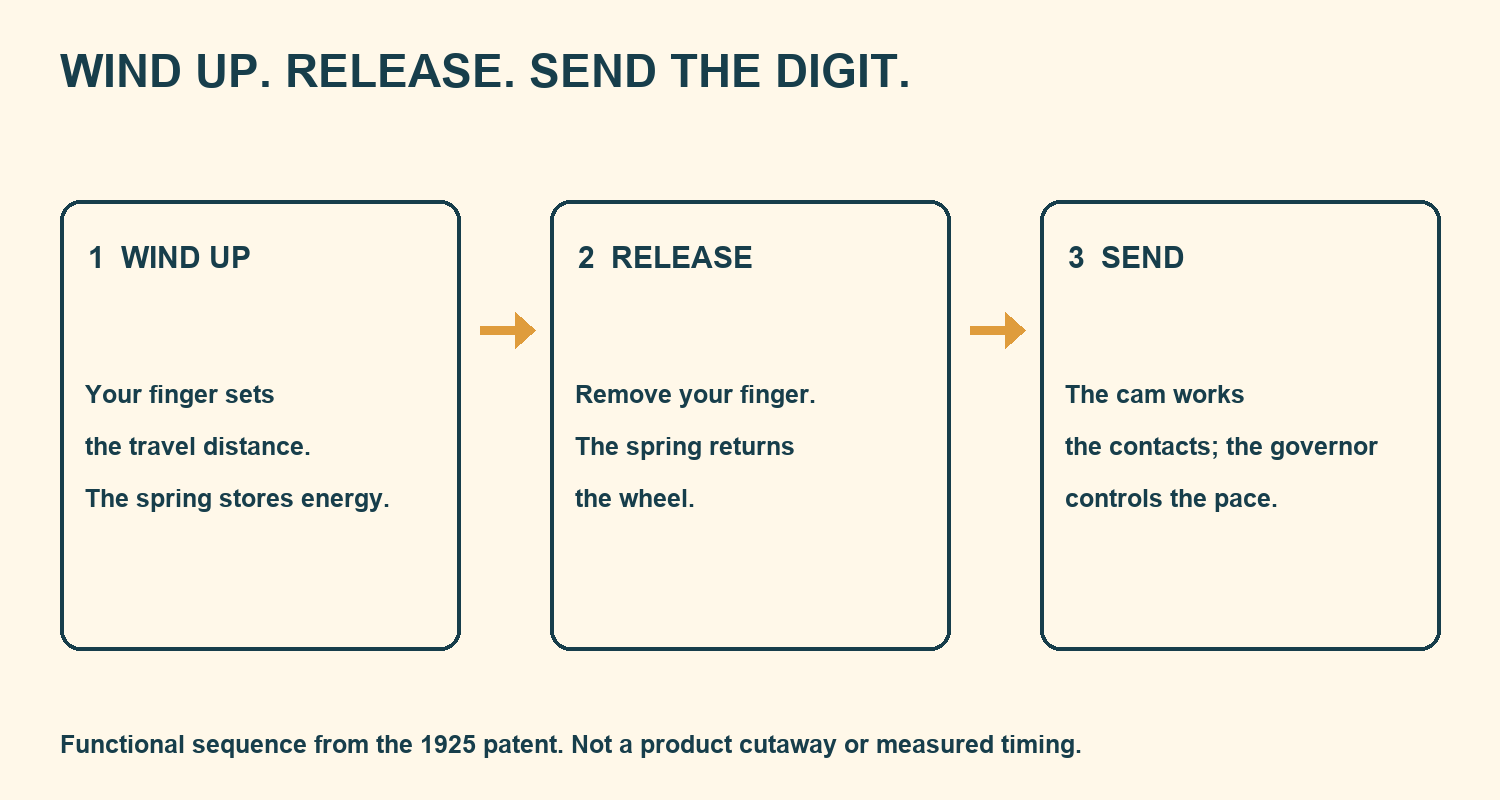
Why did a rotary telephone dial have to return on its own?
Original explanatory graphic by Back When Daily.
Original functional diagram of the sequence described in the 1925 patent. It separates setting from signaling; it is not a cutaway of the photographed telephone.
Read the story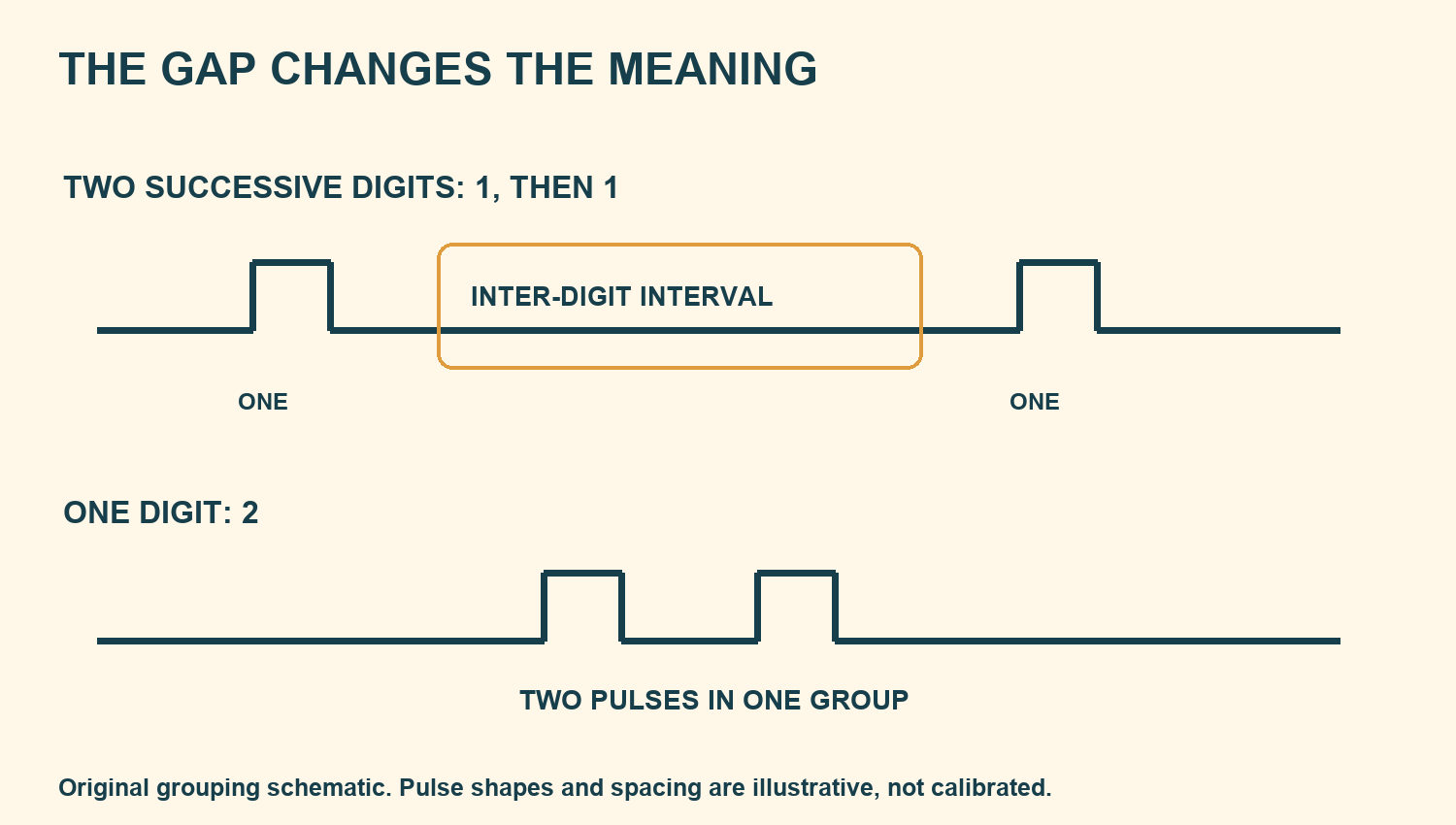
Why did a rotary telephone dial have to return on its own?
Original explanatory graphic by Back When Daily.
Original schematic: two successive ones versus a single two. Spacing and pulse widths are illustrative, not calibrated to a particular dial.
Read the story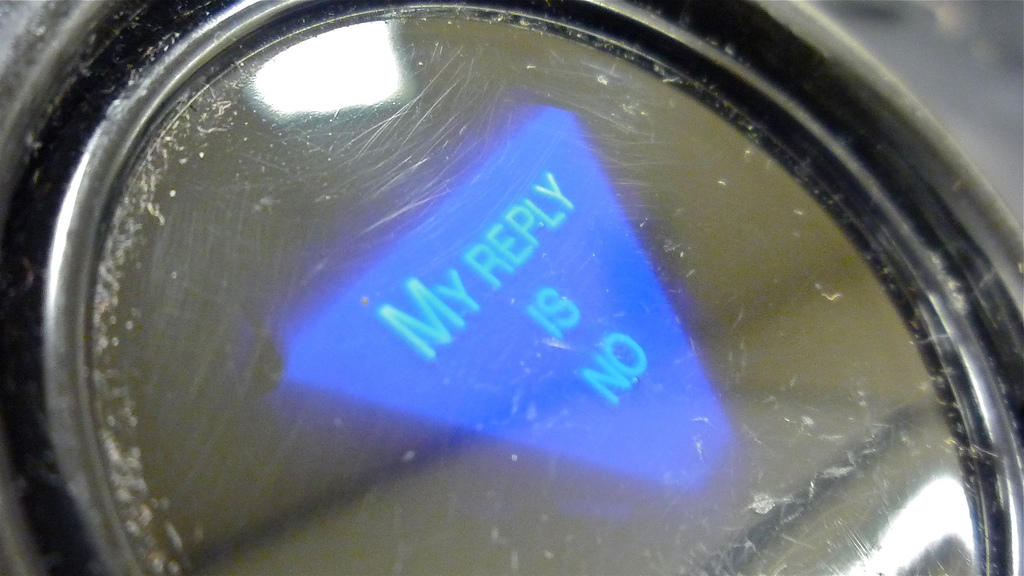
How did a Magic 8 Ball make its answer appear?
Waifer X (Patrick M. Len). CC BY 2.0. Full-frame proportional reproduction; no generative edit.

The answer window photographed by Waifer X (Patrick M. Len), August 26, 2011. CC BY 2.0. Proportionally reproduced; this later photograph is not a dated specimen of the 1964 patent.
Read the story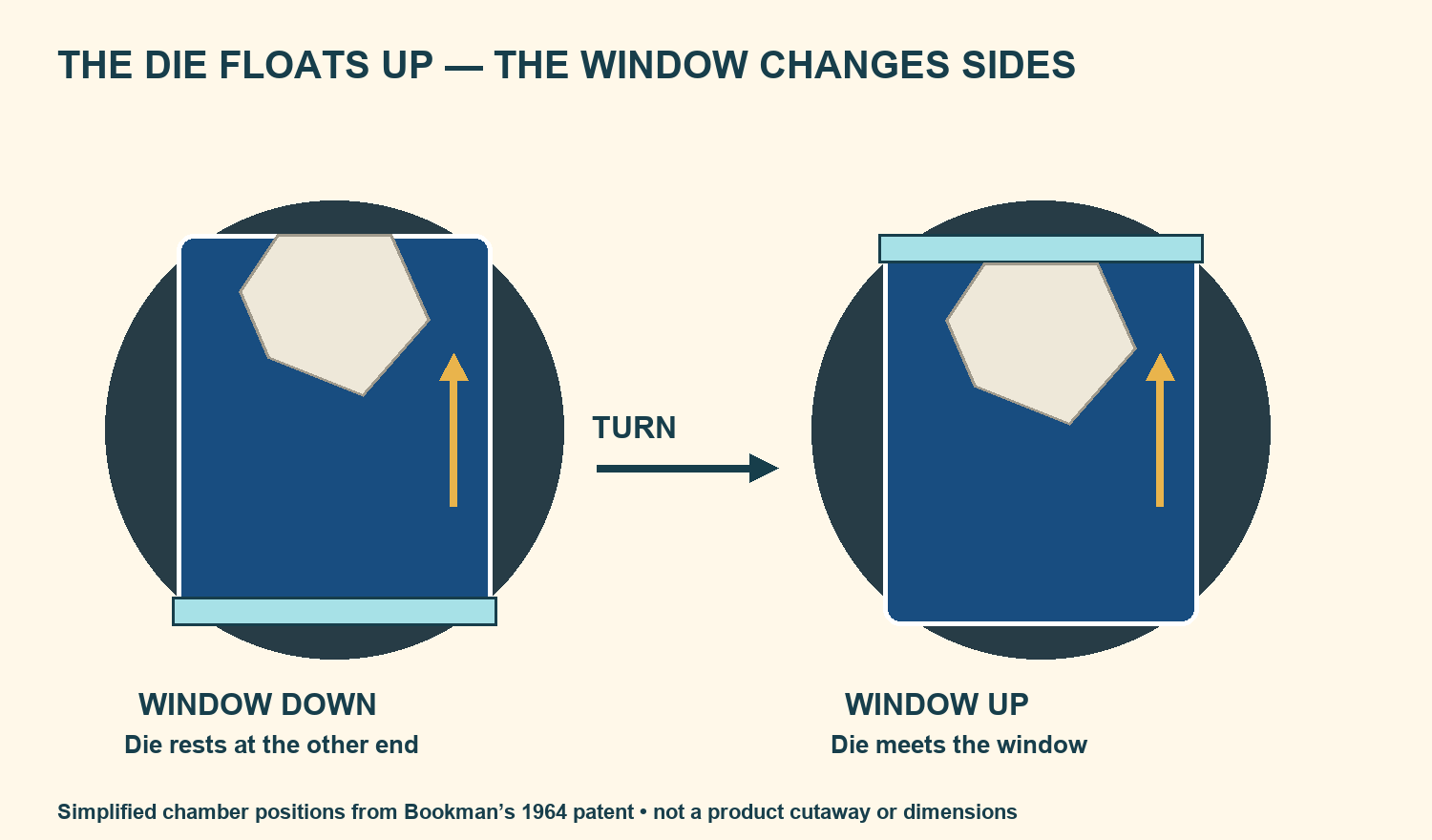
How did a Magic 8 Ball make its answer appear?
Original explanatory graphic by Back When Daily.
Original schematic of the two positions described in Bookman’s patent. The die’s shape and chamber proportions are simplified; these are not measured product dimensions.
Read the story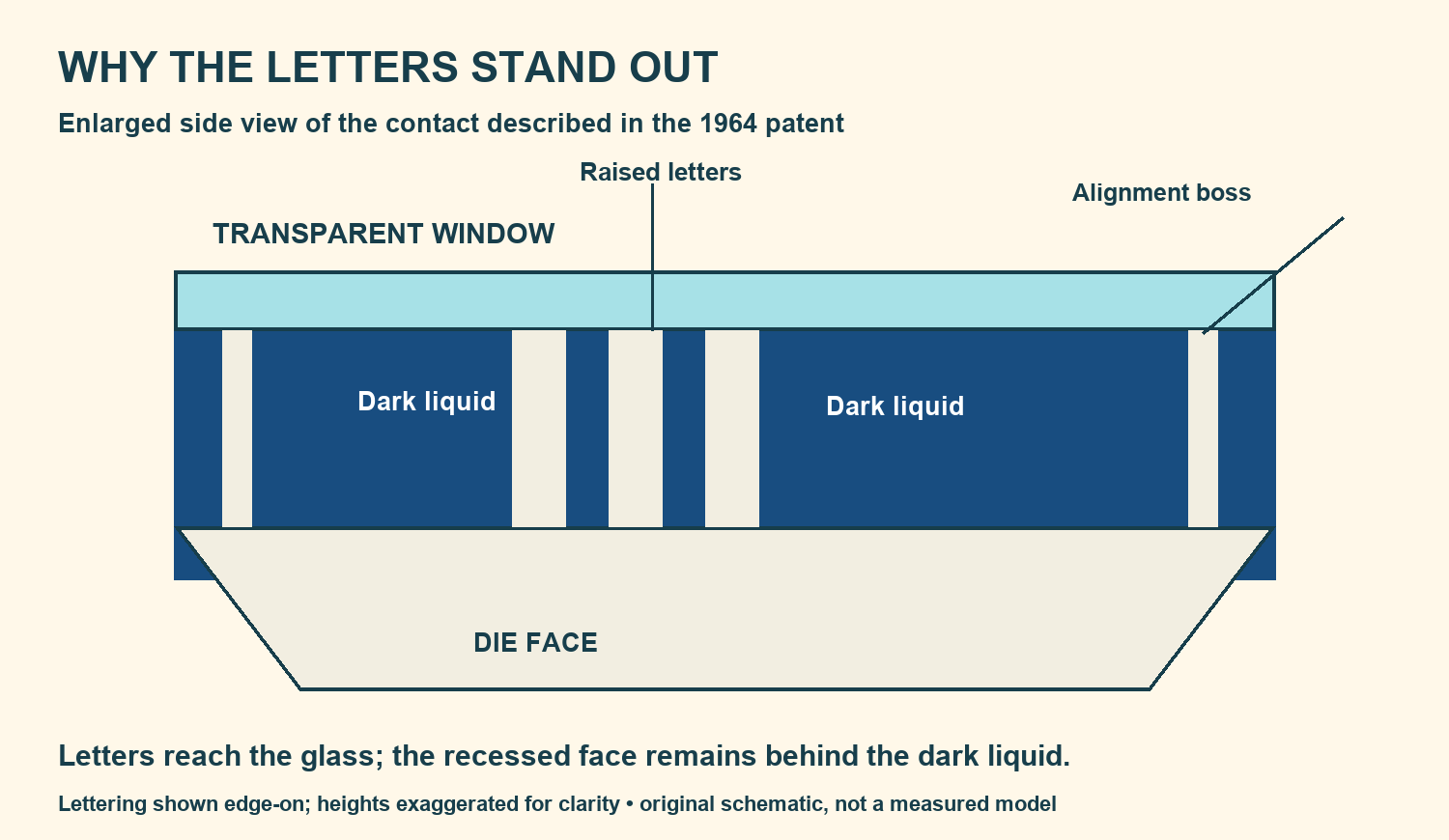
How did a Magic 8 Ball make its answer appear?
Original explanatory graphic by Back When Daily.
Original schematic of raised lettering and an alignment boss. The heights are exaggerated and the letters are shown edge-on to explain the liquid-filled gap.
Read the story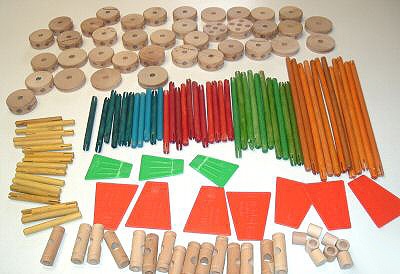
Why did Tinkertoy rods come in different lengths?
susiq5555. CC BY-SA 3.0. Full-frame proportional image; same-license adaptation; no generative edit.

Pieces from a Tinkertoy Junior set, photographed by susiq5555. CC BY-SA 3.0; proportionally resized. The photograph’s reliable capture date and the set’s manufacture date are not established here.
Read the story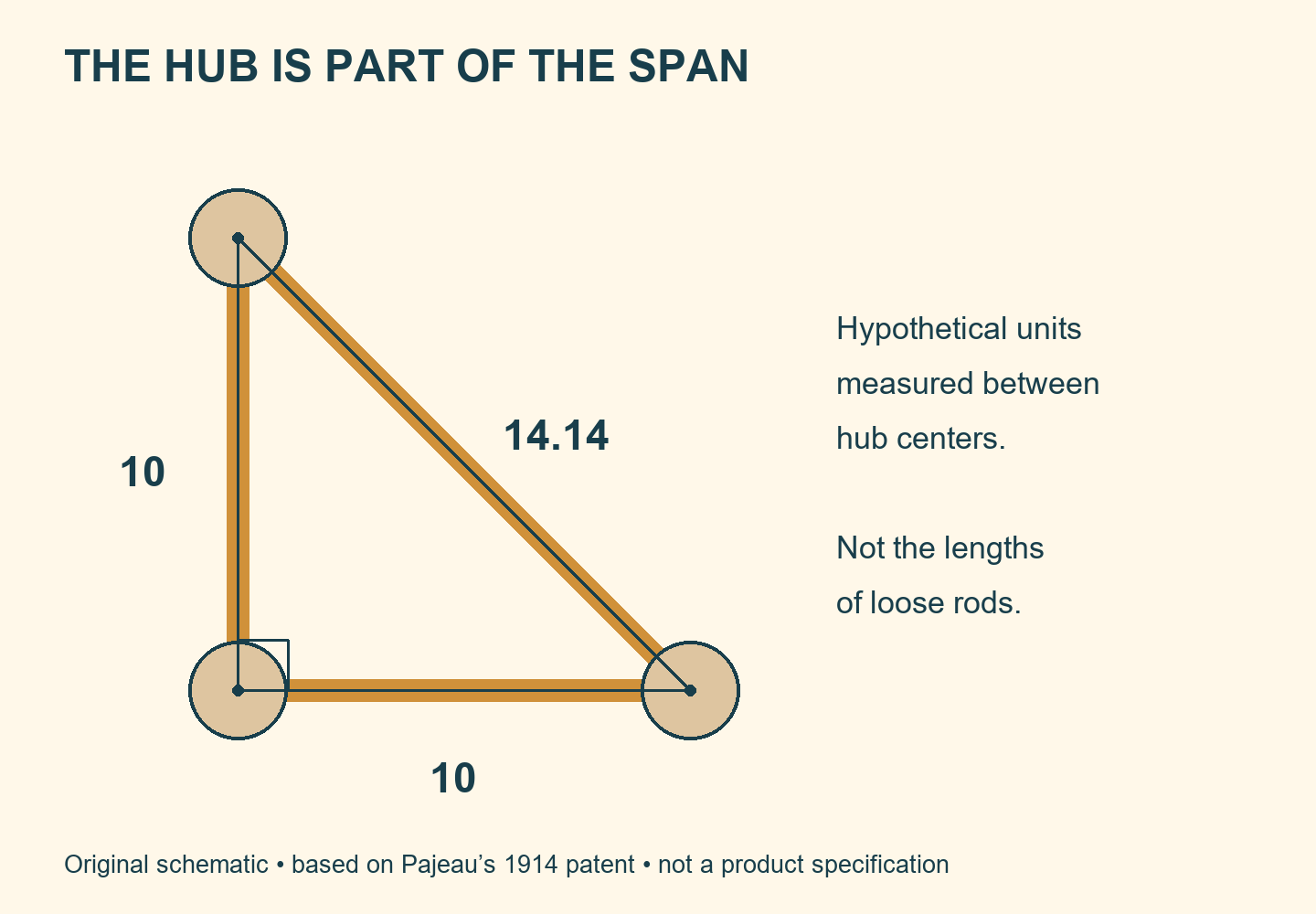
Why did Tinkertoy rods come in different lengths?
Original explanatory graphic by Back When Daily.
Original schematic: 10, 10 and approximately 14.14 are hypothetical center-to-center distances, not commercial rod dimensions. The hubs contribute to each span.
Read the story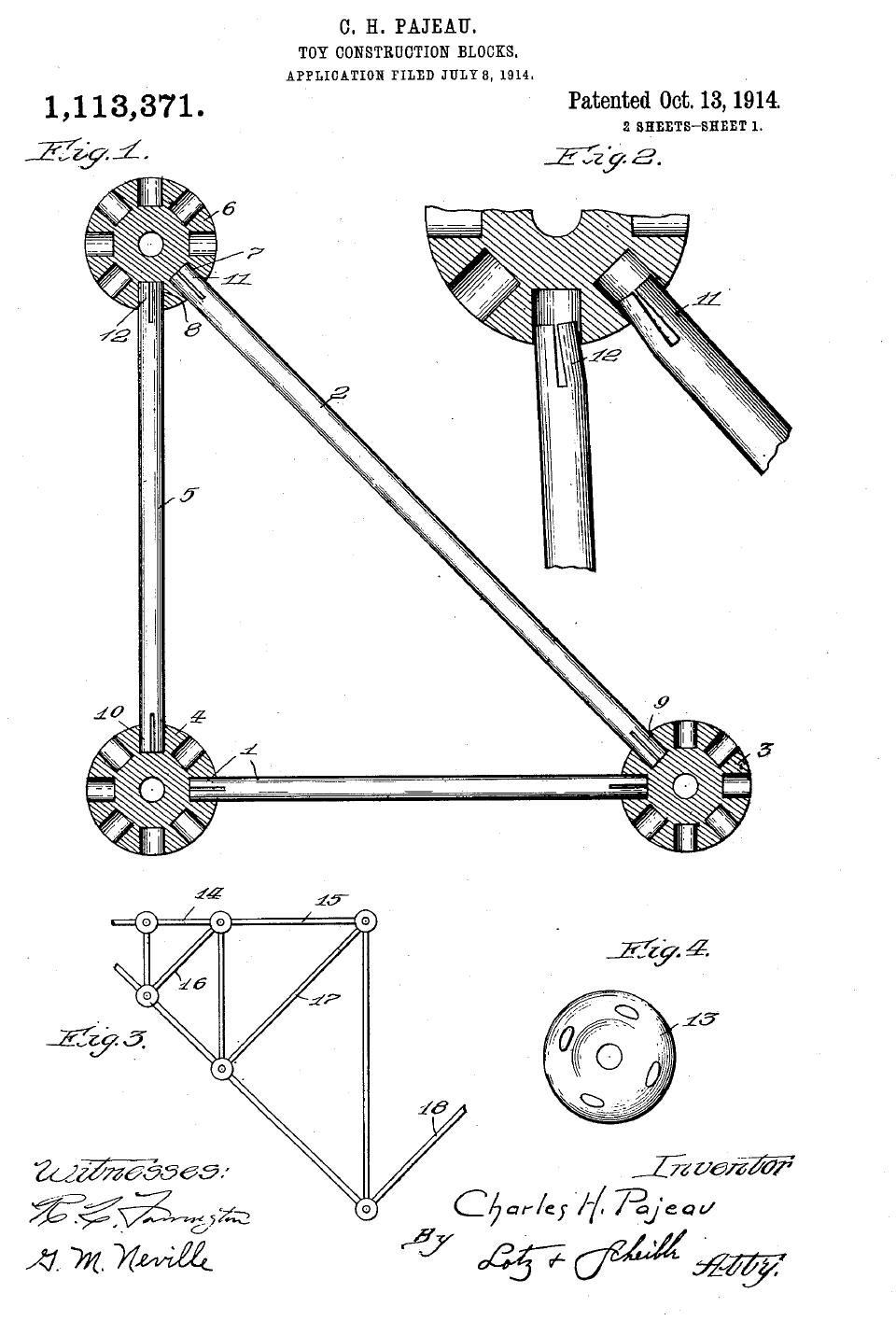
Why did Tinkertoy rods come in different lengths?
Charles H. Pajeau / US Patent Office. Public domain. Rendered original first drawing sheet; trimmed blank margins; all four figures retained. US1914publication, public domain by age.
Charles H. Pajeau’s US patent 1,113,371, granted October 13, 1914: drawing sheet 1. Public domain; blank scan margins trimmed.
Read the story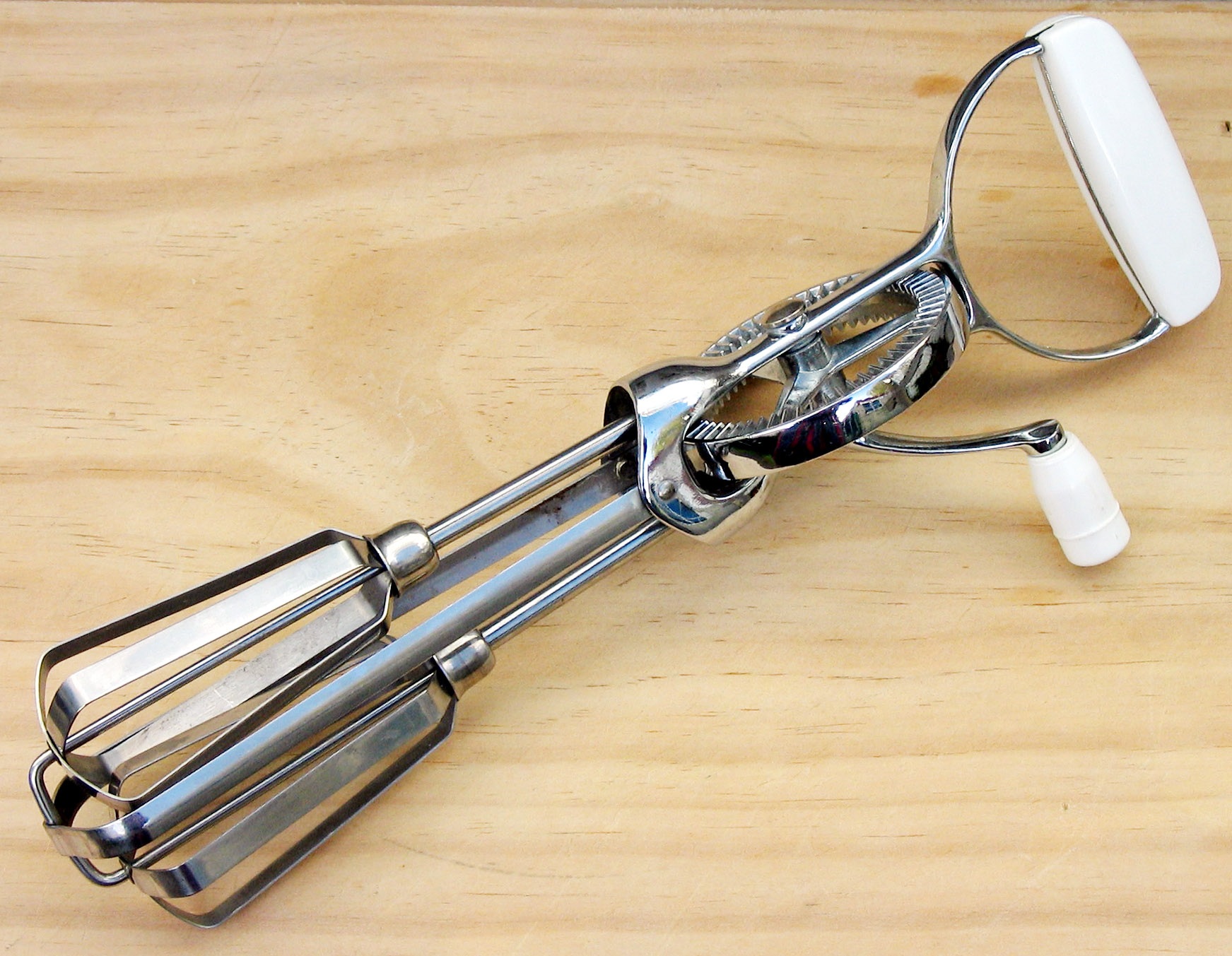
Why did a hand-cranked eggbeater spin faster than your hand?
Donovan Govan. CC BY-SA 3.0. Full framing and proportional resizing; adaptation under CC BY-SA3.0. No generative editing.

A hand-powered beater photographed by Donovan Govan in 2005. CC BY-SA 3.0; proportionally resized. Its maker and manufacture date are not established here.
Read the story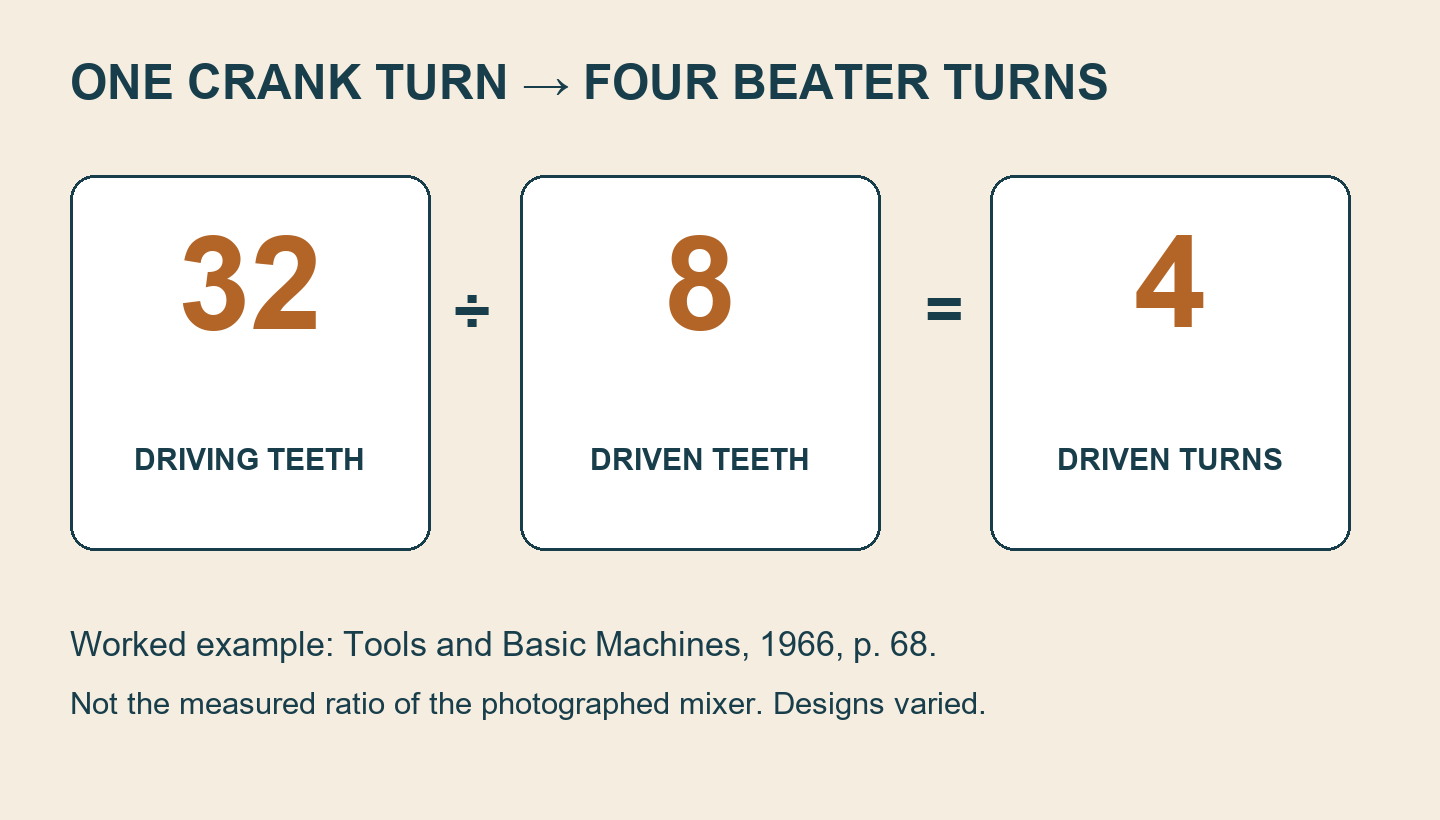
Why did a hand-cranked eggbeater spin faster than your hand?
Original explanatory graphic by Back When Daily.
The 32-to-8 example in the 1966 teaching text yields four driven turns per crank turn. Original numerical diagram, not a measured specification of the photographed beater.
Read the story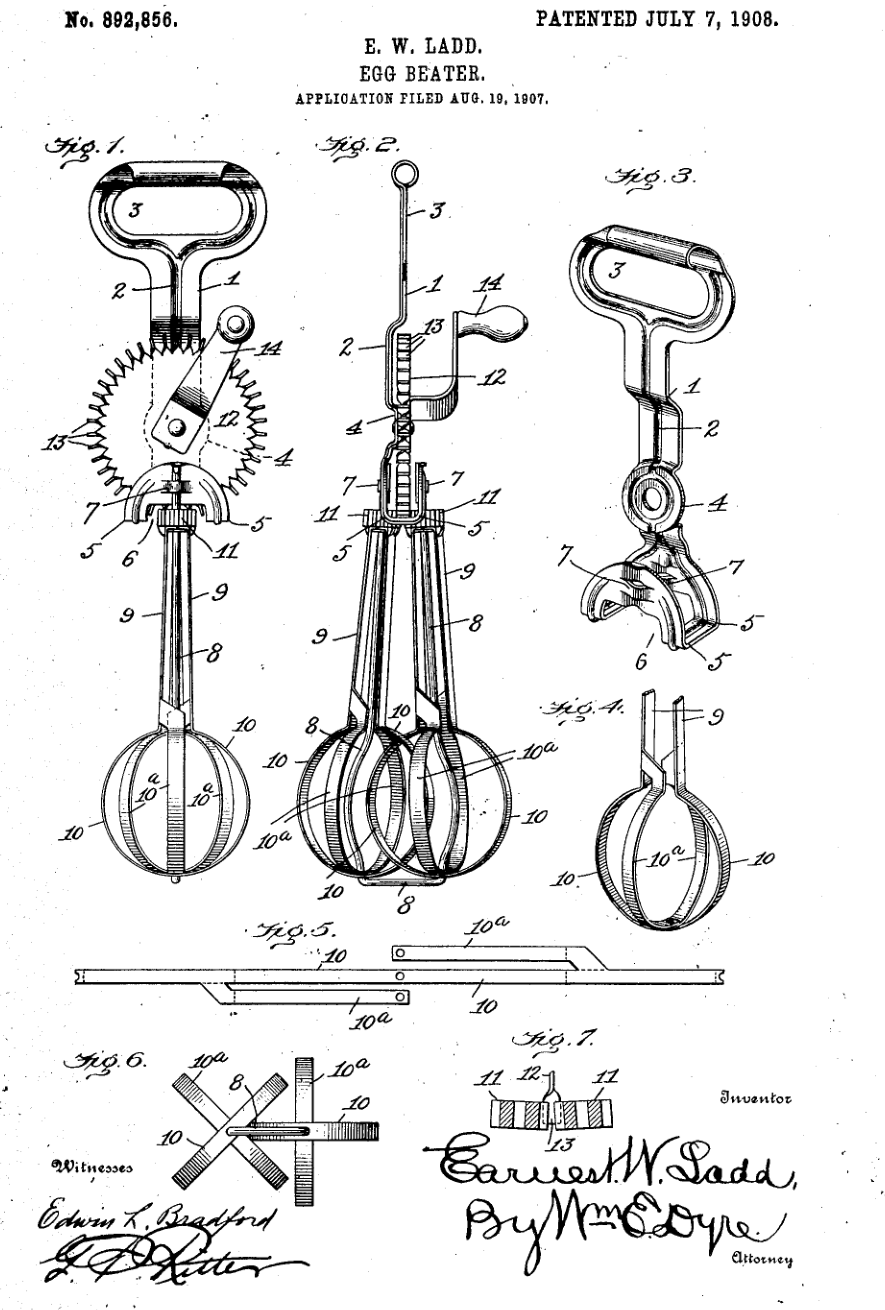
Why did a hand-cranked eggbeater spin faster than your hand?
Earnest W. Ladd / US Patent Office. Public domain. Rendered original drawing sheet and trimmed blank scan margins; all seven figures retained. Published1908 in United States; public domain by age.
Drawing sheet from Earnest W. Ladd’s US patent 892,856, granted July 7, 1908. Public domain; scan margins trimmed. Figure 7 appears at lower right.
Read the story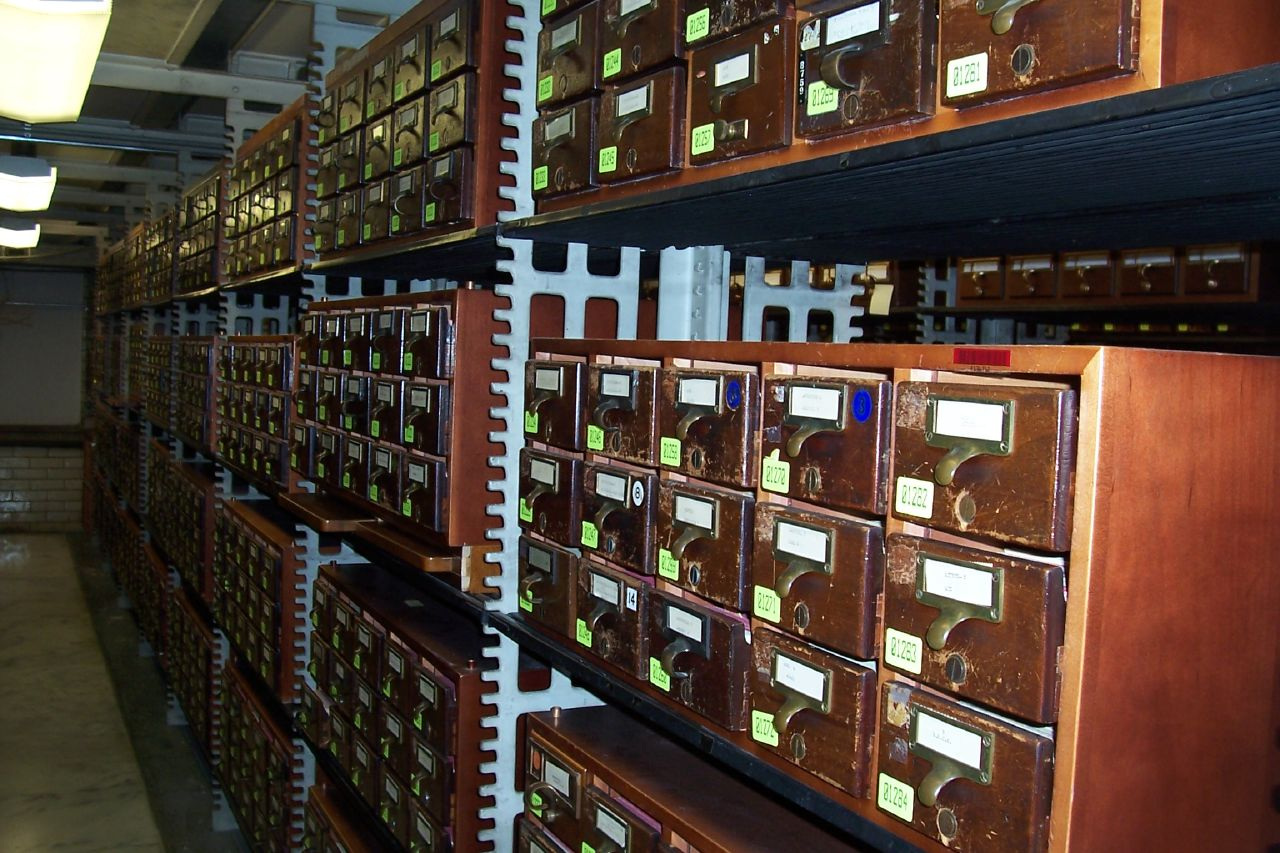
Why did one library book have several catalog cards?
Rochelle Hartman. CC BY 2.0. Full framing, proportional resize/JPEG compression only; no generative editing.

Library of Congress card-catalog cabinets, photographed in 2004. Rochelle Hartman / CC BY 2.0. Proportionally resized.
Read the story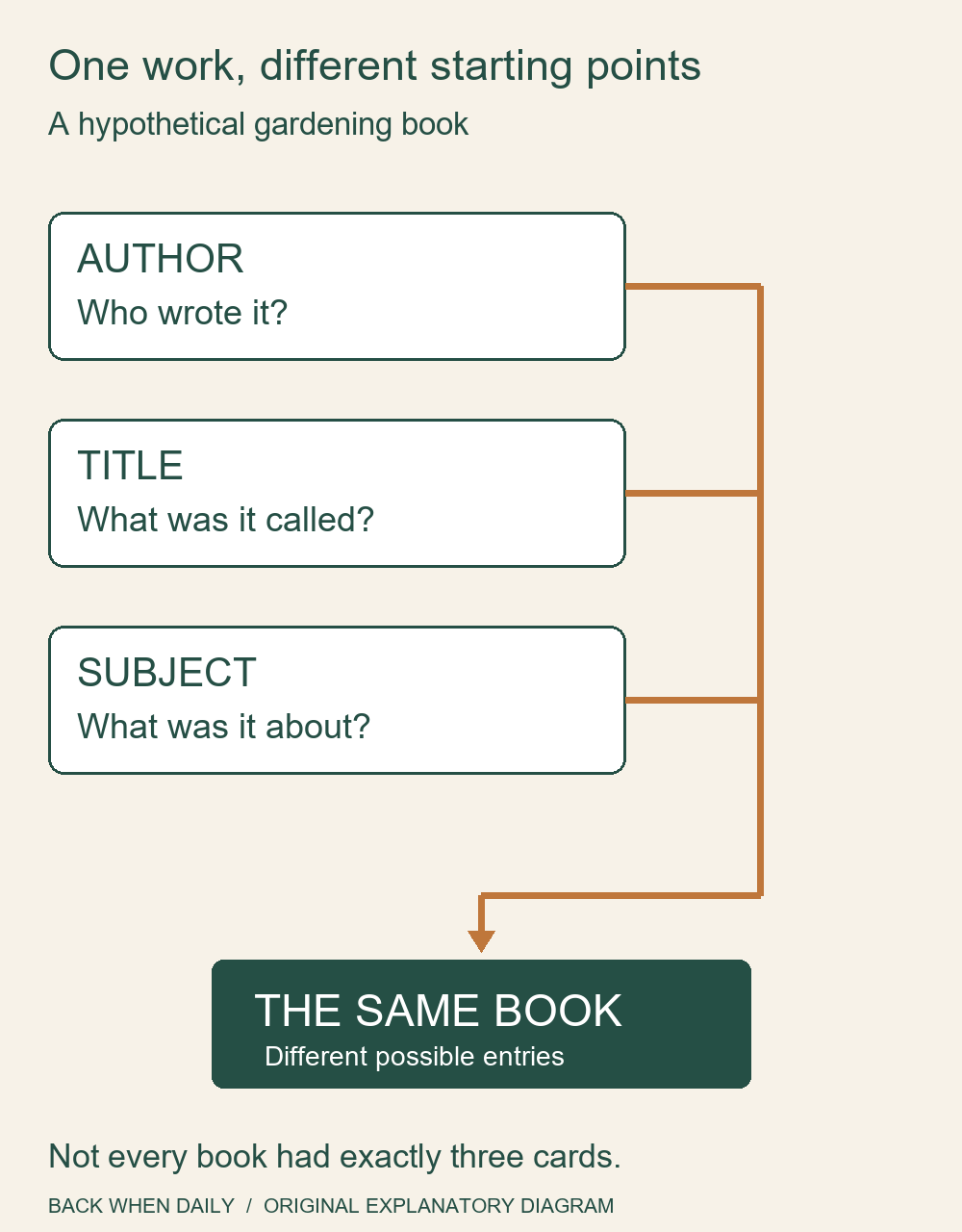
Why did one library book have several catalog cards?
Original explanatory graphic by Back When Daily.
Three possible routes to one work. Original Back When Daily diagram using a hypothetical book; not an actual catalog record.
Read the story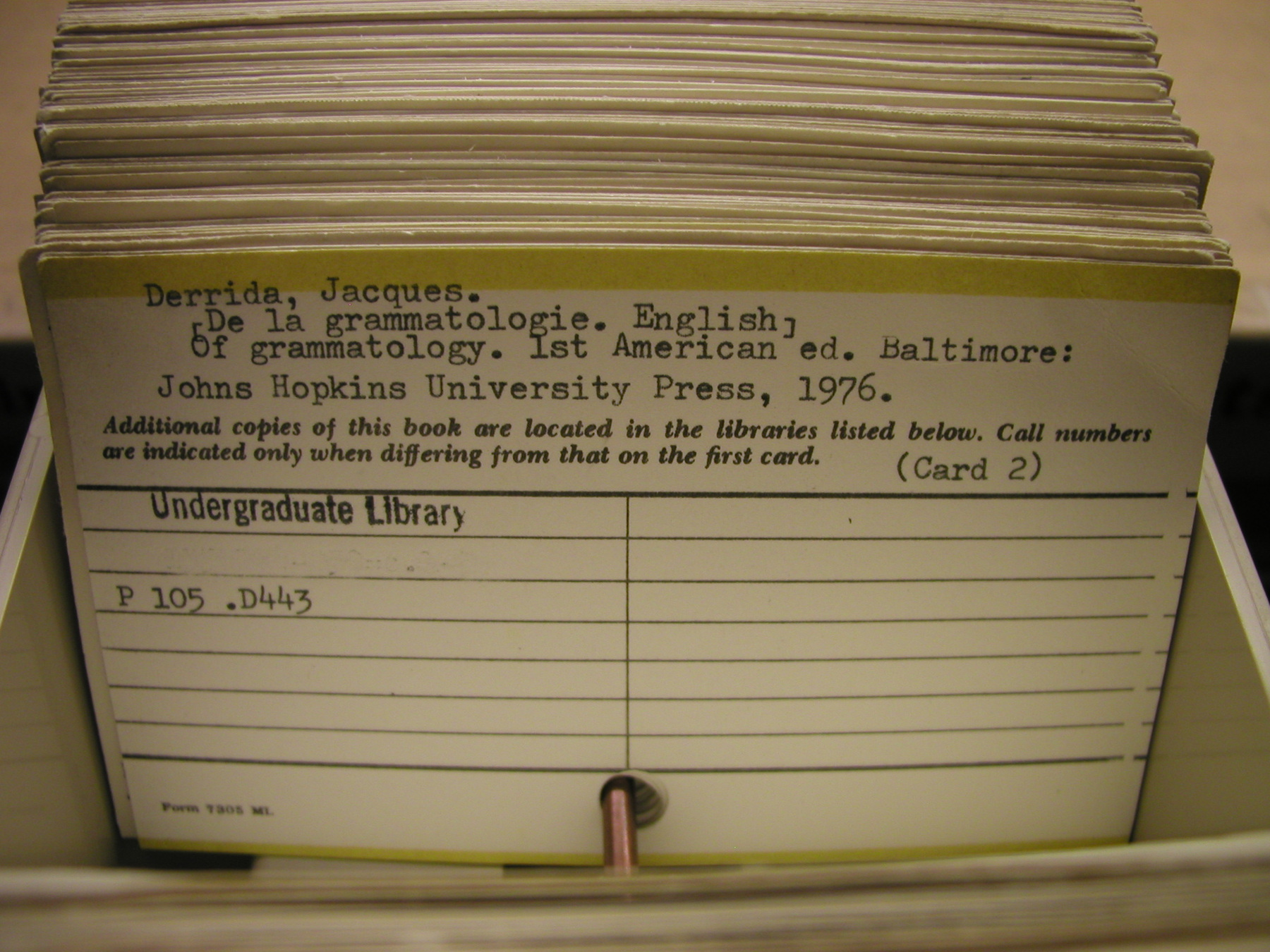
Why did one library book have several catalog cards?
David Fulmer. CC BY 2.0. Full framing, proportional resize/JPEG compression only; no generative editing.

A surviving University of Michigan catalog card, photographed in 2010. David Fulmer / CC BY 2.0. Proportionally resized; the 1976 date belongs to the book edition.
Read the story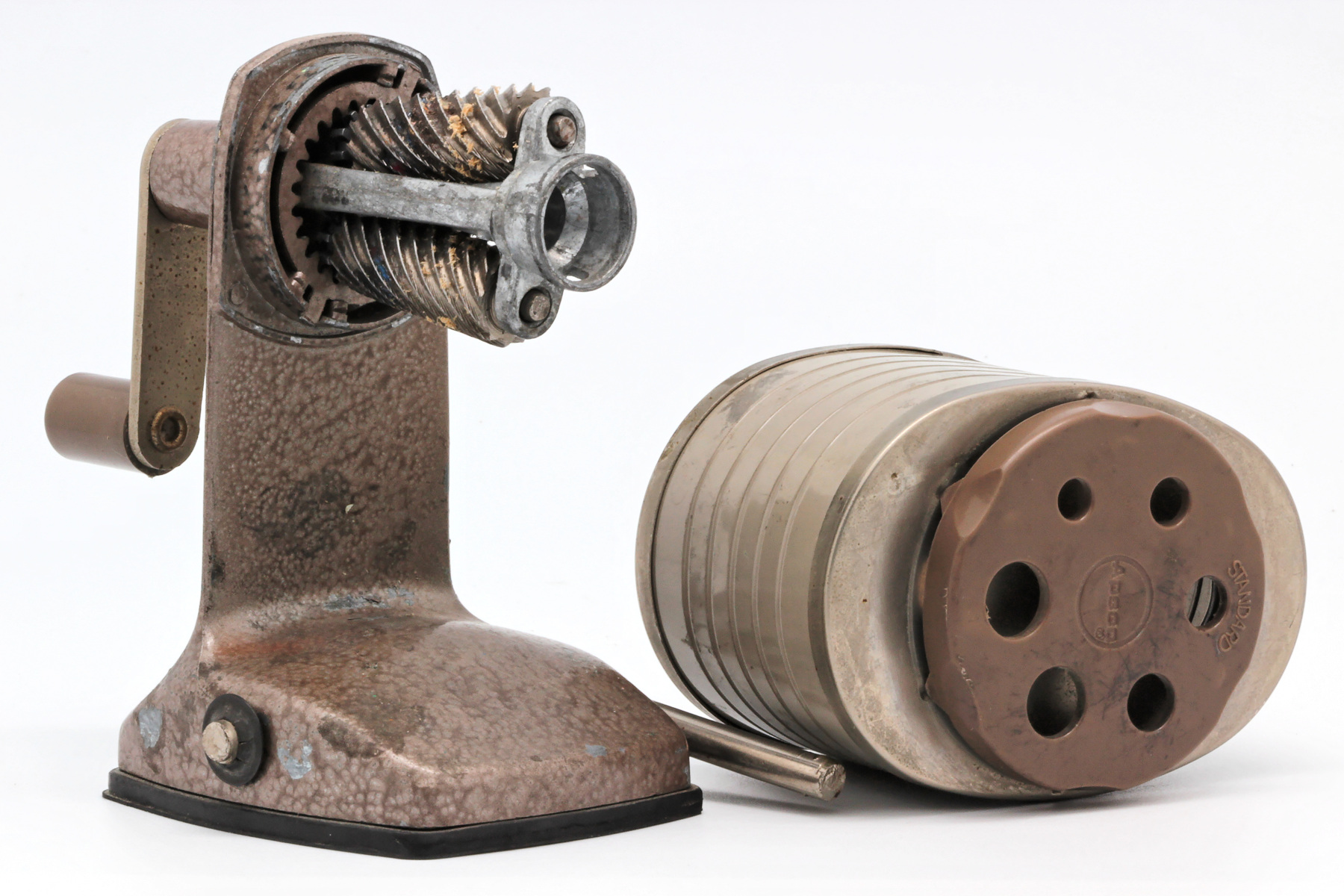
What happened inside a hand-cranked pencil sharpener?
Coyau. CC BY-SA 3.0. Full framing retained; proportional resize and JPEG compression only. Adaptation under CC BY-SA3.0; no generative editing.

An Apsco Vacuhold with its cover removed, photographed in 2012. Coyau / Wikimedia Commons / CC BY-SA 3.0. Proportionally resized; adaptation under the same license.
Read the story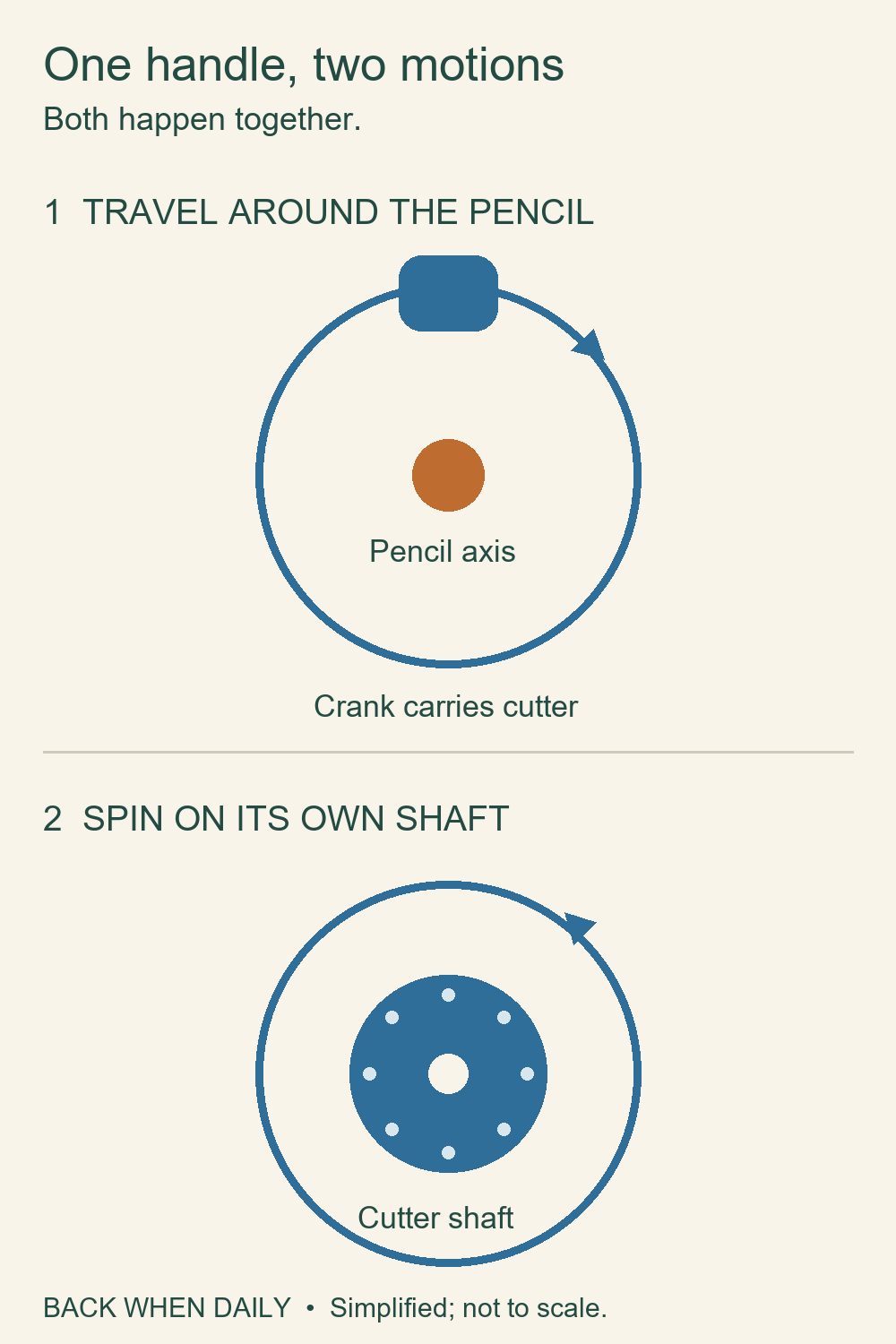
What happened inside a hand-cranked pencil sharpener?
Original explanatory graphic by Back When Daily.
Two simultaneous motions, shown separately for clarity. Original Back When Daily schematic; not to scale and not a drawing of a particular model.
Read the story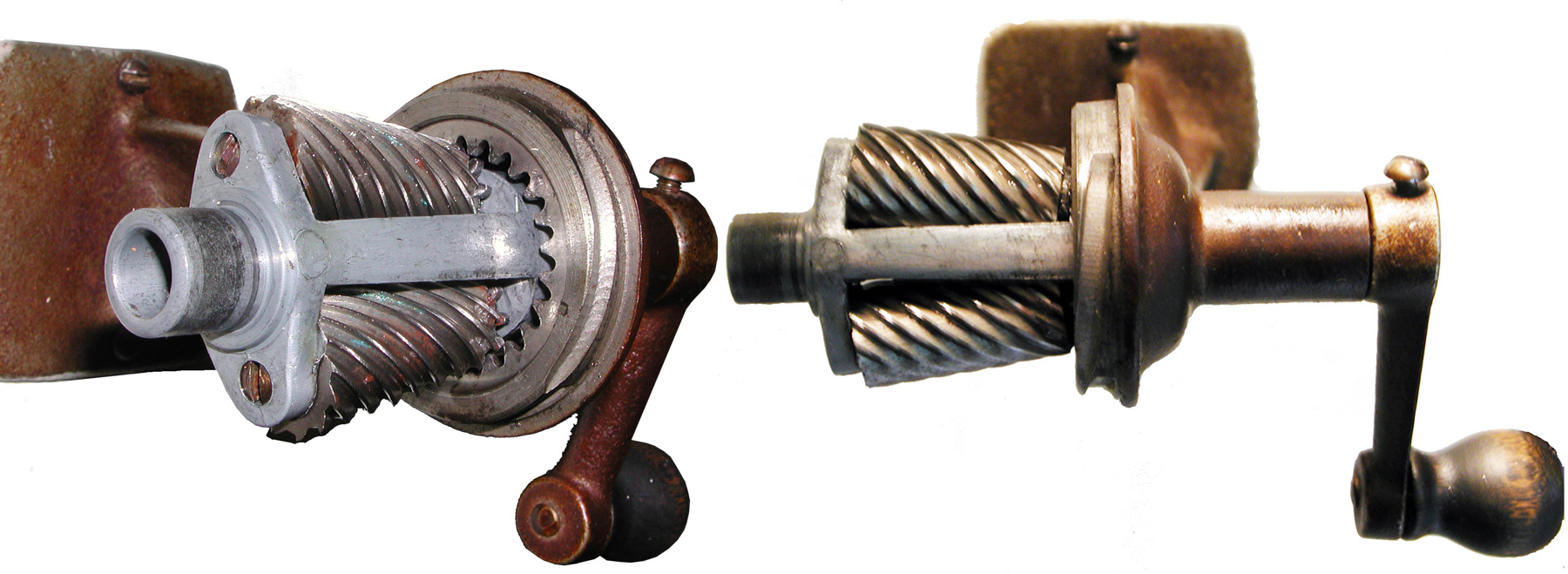
What happened inside a hand-cranked pencil sharpener?
Toytoy. CC BY-SA 2.5. Full two-view photograph retained, proportional resize and JPEG compression. Adaptation under CC BY-SA2.5; no generative editing.

Two views of an exposed wall-mounted mechanism. Photograph uploaded in 2006; Toytoy / Wikimedia Commons / CC BY-SA 2.5. Proportionally resized; adaptation under the same license.
Read the story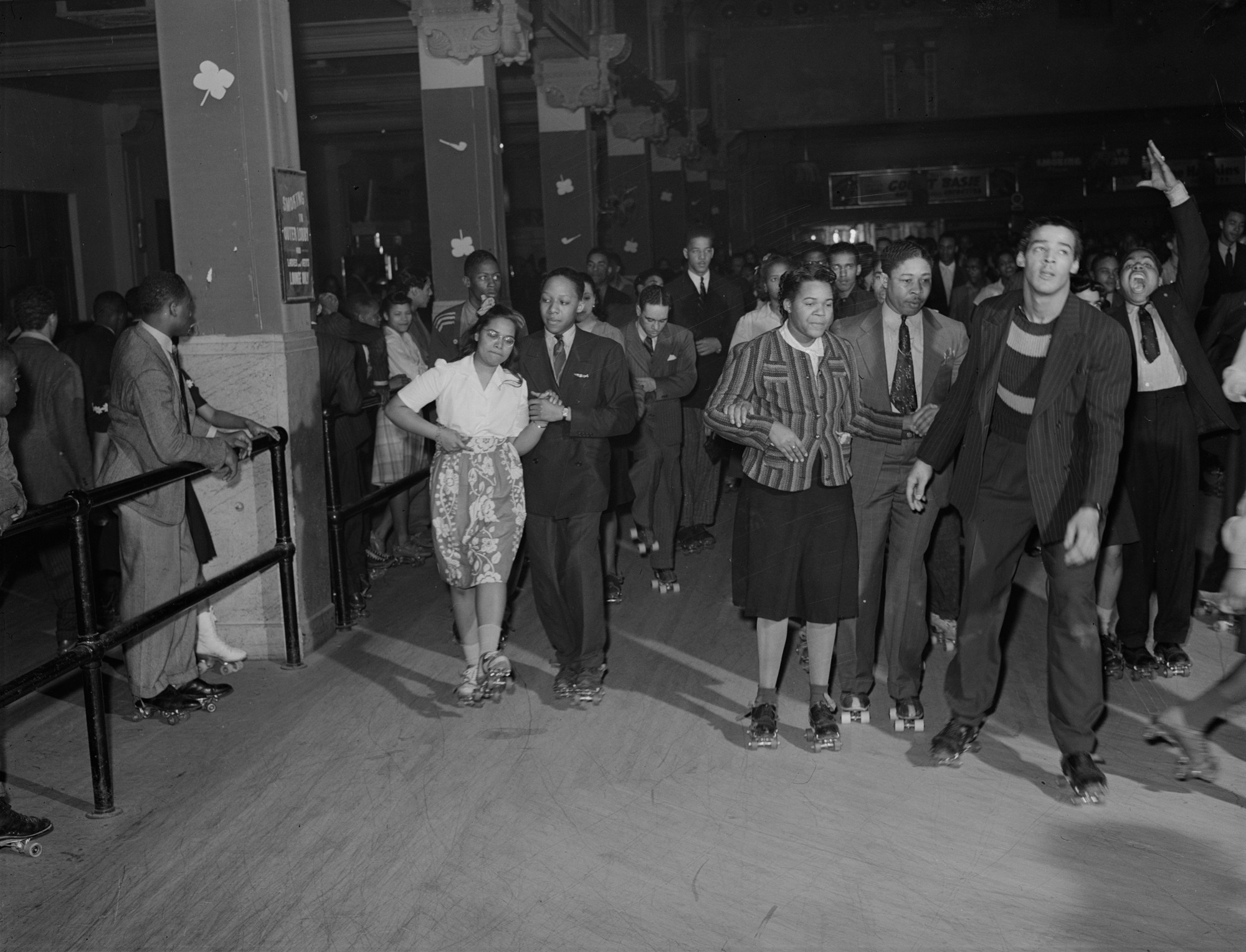
At Chicago’s Savoy, skating night happened off the floor too
Russell Lee / Library of Congress, FSA/OWI collection. Public domain, U.S. federal FSA photograph. Full framing and archival borders retained; proportional resize and JPEG compression only. No generative edits.

A Saturday-night skating crowd at Chicago’s Savoy Ballroom, April 1941. Russell Lee, Library of Congress, FSA/OWI collection, digital ID fsa.8c00641.
Read the story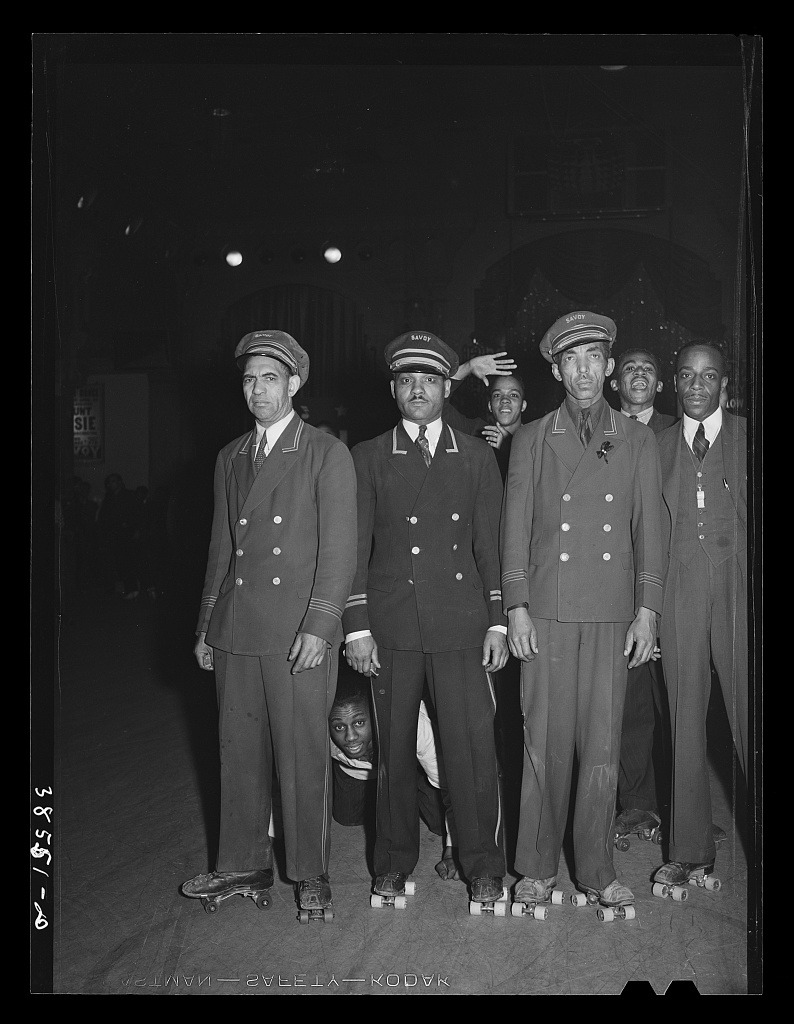
At Chicago’s Savoy, skating night happened off the floor too
Russell Lee / Library of Congress, FSA/OWI collection. Public domain, U.S. federal FSA photograph. Full framing and archival borders retained; proportional resize and JPEG compression only. No generative edits.
Skating instructors at the Savoy Ballroom, April 1941. The job identification comes from the original caption record. Russell Lee, Library of Congress, LC-USF34-038551-D.
Read the story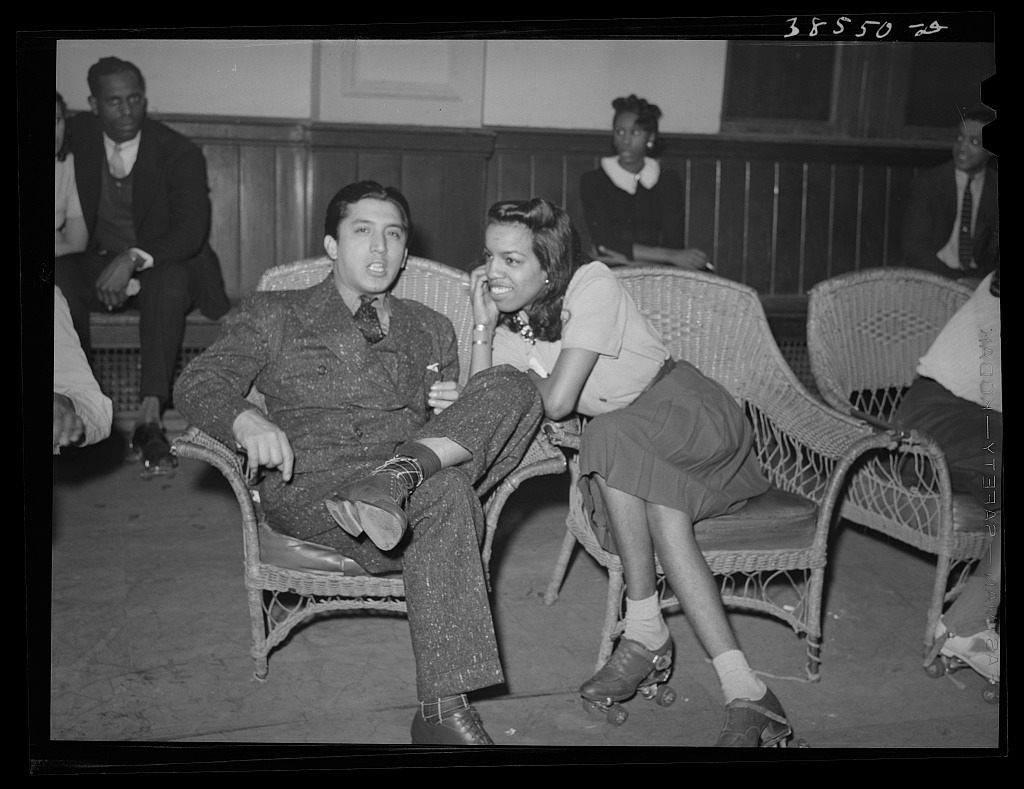
At Chicago’s Savoy, skating night happened off the floor too
Russell Lee / Library of Congress, FSA/OWI collection. Public domain, U.S. federal FSA photograph. Full framing and archival borders retained; proportional resize and JPEG compression only. No generative edits.
A couple talking at the Savoy skating rink, April 1941. Their names and words are not supplied by the record. Russell Lee, Library of Congress, LC-USF34-038550-D.
Read the story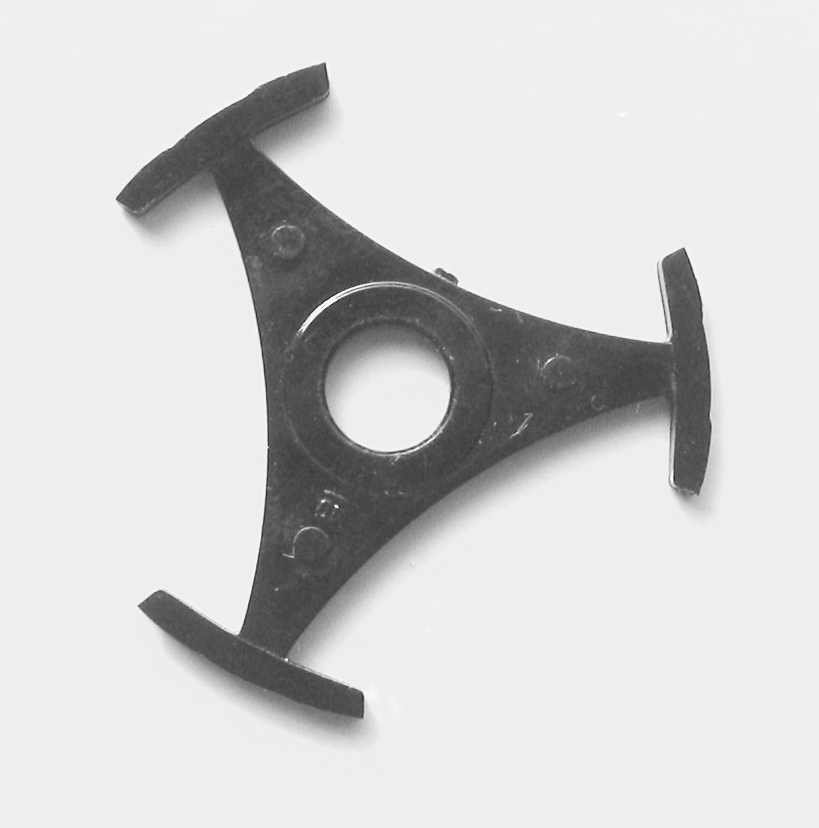
What was the little adapter inside a 45 record for?
Hans Haase. CC BY-SA 4.0. Full source framing preserved; responsive resizing. Derivatives shared under CC BY-SA 4.0.

A small part with a precise job: centering a large-hole record on a narrow spindle. Hans Haase photographed this example in 2017; it is not a period publicity photograph.
Read the story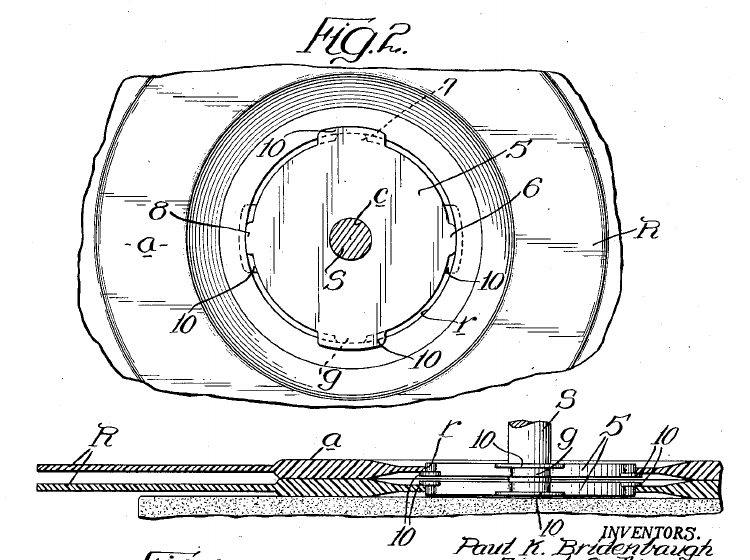
What was the little adapter inside a 45 record for?
Paul K. Bridenbaugh and Frank A. Jansen. Public domain, U.S. patent drawing. Figures 2 and 3 cropped from first patent sheet, preserving geometry and labels. Complete original PDF retained.
Figures 2 and 3 in Bridenbaugh and Jansen’s U.S. Patent 2,585,622. The top view explains the grip; the section below explains how stacked records touch. Filed September 15, 1949; granted February 12, 1952.
Read the story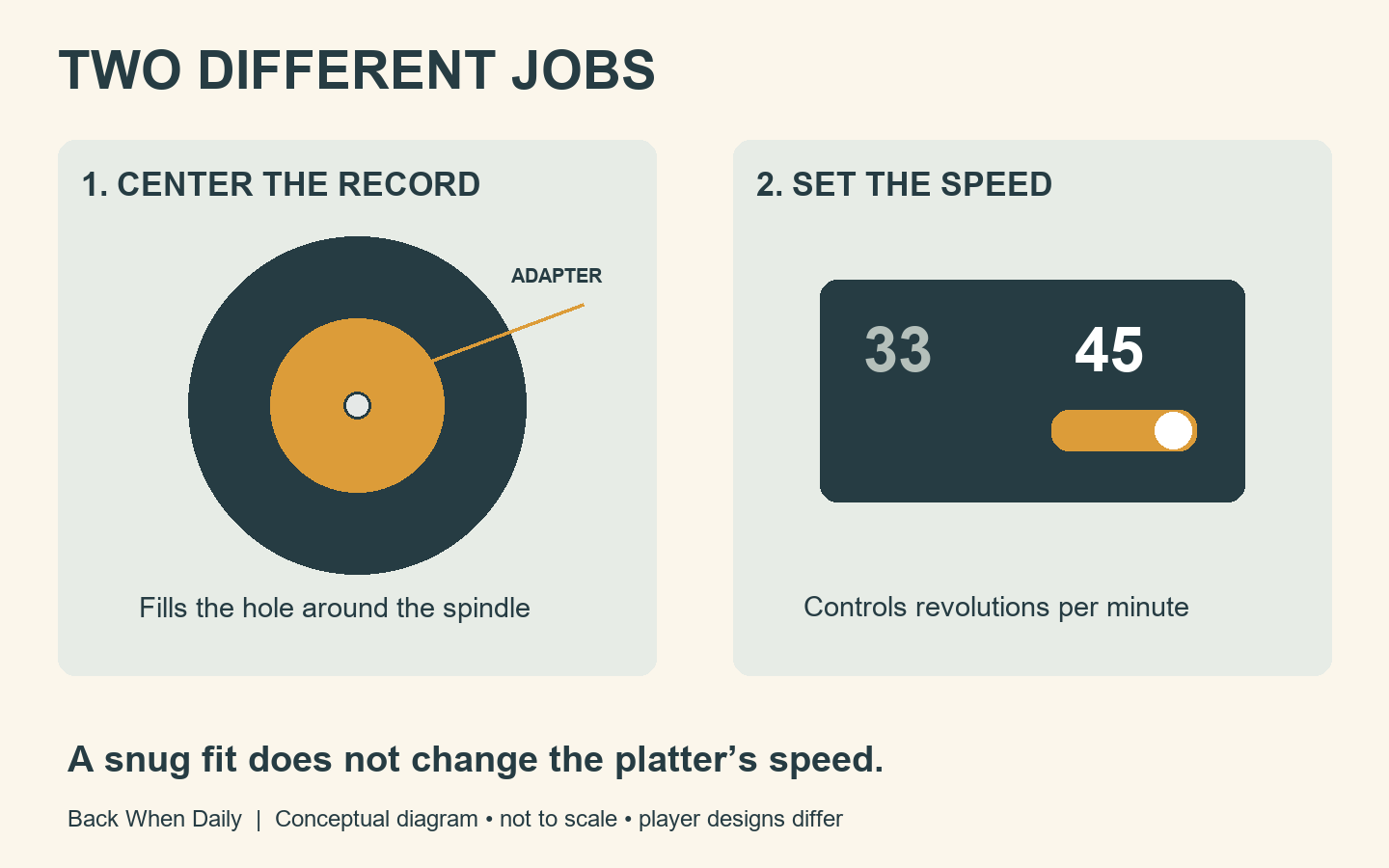
What was the little adapter inside a 45 record for?
Back When Daily. Original Back When Daily graphic. Original non-generative schematic; no manufacturer artwork copied.
Fit and speed answer different questions. Original conceptual diagram, not a reconstruction of a particular player or an installation guide.
Read the story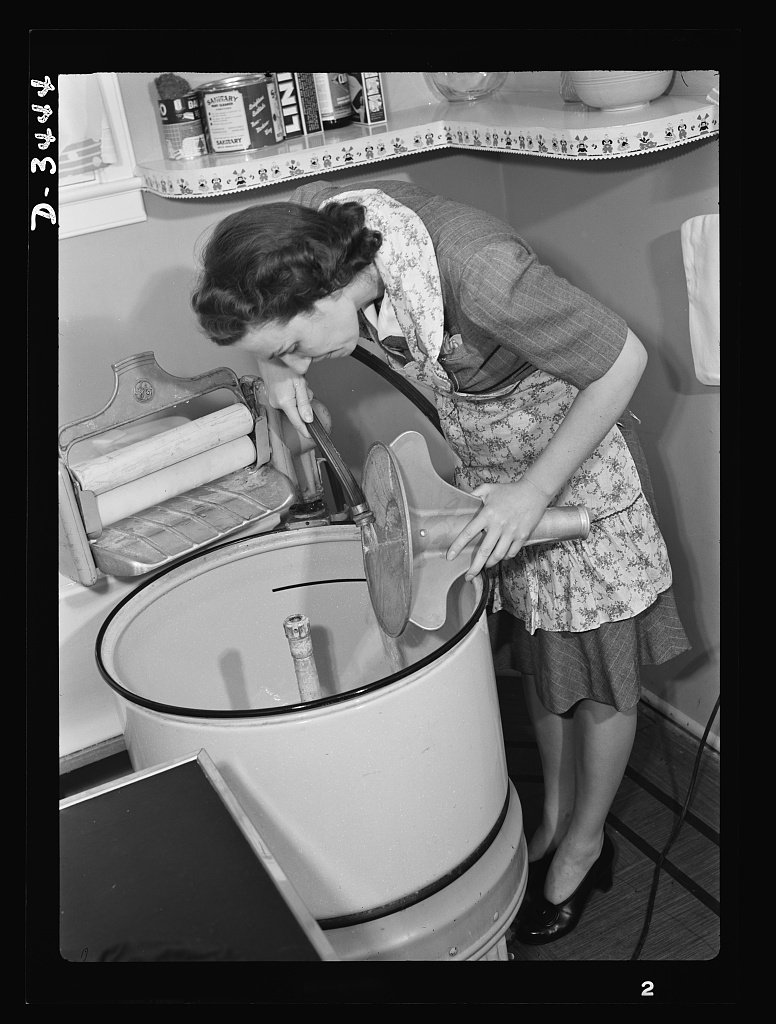
Washday was not finished when the washer stopped
Ann Rosener / U.S. Farm Security Administration–Office of War Information. Public domain, U.S. federal government work. Original full archival scan retained; responsive resizing only.

Cleaning the machine was part of the job. Ann Rosener photographed this washing-machine care demonstration in February 1942 for the federal photographic record.
Read the story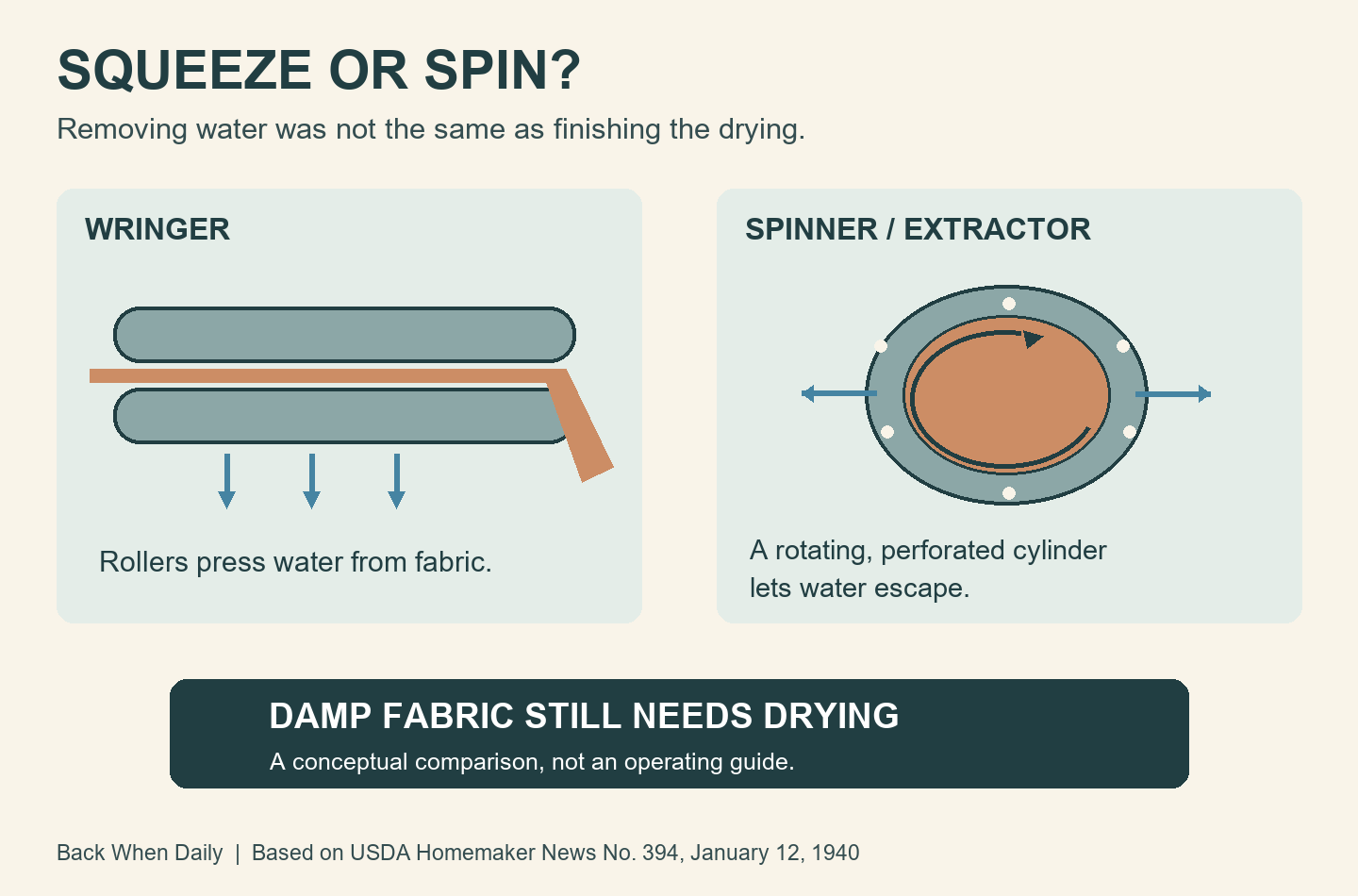
Washday was not finished when the washer stopped
Back When Daily. Original Back When Daily graphic. Original non-generative diagram drawn programmatically from the documented physical distinction. No photographed provenance applied.
Two ways to remove water, with the same unfinished job afterward. Original explanatory graphic based on the USDA’s 1940 comparison; simplified, not a repair or operating guide.
Read the story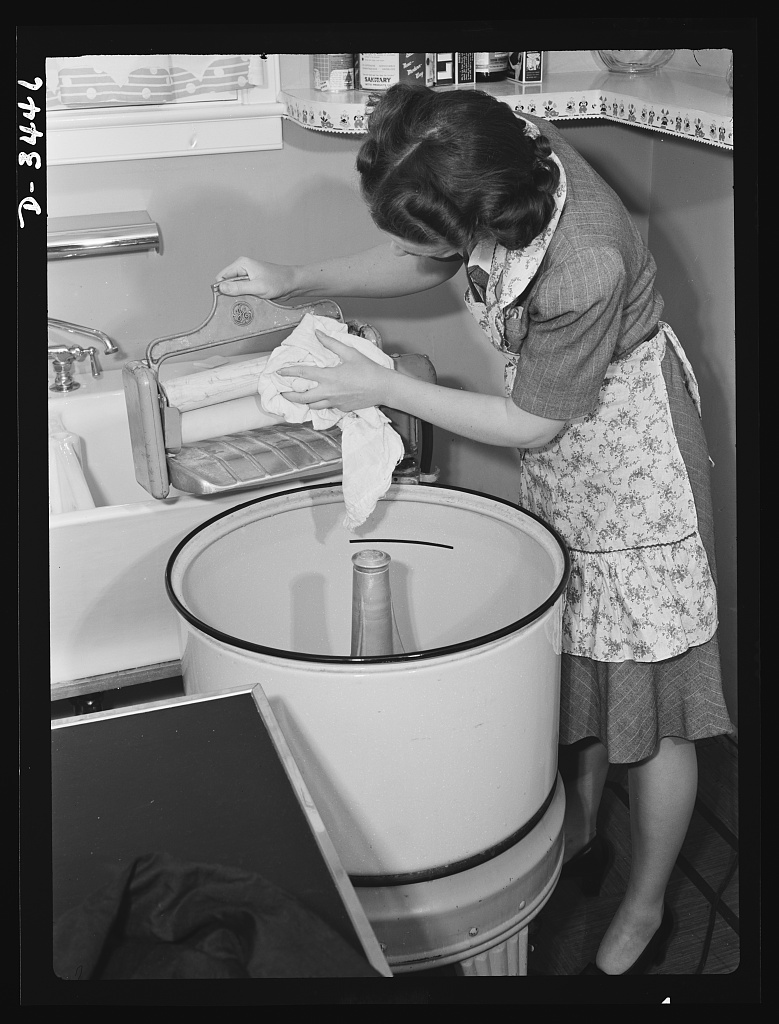
Washday was not finished when the washer stopped
Ann Rosener / U.S. Farm Security Administration–Office of War Information. Public domain, U.S. federal government work. Original full archival scan retained; responsive resizing only.

The rollers needed attention too. Rosener’s companion photograph, February 1942, documents wringer care after use—not clothing passing through the machine.
Read the story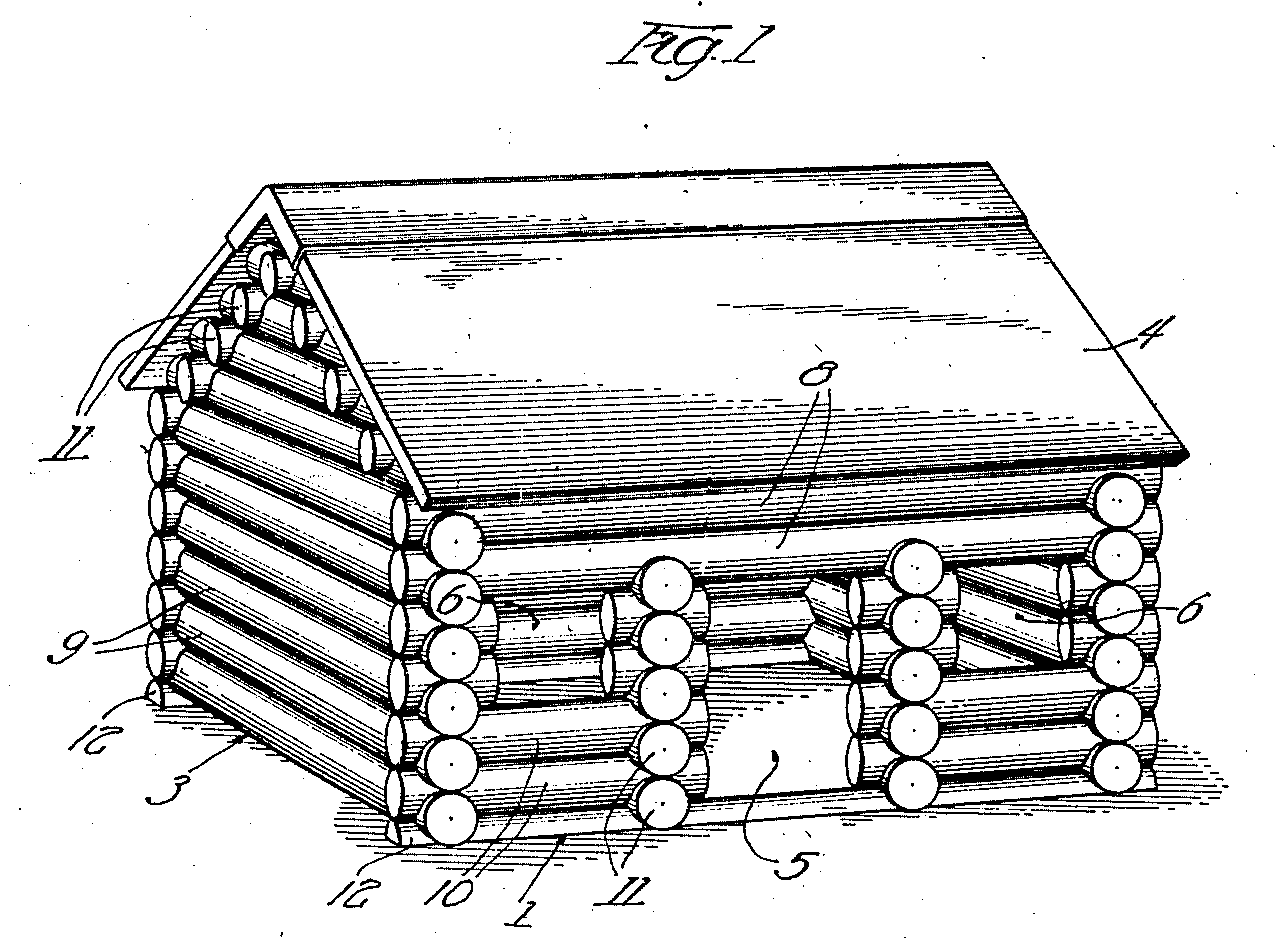
Why did Lincoln Logs stay together without glue?
John Lloyd Wright / U.S. Patent Office. Public domain (published 1920). Original Figure1 reproduction retained, responsive resize only.

The complete cabin in John Lloyd Wright’s U.S. patent 1,351,086, granted August 31, 1920. The numbered pieces explain how the small structure fits together.
Read the story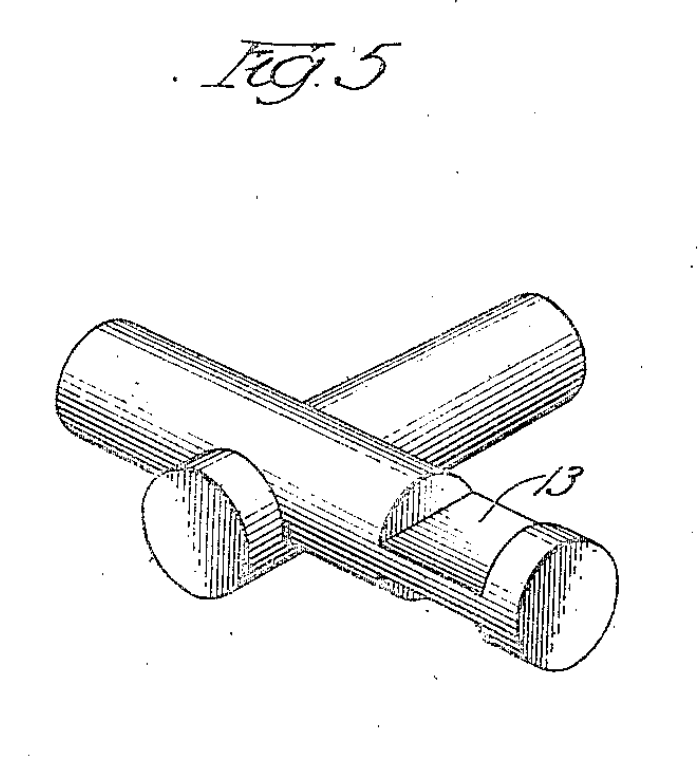
Why did Lincoln Logs stay together without glue?
John Lloyd Wright / U.S. Patent Office. Public domain (published 1920). Figure5 cropped from sheet2 and unrelated neighboring figure marks removed from blank left margin. OriginalPDF retained; joint geometry and callouts intact.
Figure 5 isolates the crossing joint. The flat surfaces inside the notches support the adjoining piece; the cut shoulders help locate it.
Read the story
Why did Lincoln Logs stay together without glue?
Blue Plover. CC BY-SA 3.0. Complete photograph retained; responsive resizing. Derivatives use the same CC BY-SA3.0 license.

A later use of the same building idea: students in Laos at a Big Brother Mouse activity, February 2013. Photograph by Blue Plover; the source identifies the model as a stilt-house design.
Read the story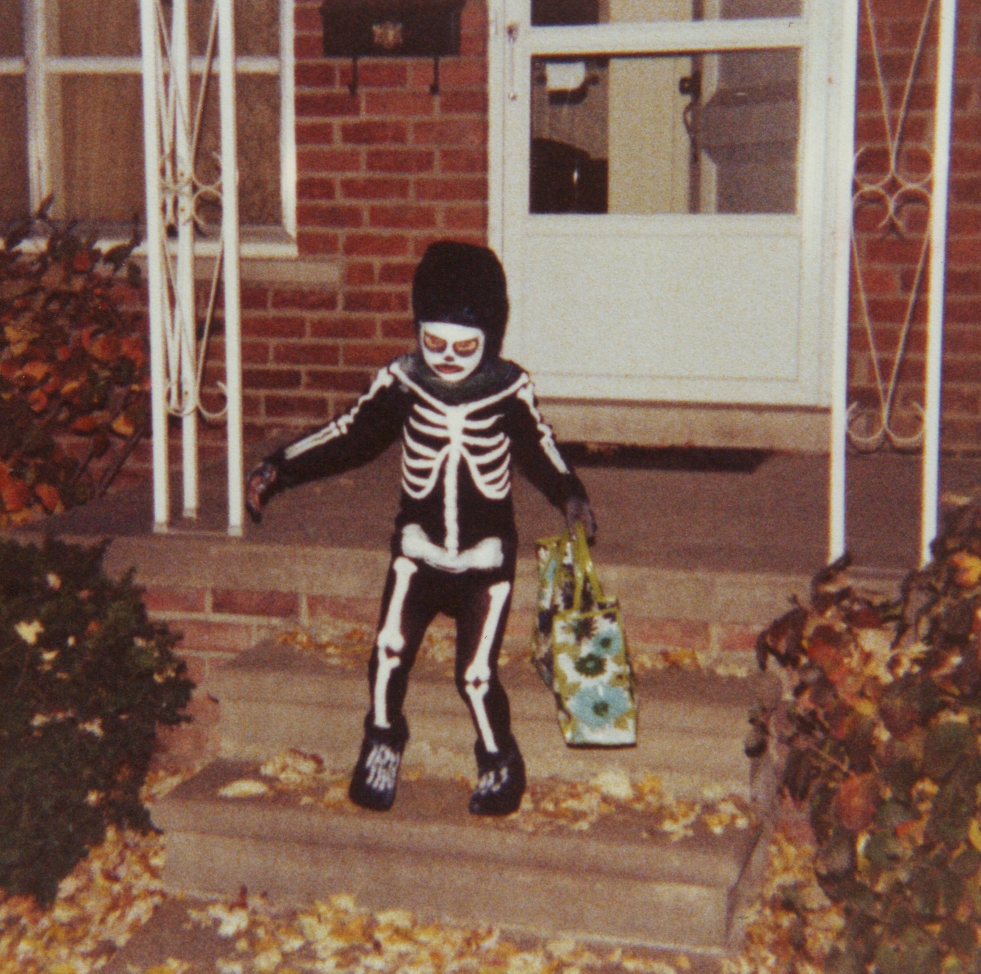
The mask, the suit, the box: reading a vintage Halloween costume
Don Scarborough. CC BY-SA 2.5. Original source retained unchanged. Responsive resizing under the same CC BY-SA 2.5 license.

Ready for the door-to-door part of Halloween: a trick-or-treater in Redford, Michigan, on October 31, 1979. Photograph by Don Scarborough.
Read the story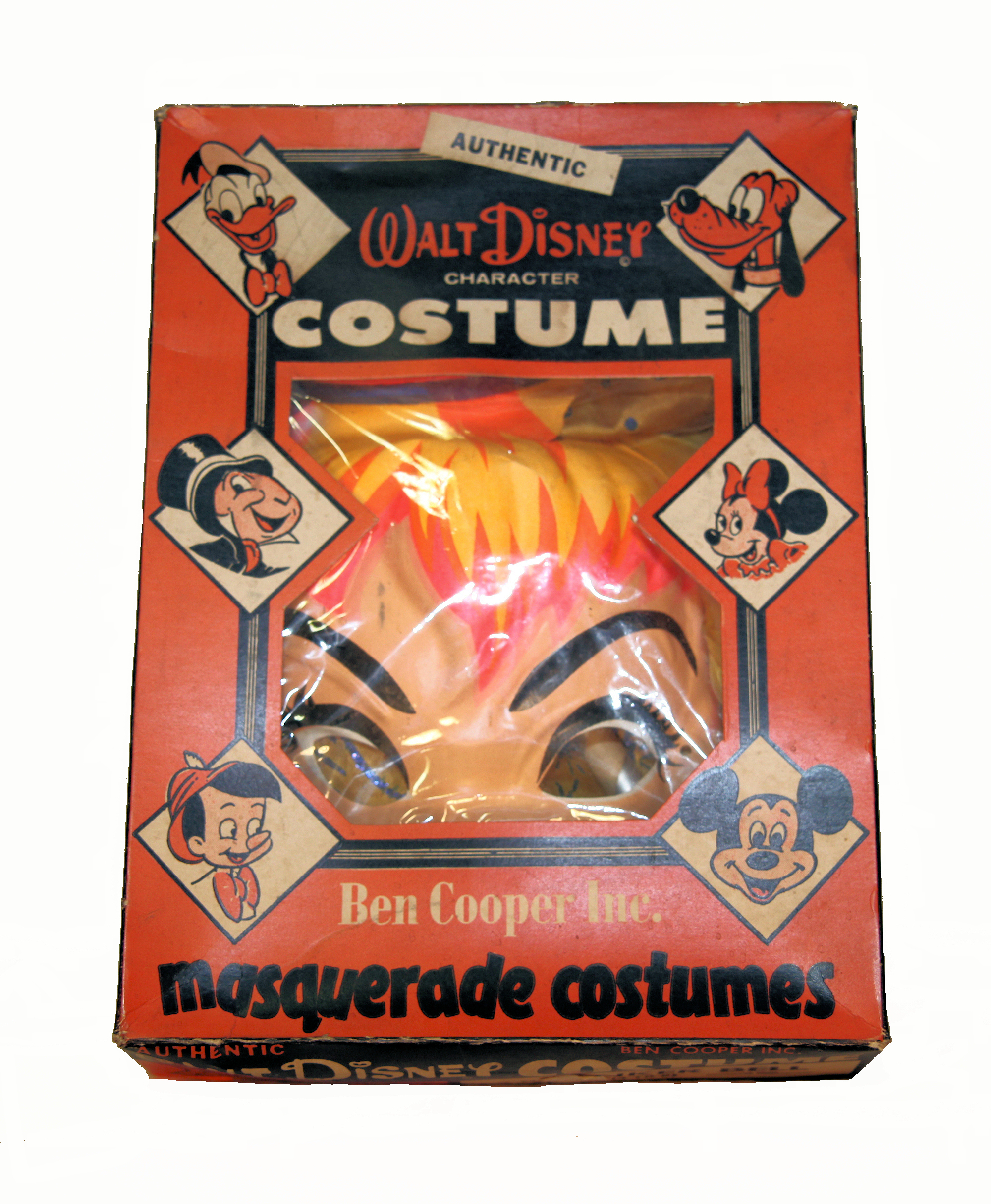
The mask, the suit, the box: reading a vintage Halloween costume
Tim1965. CC BY-SA 3.0. Original source retained unchanged. Responsive resizing under the same CC BY-SA 3.0 license.

A surviving boxed costume, photographed in 2010. The photographer identifies it as a 1950s Tinker Bell costume; the box and window can be read separately from that attribution.
Read the story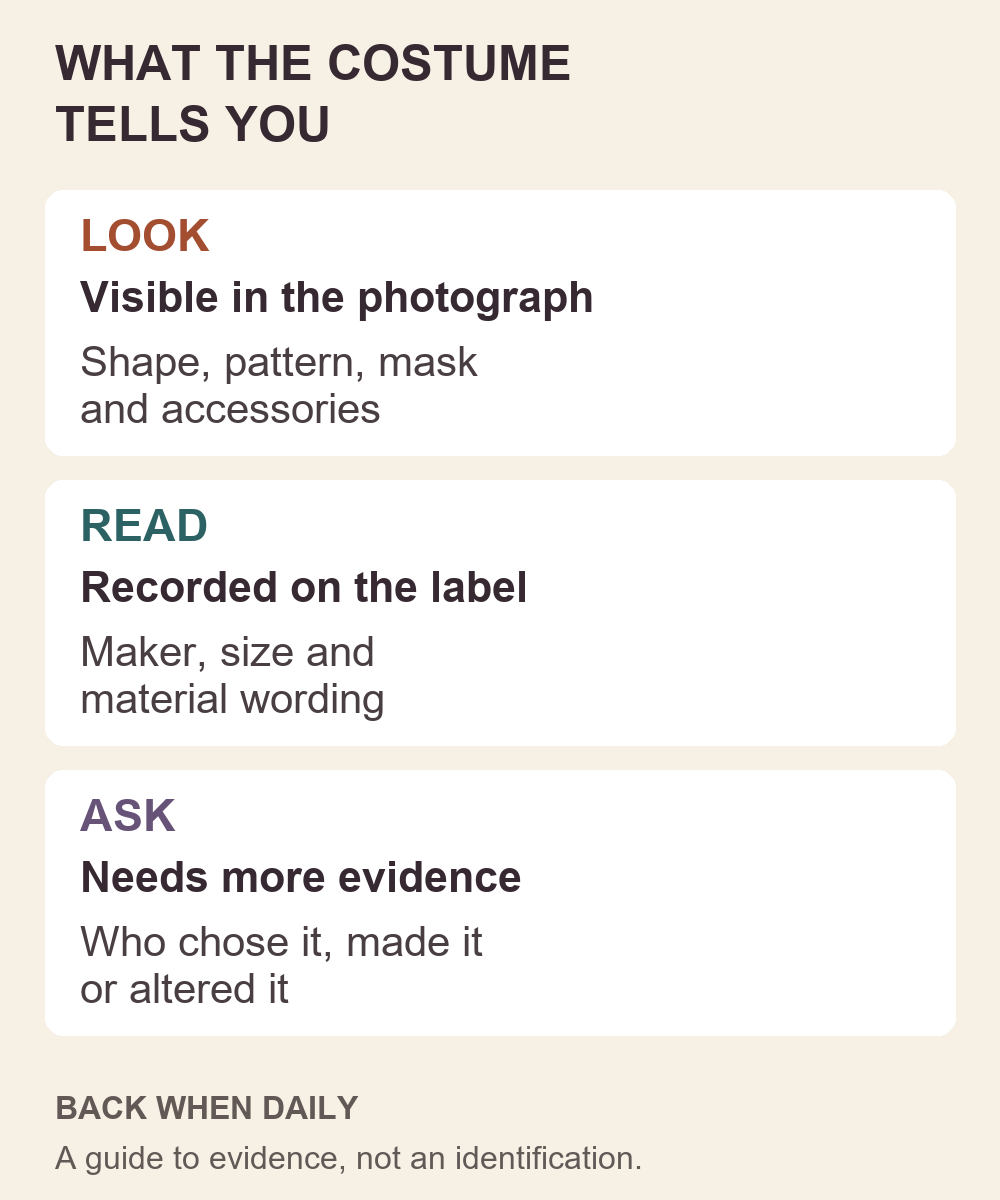
The mask, the suit, the box: reading a vintage Halloween costume
Original explanatory graphic by Back When Daily.
A way to read a costume without guessing: keep visible details, label information and unanswered questions separate.
Read the story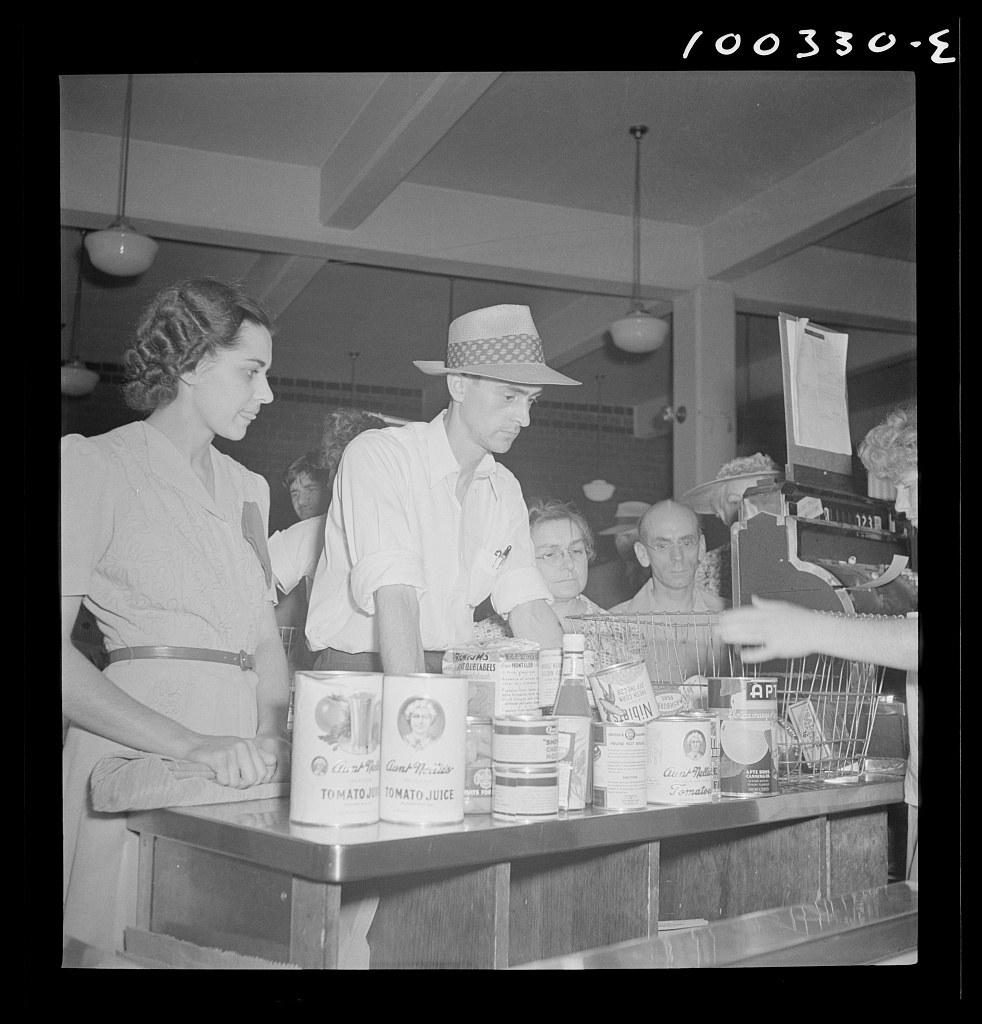
What did the supermarket barcode actually change?
Marjory Collins / FSA-OWI. Public domain (U.S. government work). Complete source photograph and negative border preserved; responsive resizing only.

Before the scanner: a Giant Food checkout in Washington, D.C., June–July 1942. Photograph by Marjory Collins, Library of Congress, FSA/OWI collection.
Read the story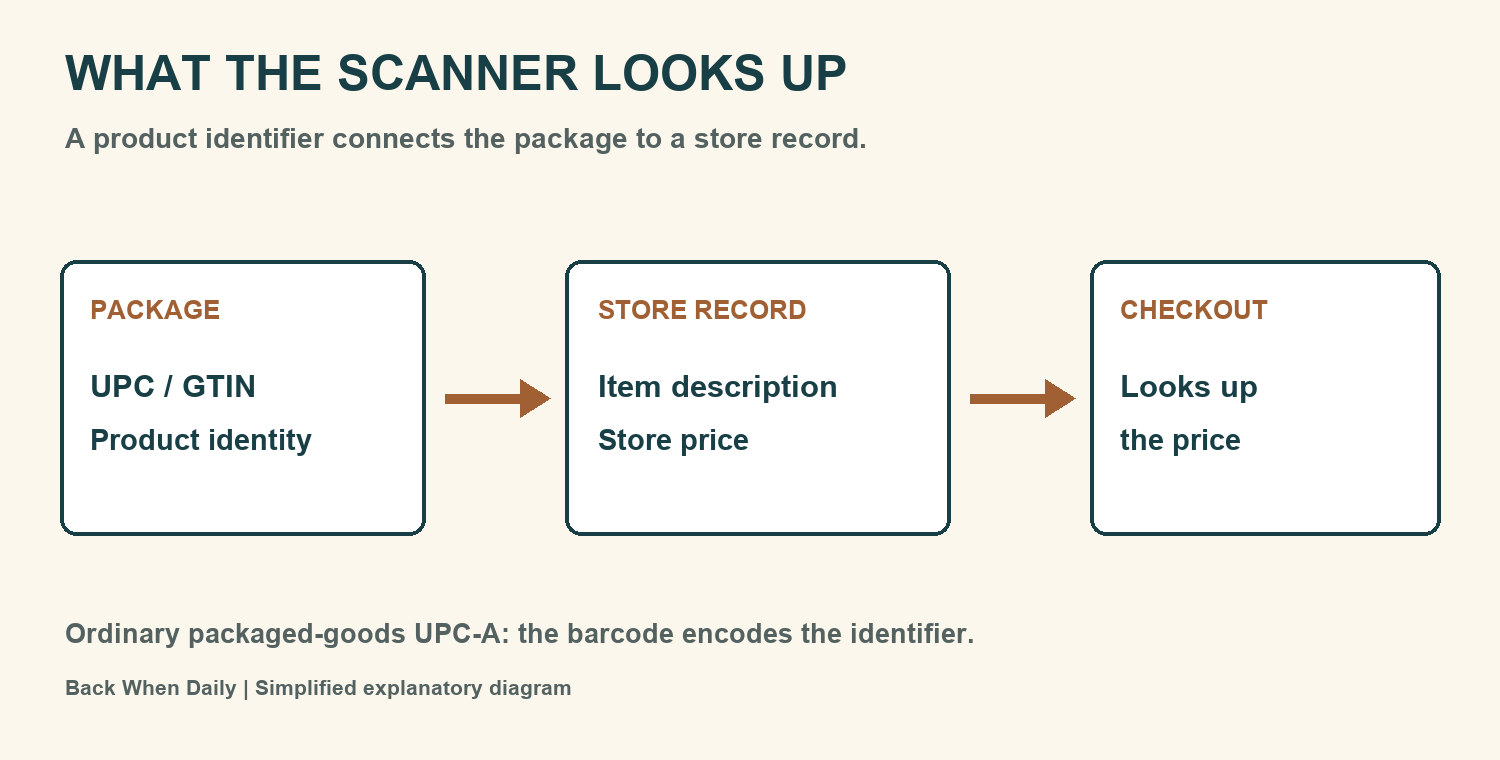
What did the supermarket barcode actually change?
Original explanatory graphic by Back When Daily.
The barcode identifies the product; the store record supplies the price. Original simplified diagram of ordinary packaged-goods UPC lookup.
Read the story
What did the supermarket barcode actually change?
Original explanatory graphic by Back When Daily.
One identifier, two hypothetical store prices. These amounts illustrate the lookup relationship; they are not documented historical prices.
Read the story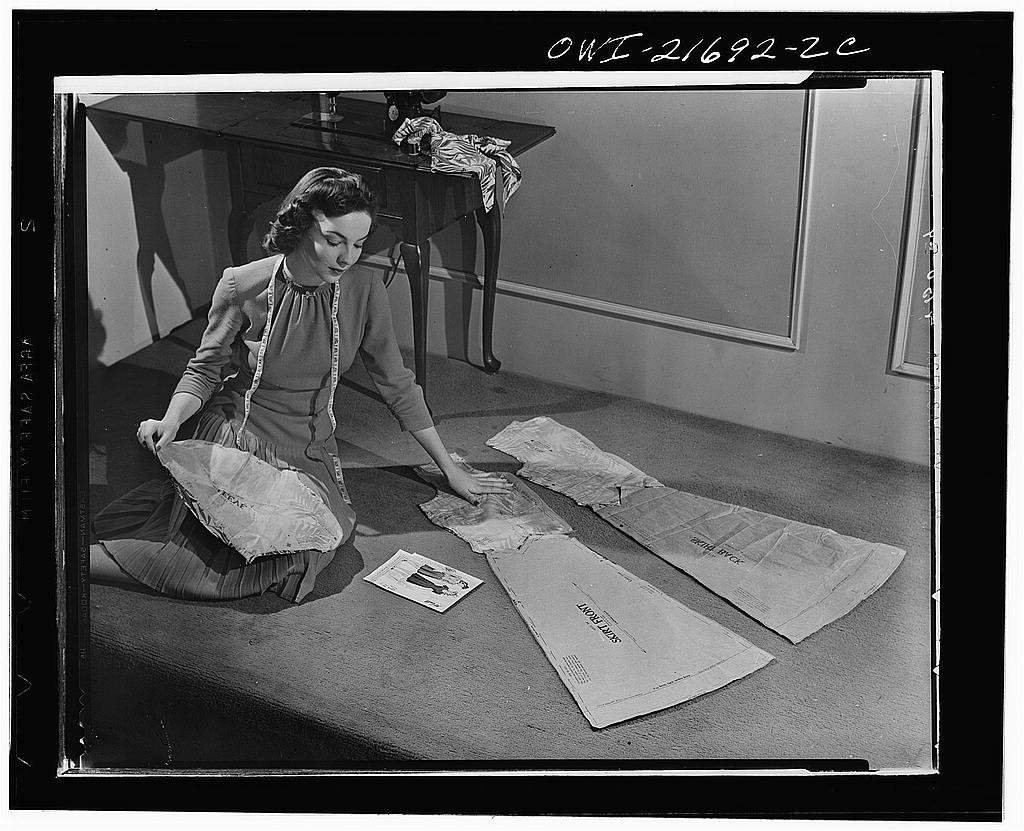
Choosing a sewing pattern meant choosing more than a picture
U.S. Office of War Information. Public domain (U.S. government work). Original photograph preserved; responsive resizing only.
Cynthia assembles a dress pattern in a 1943 Office of War Information photograph. Library of Congress, LC-USW33-021692-ZC.
Read the story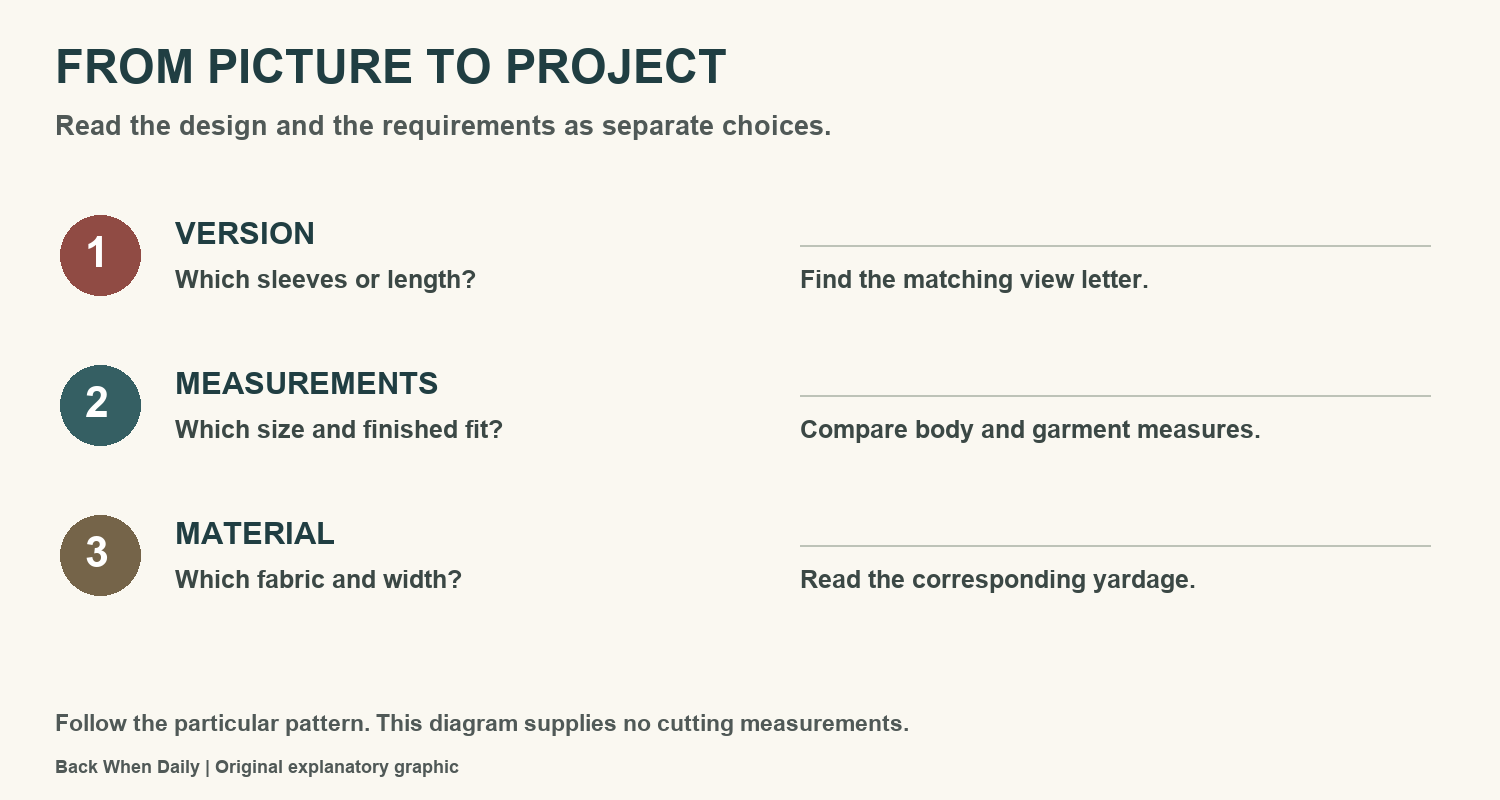
Choosing a sewing pattern meant choosing more than a picture
Original explanatory graphic by Back When Daily.
Three decisions behind the picture: version, measurements and material. Original explanatory graphic based on Simplicity’s current envelope guide; not a reproduction of a vintage pattern.
Read the story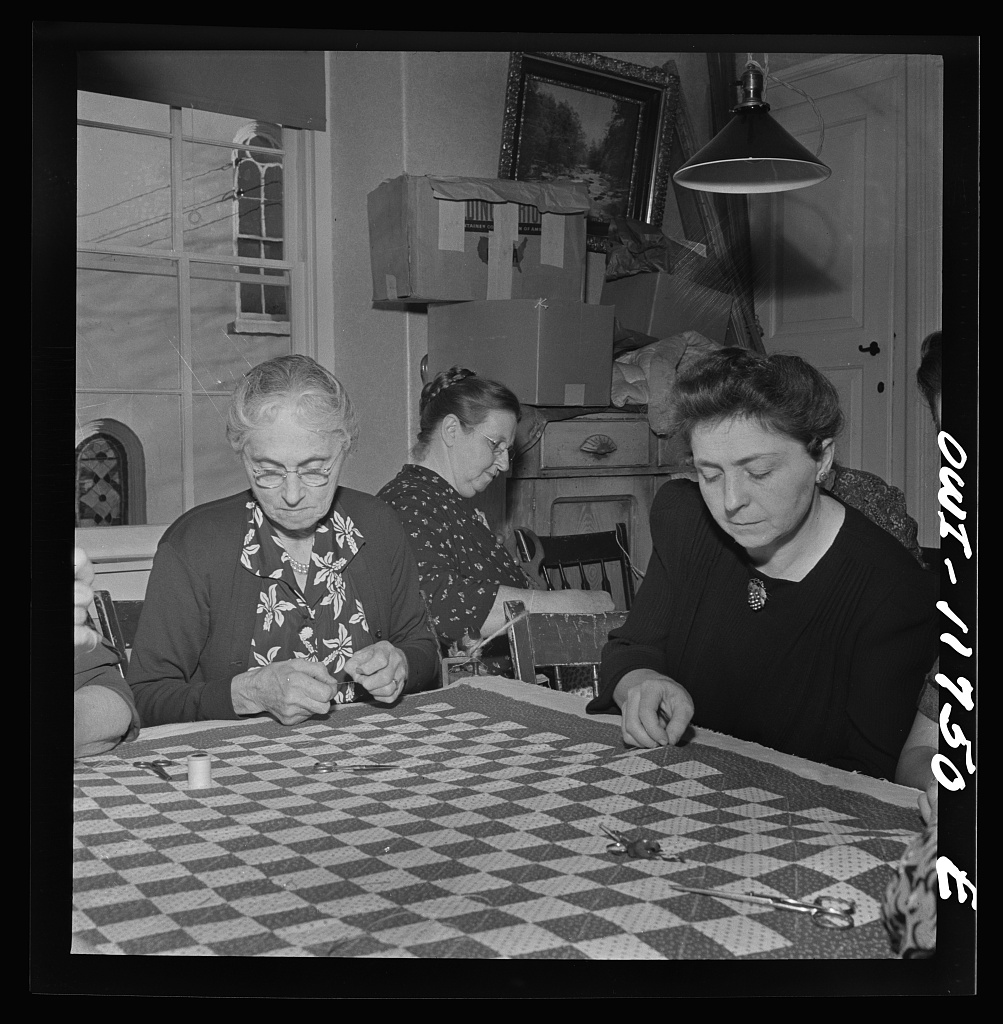
Choosing a sewing pattern meant choosing more than a picture
Marjory Collins / Office of War Information. Public domain (U.S. government work). Source photograph preserved; responsive resizing only.

A different kind of shared sewing: a Moravian quilting circle in Lititz, Pennsylvania, November 1942. Photograph by Marjory Collins, Library of Congress.
Read the story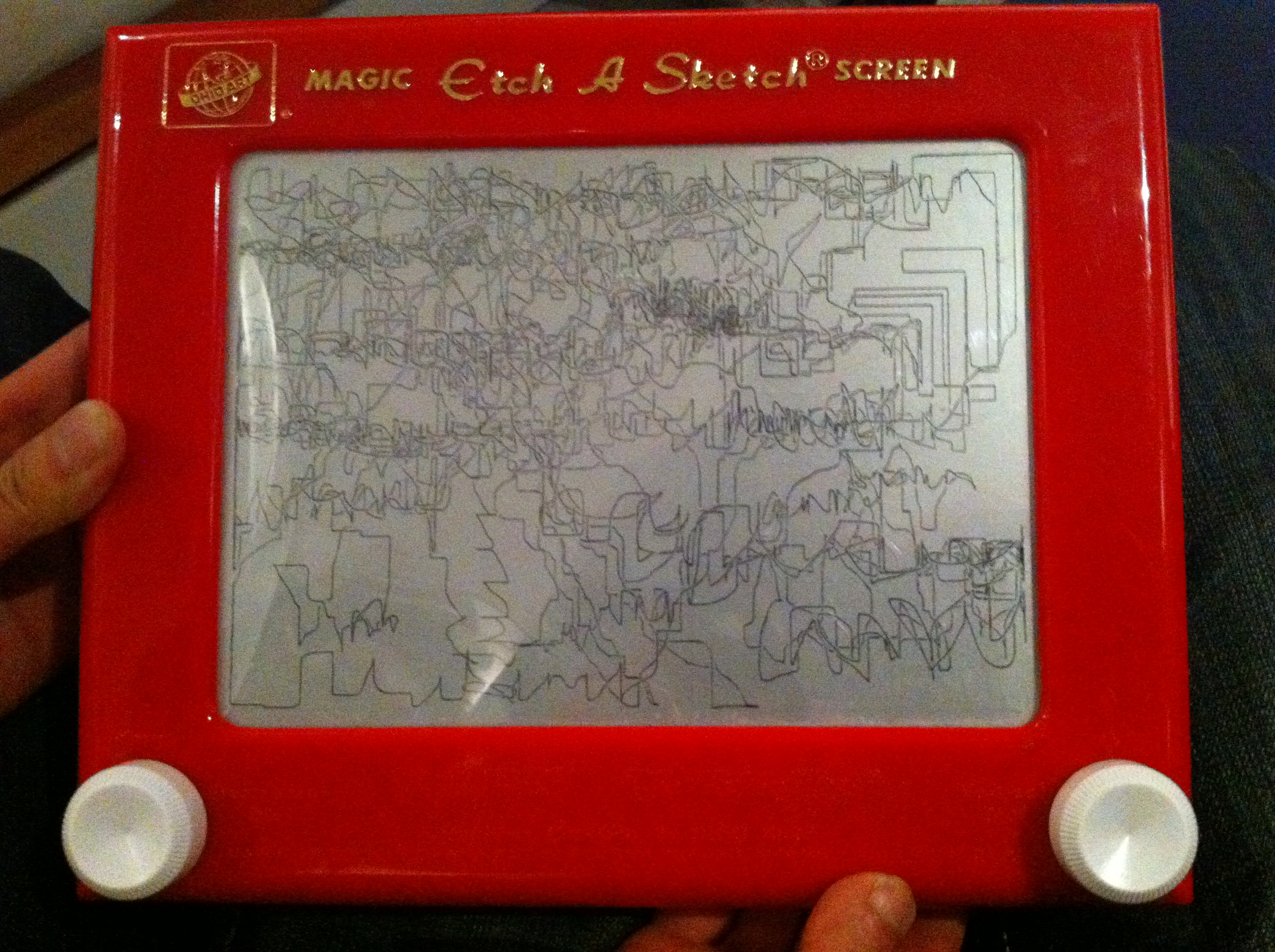
How does an Etch A Sketch draw without ink?
mangtronix. CC BY-SA 2.0. Resized and compressed for responsive display; image remains under CC BY-SA 2.0.

A well-used drawing surface, photographed in 2011.
Read the story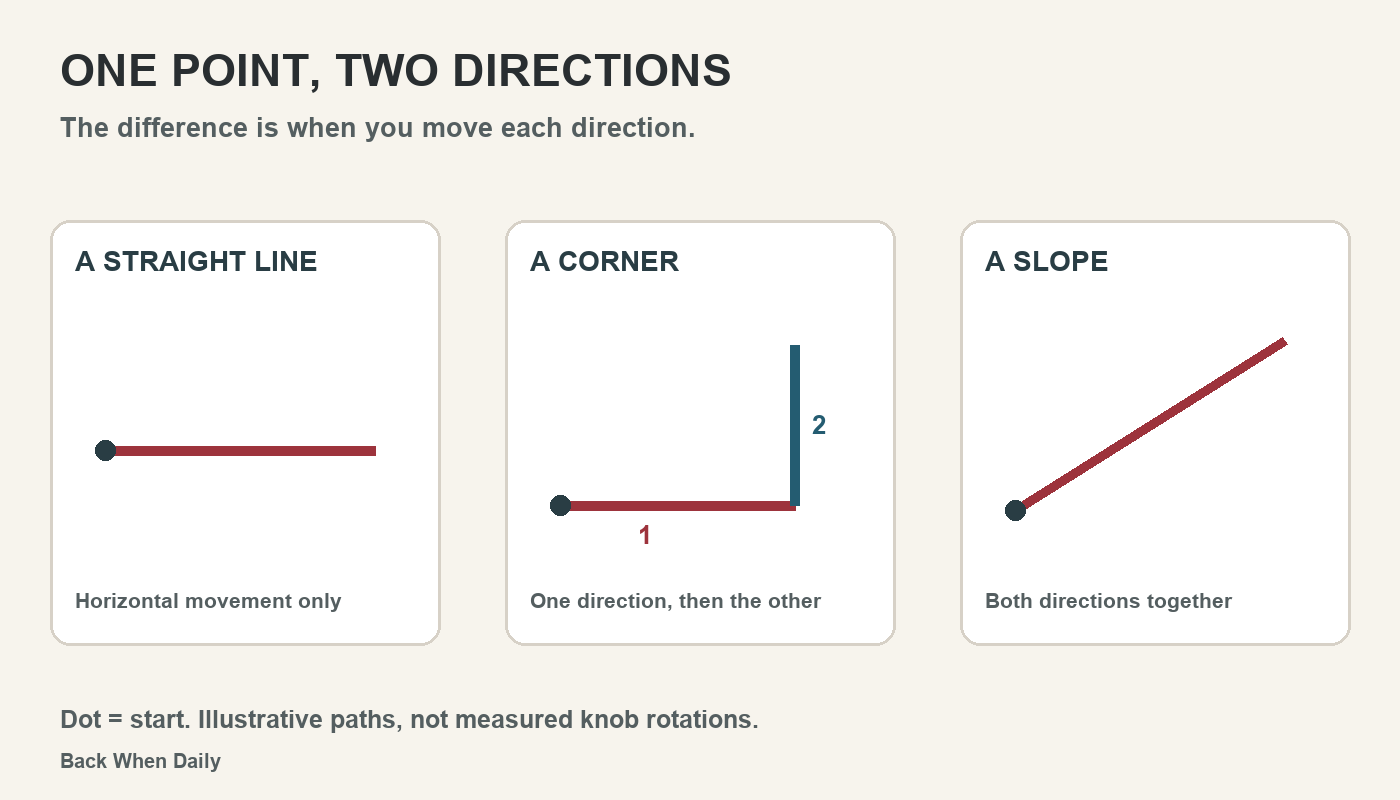
How does an Etch A Sketch draw without ink?
Original explanatory graphic by Back When Daily.
Separate directions make a corner; combined movement makes a slope. Original explanatory diagram, with illustrative paths rather than measured knob rotations.
Read the story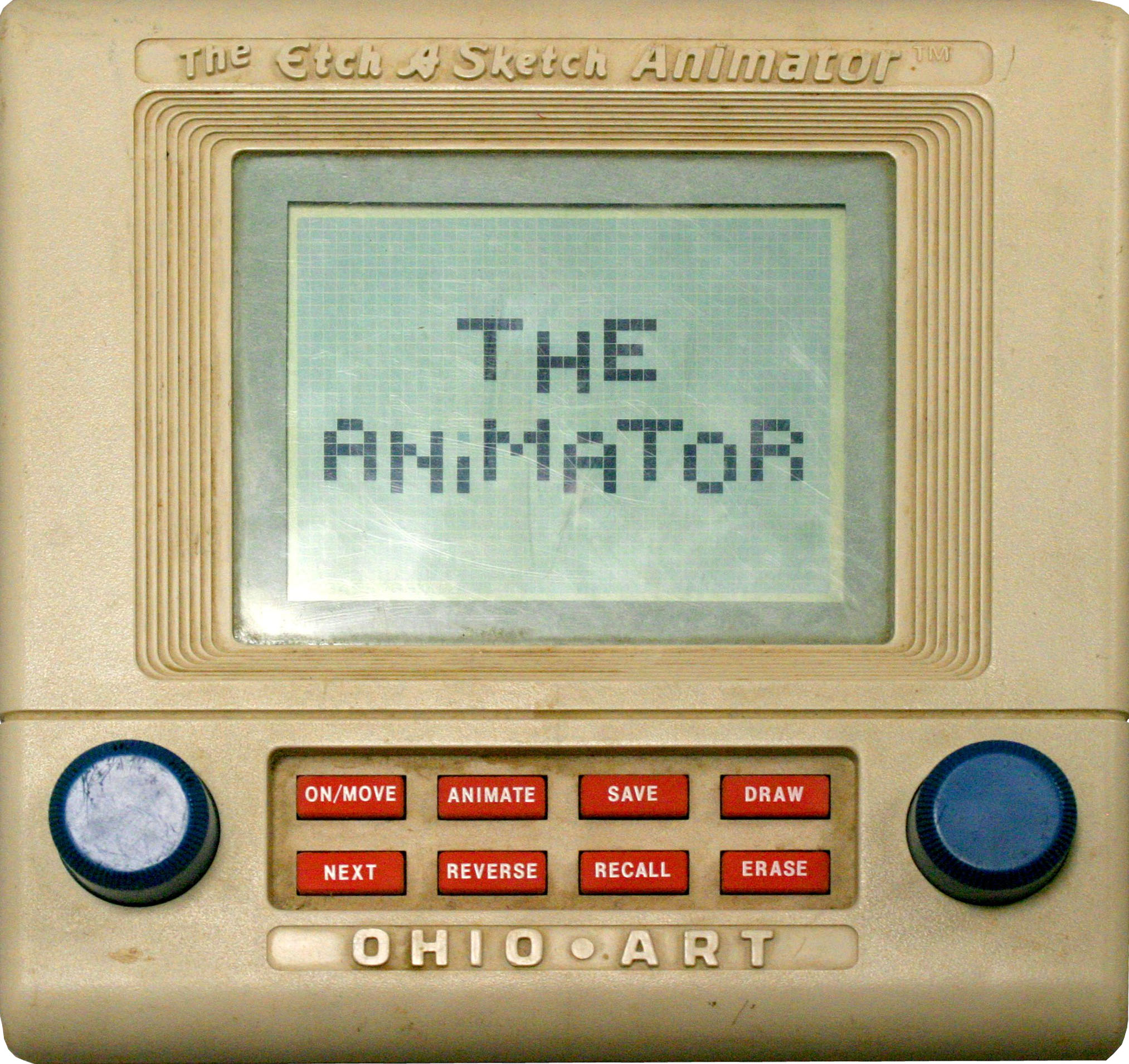
How does an Etch A Sketch draw without ink?
Tim Morgan (attributed by Wikimedia Commons). Public domain (uploader release). Source photograph preserved; responsive resize only.

The electronic Animator, photographed in 2005. Its function buttons and pixel display distinguish it from the classic powder-and-stylus toy. Public-domain photo credited to Tim Morgan on Wikimedia Commons.
Read the story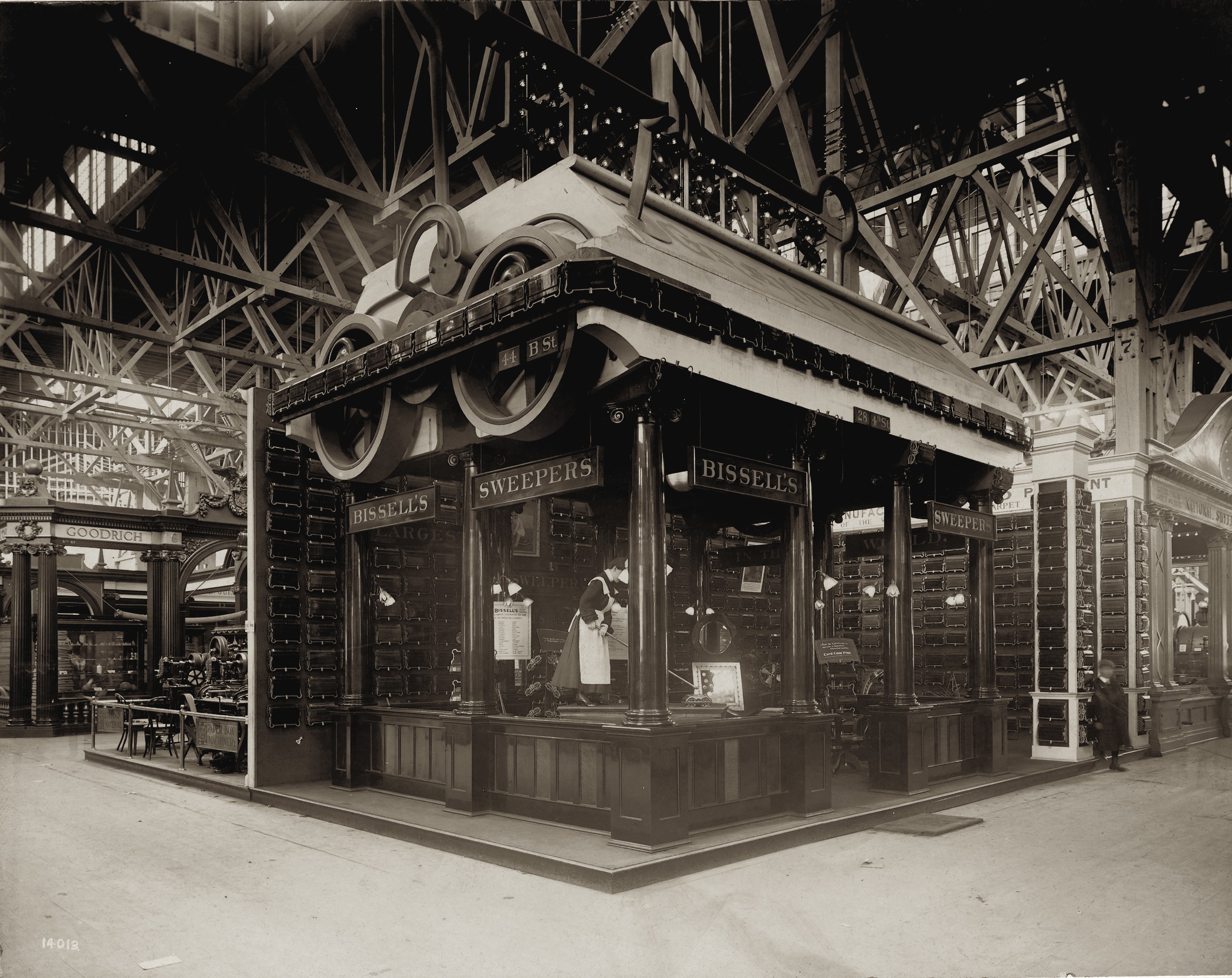
How did a carpet sweeper clean without electricity?
Official Photographic Company. Public domain in United States (published1904; faithful reproduction). Original source unchanged; responsive derivatives resize only; no generative alteration.

Bissell’s display at the 1904 St. Louis World’s Fair. Official Photographic Company, Missouri History Museum.
Read the story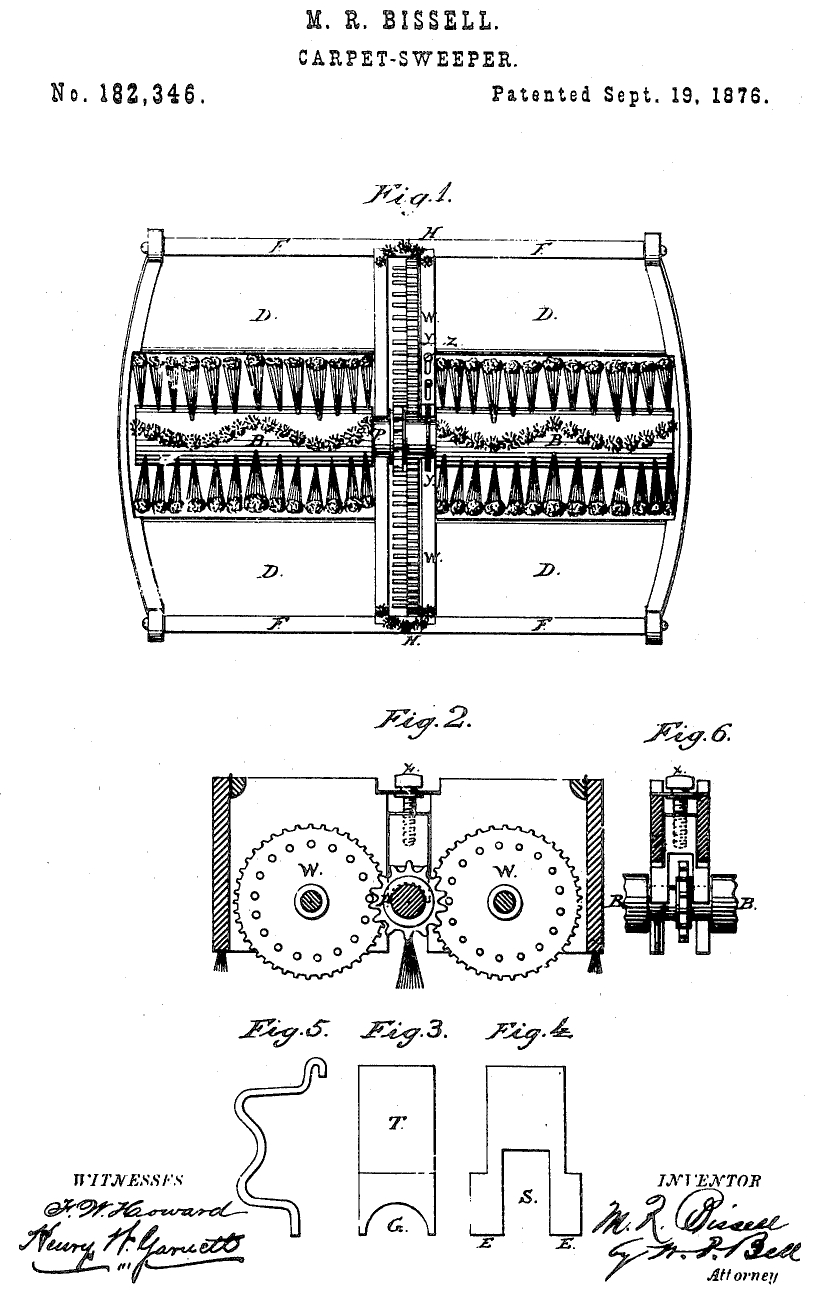
How did a carpet sweeper clean without electricity?
Melville R. Bissell. Public domain (1876patent drawing). Original source unchanged; responsive derivatives resize only; no generative alteration.

U.S. Patent 182,346, September 19, 1876. Figure 1 shows the underside; Figure 2 reveals the wheel-and-pinion connection.
Read the story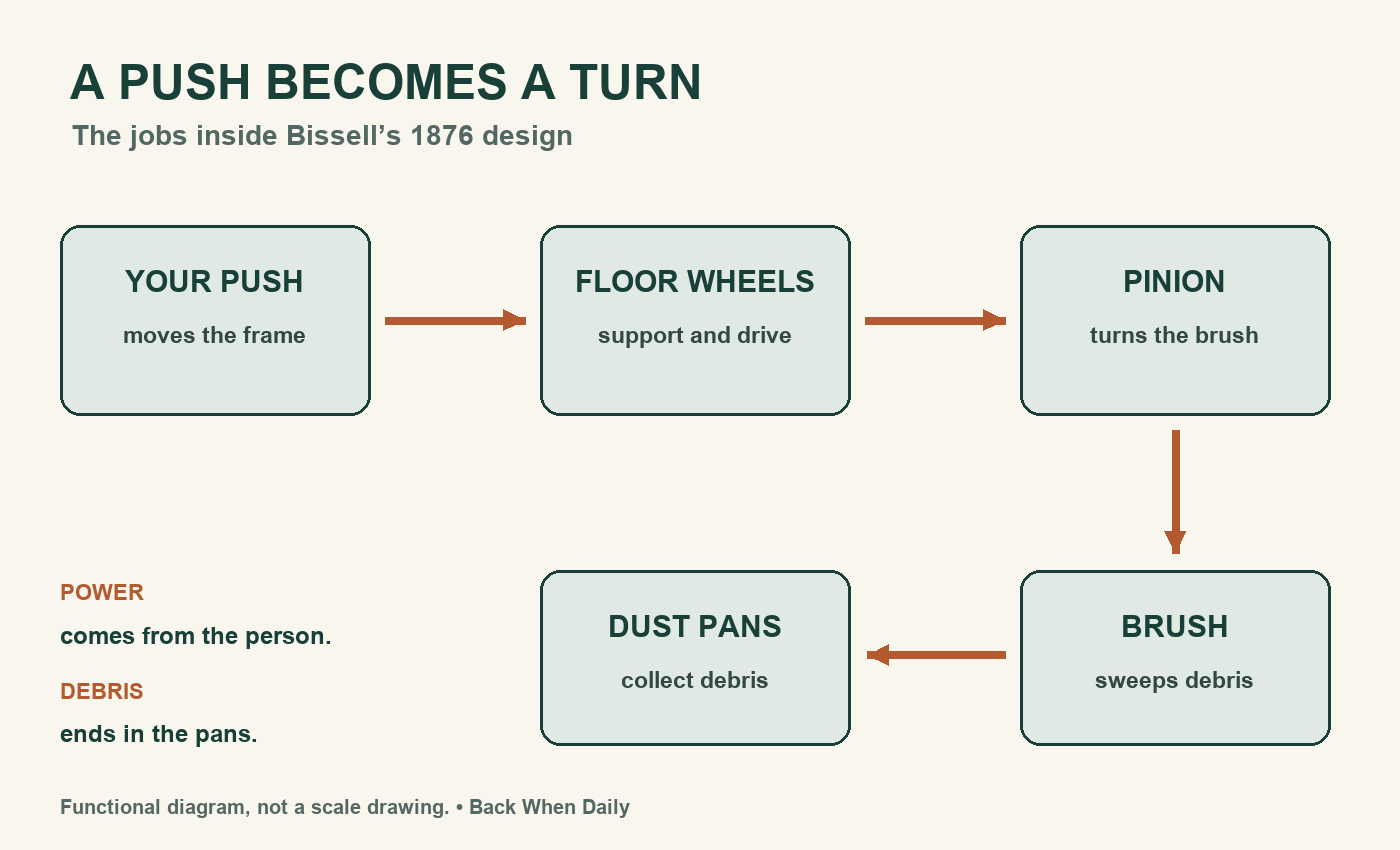
How did a carpet sweeper clean without electricity?
Back When Daily. Original Back When Daily graphic. Original conventional Pillow graphic.
The power path, simplified from the 1876 patent. Arrows show functional connections, not the physical placement or scale of parts.
Read the story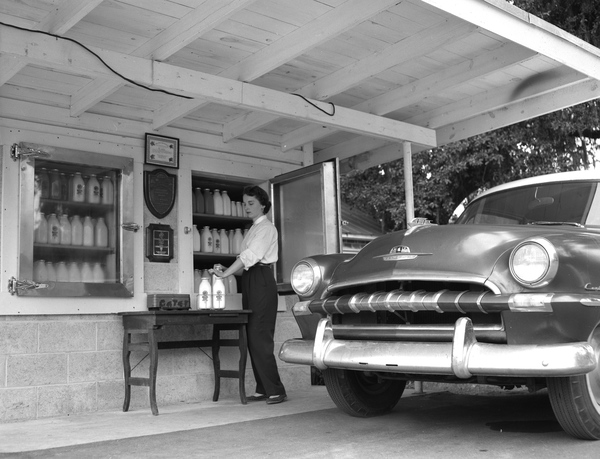
When a milk run meant stopping at the dairy
Tallahassee Democrat (individual photographer not identified). Public domain (State Archives of Florida Public Domain Mark). Source image unchanged; responsive copies resized. No generative alteration.
Picking up milk at Willis Dairy, Tallahassee, December 3, 1957. Tallahassee Democrat collection, State Archives of Florida.
Read the story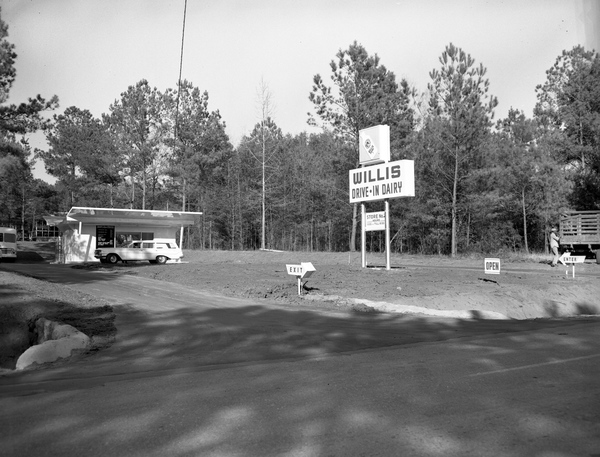
When a milk run meant stopping at the dairy
Tallahassee Democrat (individual photographer not identified). Public domain (State Archives of Florida Public Domain Mark). Source image unchanged; responsive copies resized. No generative alteration.
The roadside approach to a Willis Dairy drive-in facility, January 1963. Tallahassee Democrat collection, State Archives of Florida.
Read the story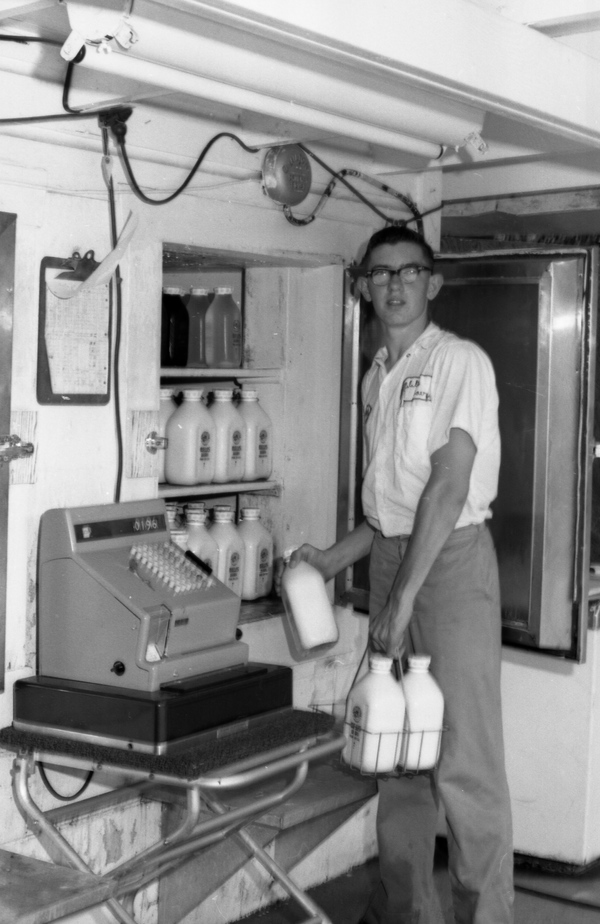
When a milk run meant stopping at the dairy
Ellis Finch. Public domain (State Archives of Florida Public Domain Mark). Source image unchanged; responsive copies resized. No generative alteration.
Tommy Miller at the Centerville Road dairy, August 5, 1964. Photograph by Ellis Finch, Tallahassee Democrat collection, State Archives of Florida.
Read the story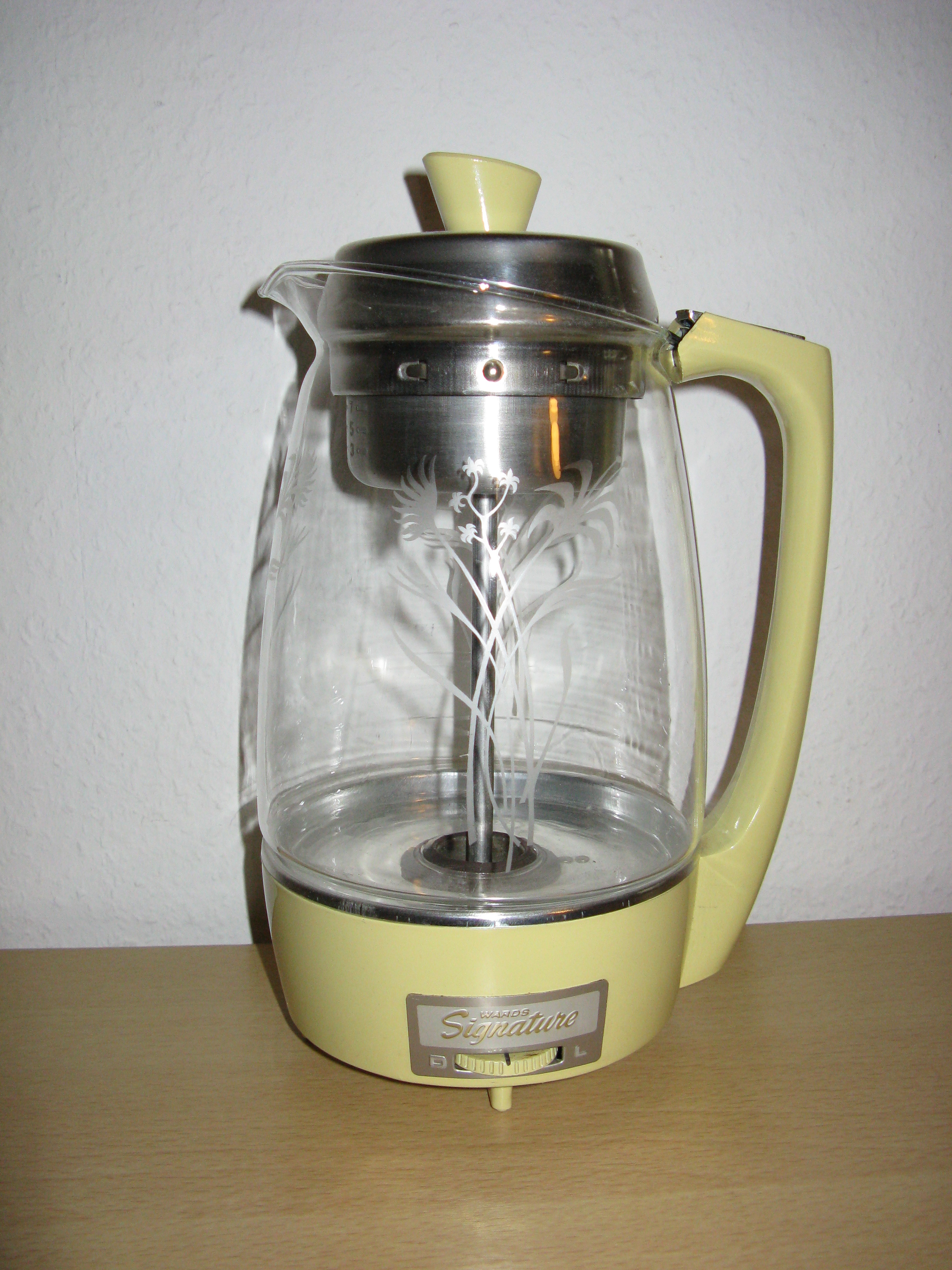
What was the tube inside a coffee percolator for?
Rote Fingur. CC BY-SA 3.0. Original photograph unchanged; responsive resized versions retain the same CC BY-SA 3.0 license.

The glass body makes the basket and rising tube visible. This photograph was taken in 2012; it is not a photograph of a 1950s kitchen.
Read the story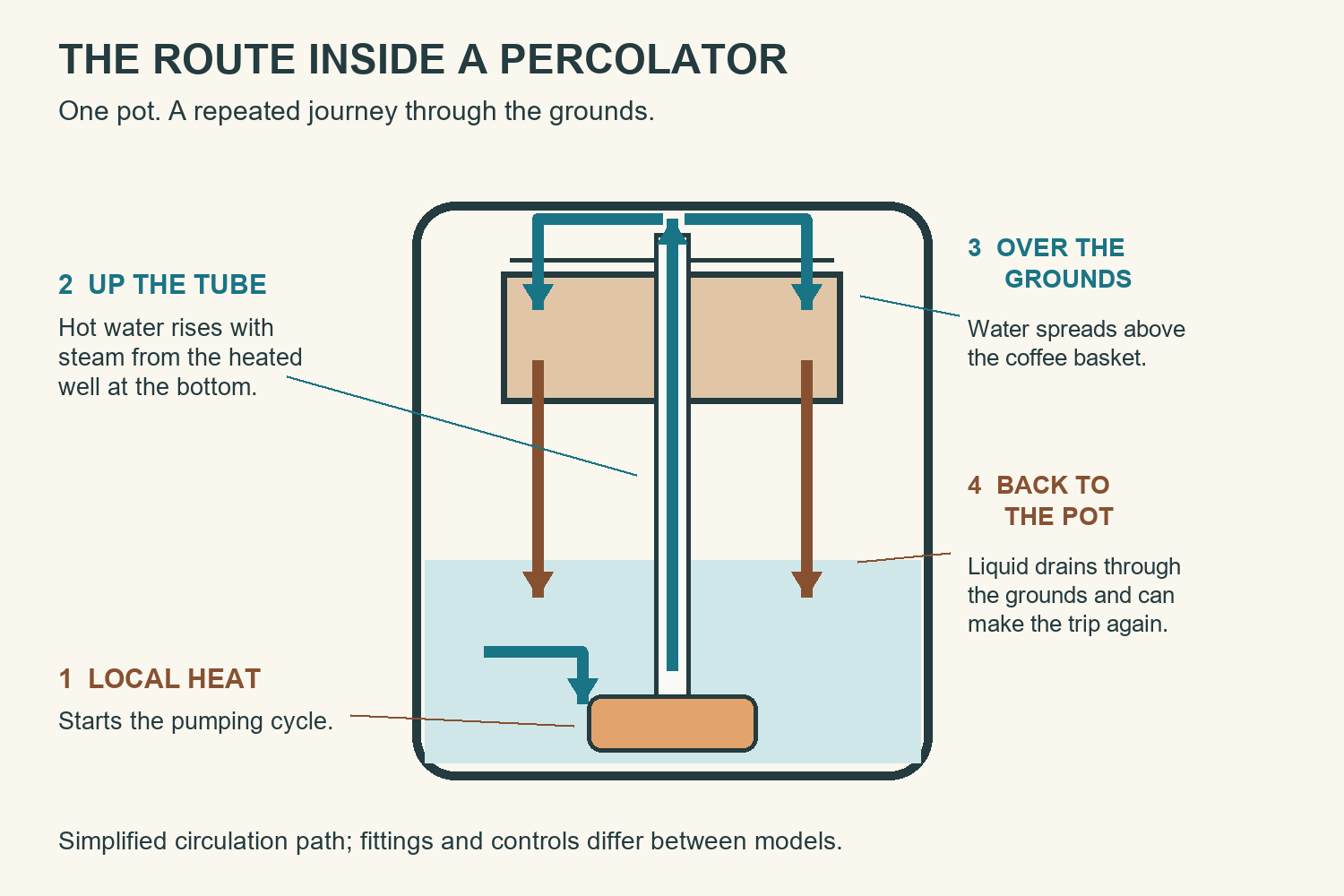
What was the tube inside a coffee percolator for?
Original explanatory graphic by Back When Daily.
A simplified circulation loop: up the stem, through the grounds, and back into the pot. Model-specific valves and electrical controls are omitted.
Read the story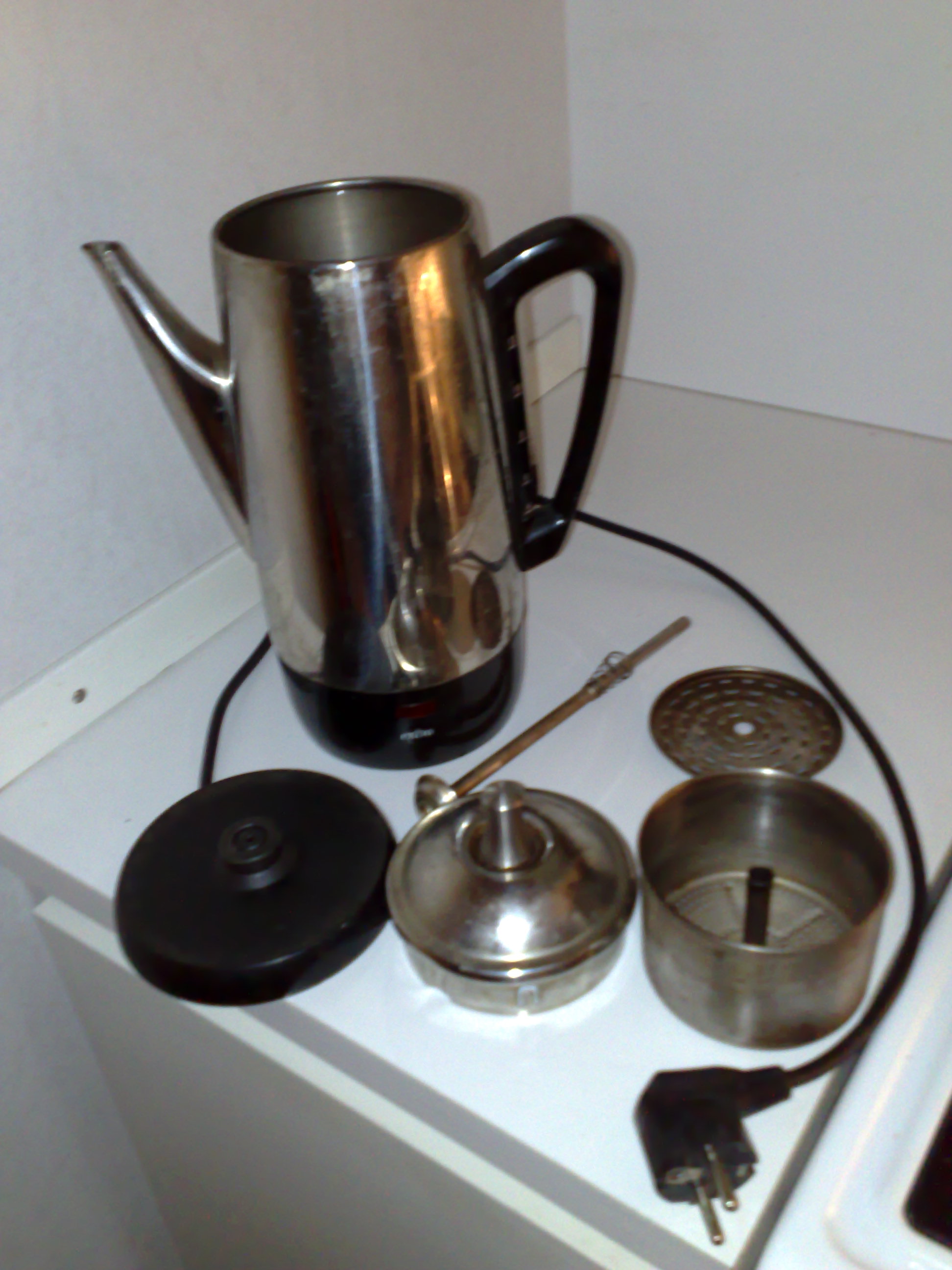
What was the tube inside a coffee percolator for?
Andreaze. Public domain dedication by photographer. Original photograph unchanged; responsive copies resized.


A percolator and its loose components, photographed by Andreaze in 2008. This modern example illustrates the parts rather than a particular American model’s date.
Read the story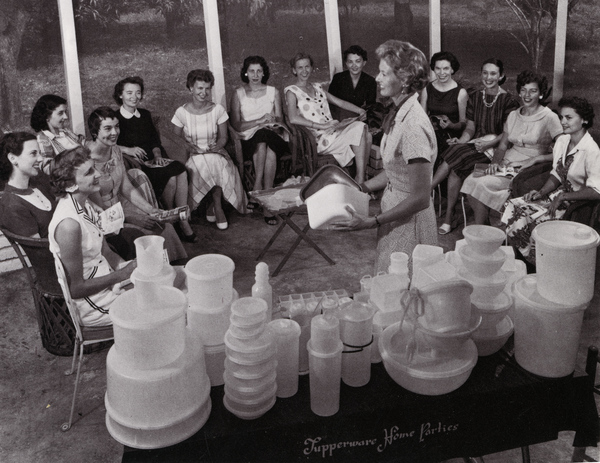
Why was Tupperware sold at house parties?
Joseph Janney Steinmetz / Florida Photographic Collection, State Archives of Florida. Public domain. Resized for display.

A Tupperware home party in Sarasota, Florida, in 1958.
Read the story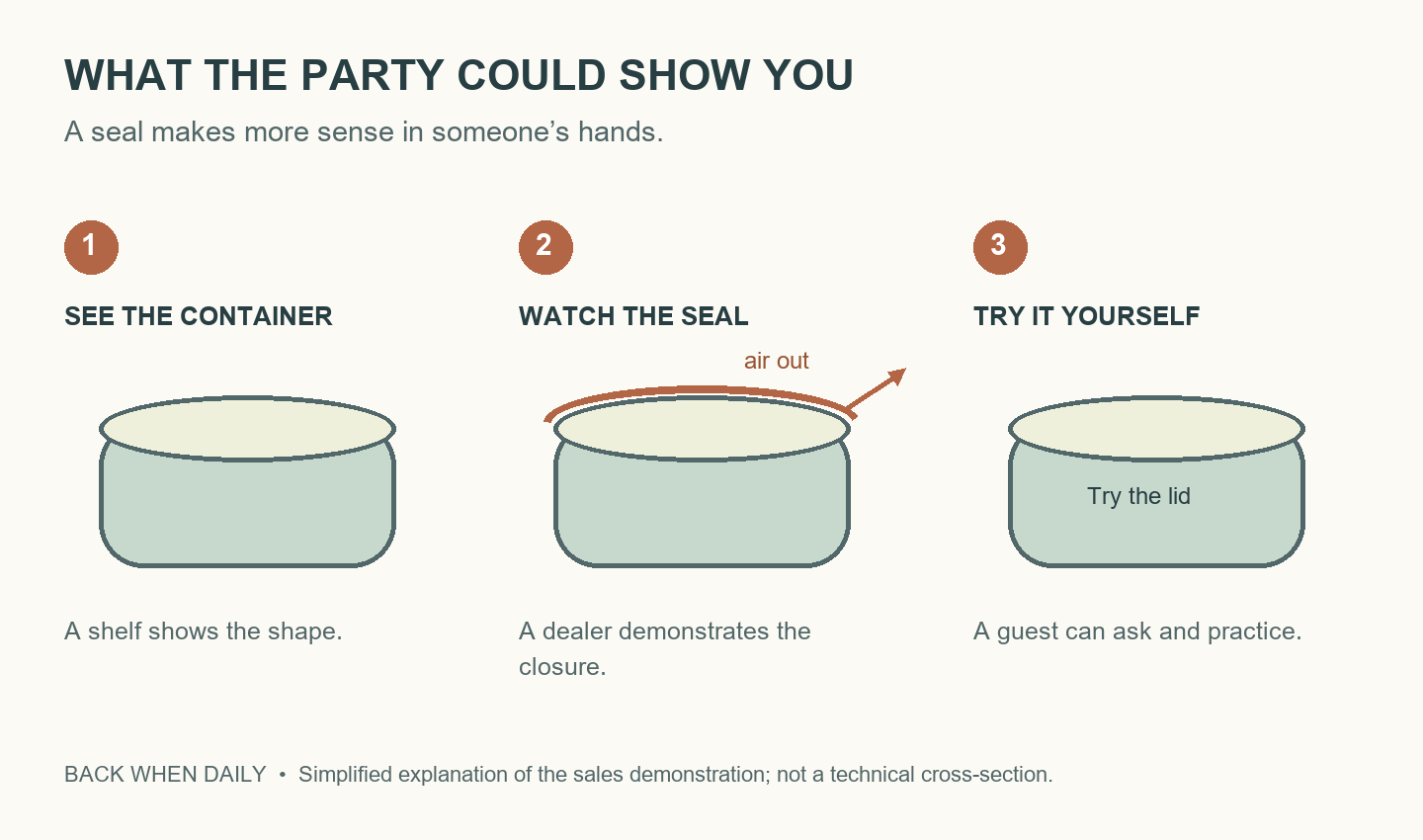
Why was Tupperware sold at house parties?
Original explanatory graphic by Back When Daily.
The party gave a dealer room to explain the closure and a guest time to try it.
Read the story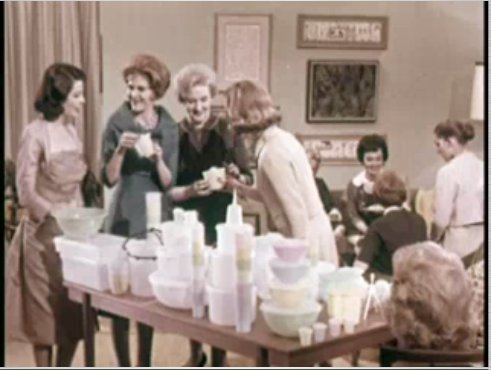
Why was Tupperware sold at house parties?
Tupperware Corporation / Prelinger Archives. Public Domain. Original source JPEG unchanged; metadata retained. Responsive derivatives resize only.

A party scene from a Tupperware Corporation promotional film, preserved by the Prelinger Archives.
Read the story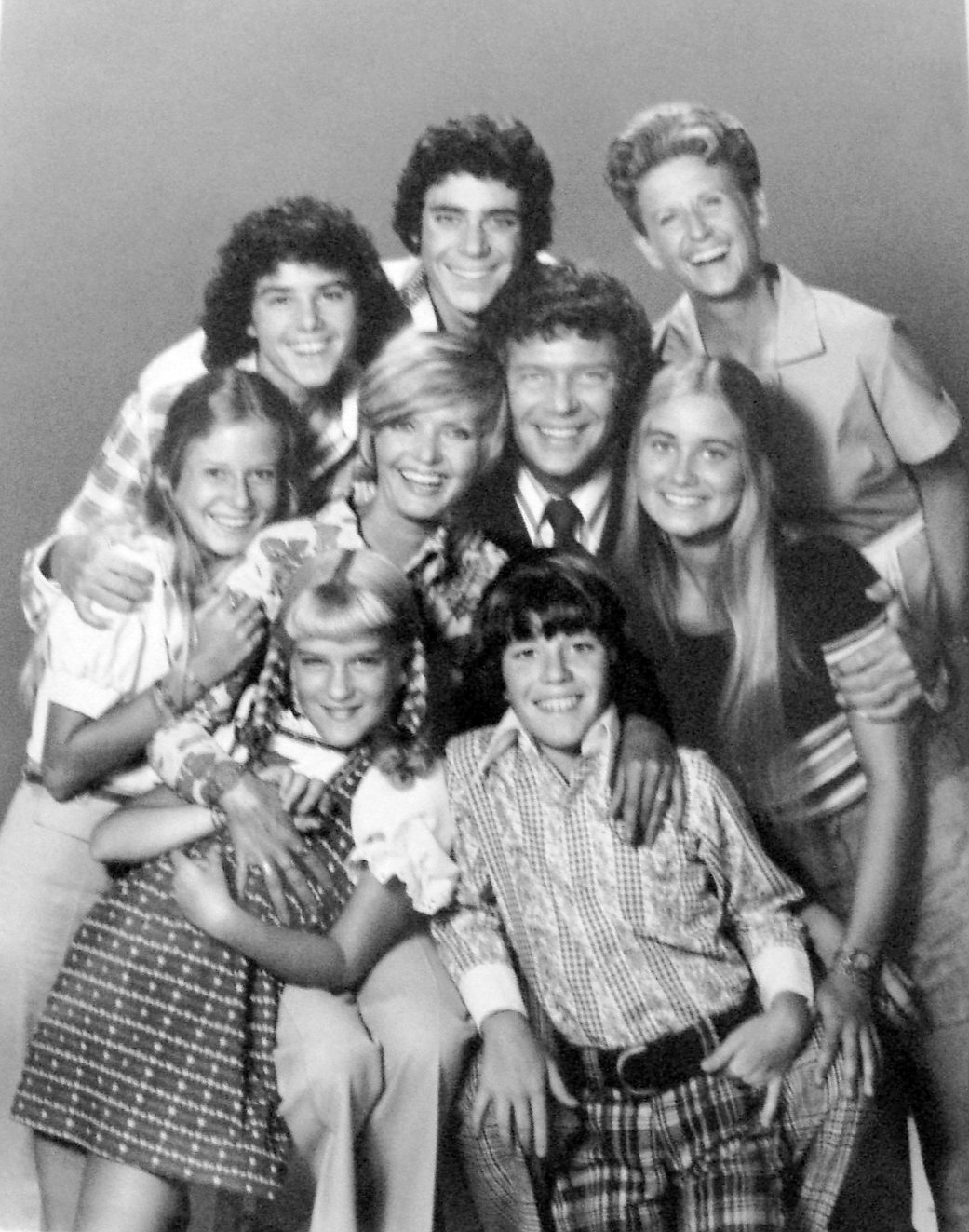
The Brady Bunch premiered in 1969—with a wedding
ABC Television. Public domain. Source JPEG retained unchanged, including embedded metadata. Responsive derivatives resize only.


The Brady Bunch ensemble in a 1973 publicity photograph, four years after the premiere.
Read the story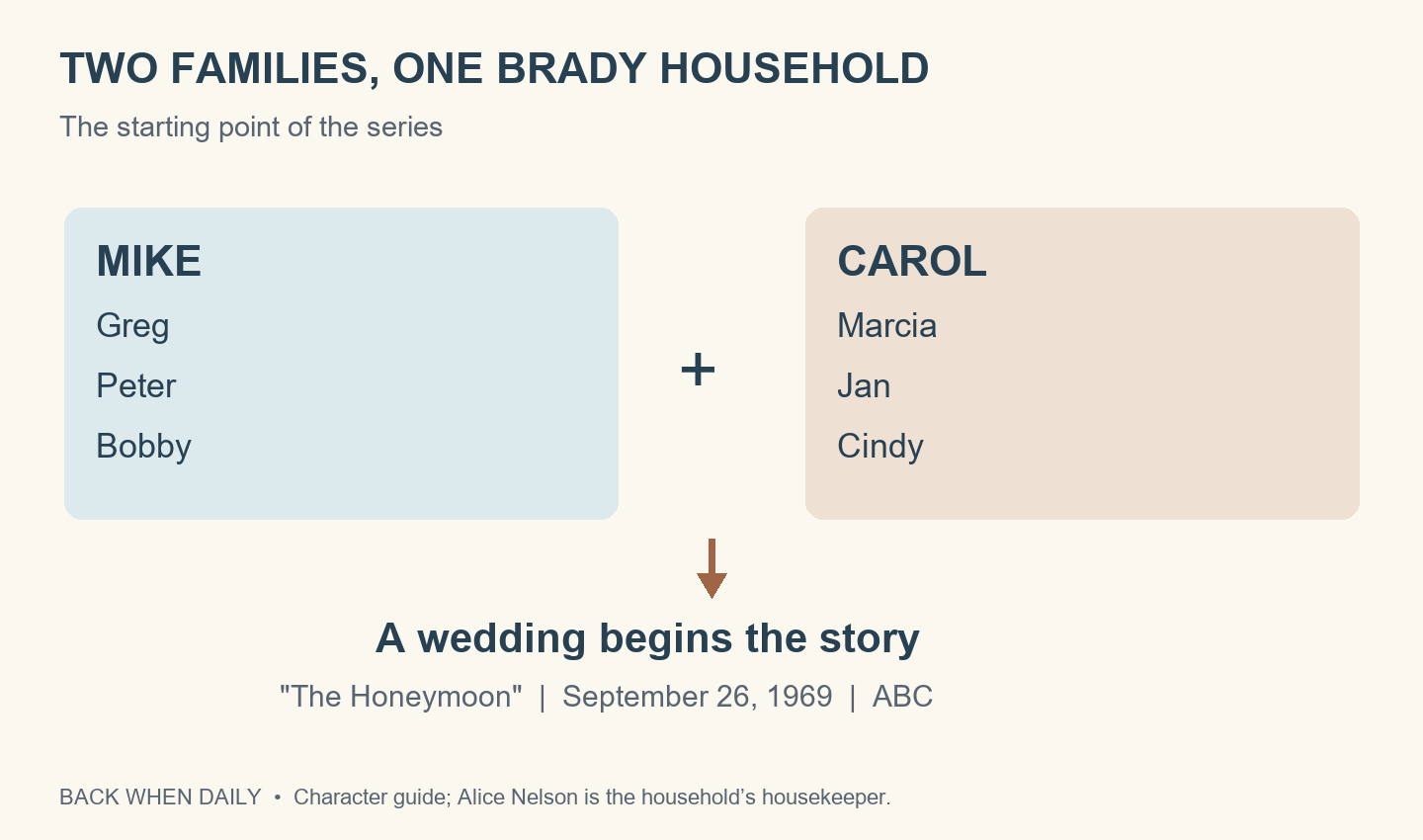
The Brady Bunch premiered in 1969—with a wedding
Original explanatory graphic by Back When Daily.
Mike’s three sons and Carol’s three daughters form the starting point of the series.
Read the story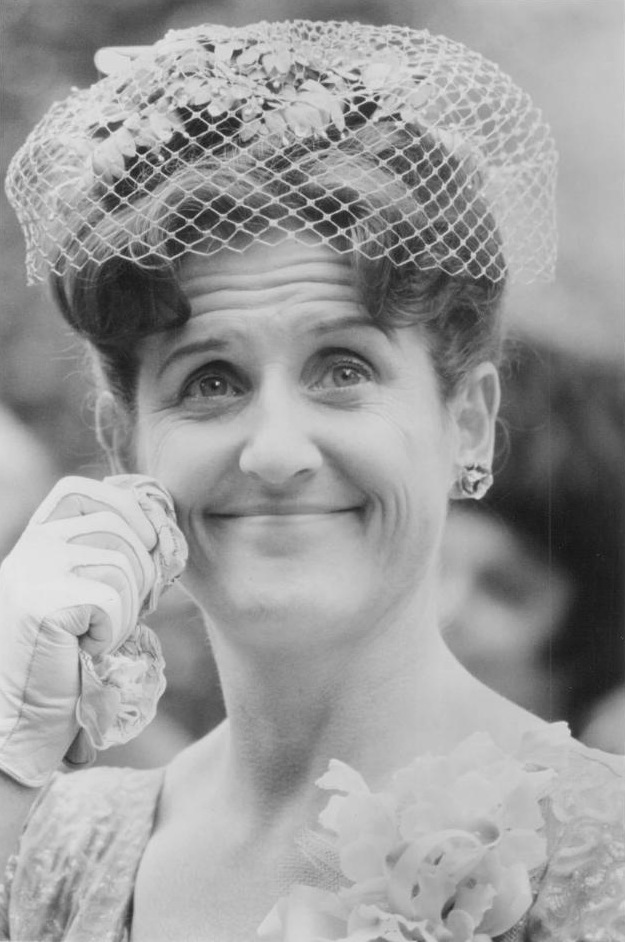
The Brady Bunch premiered in 1969—with a wedding
ABC Television.. Public domain. Source JPEG retained unchanged, including embedded metadata. Responsive derivatives resize only.


Ann B. Davis in a publicity portrait for The Brady Bunch from 1969.
Read the story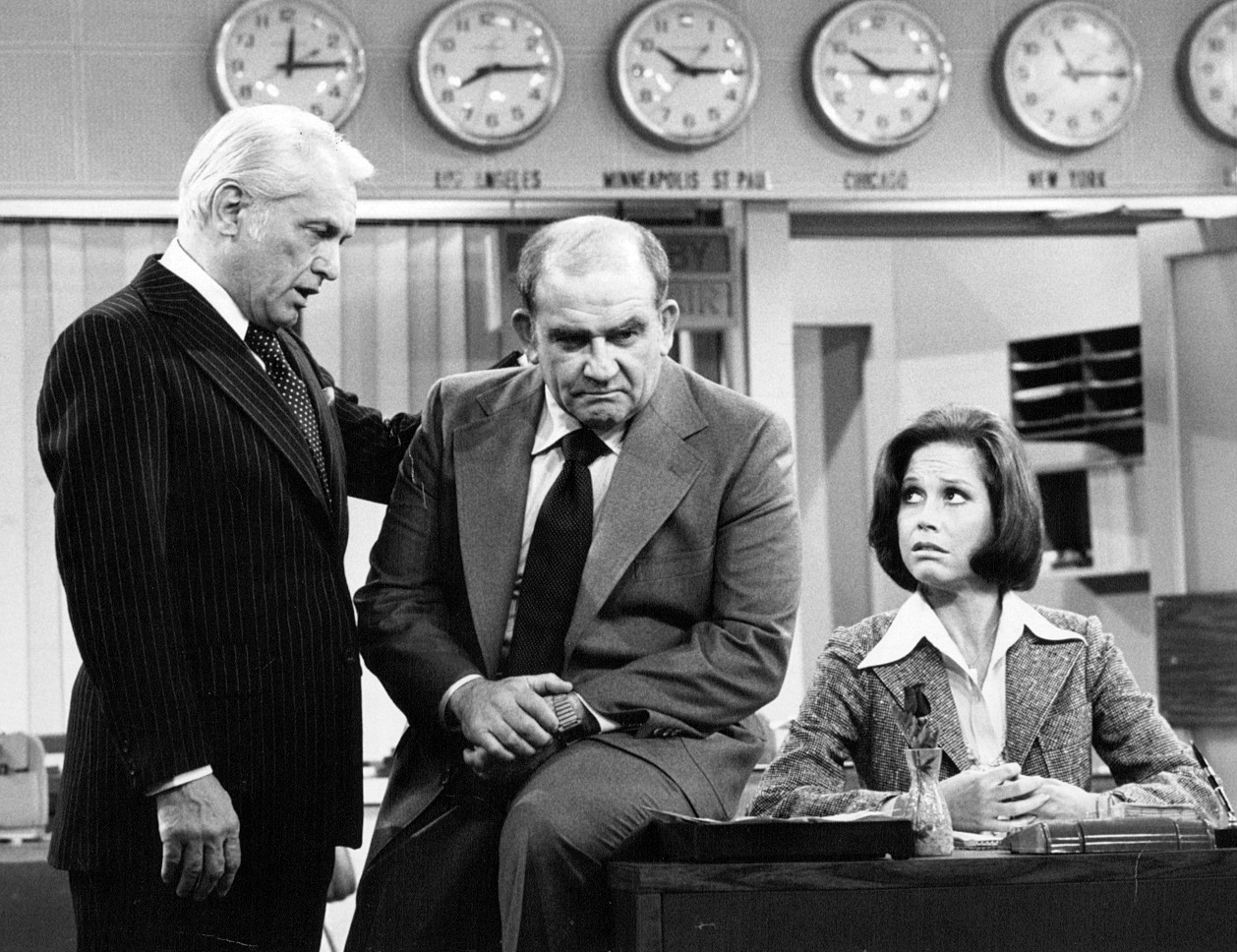
Was Mary Richards’s television station WJM real?
CBS Television. Public domain. Original photograph retained without compositing. Responsive versions resize the photograph.


Ted Knight, Ed Asner and Mary Tyler Moore in a publicity photograph for the series finale.
Read the story
Was Mary Richards’s television station WJM real?
Original explanatory graphic by Back When Daily.
Mary worked behind the broadcast; Ted Baxter was its on-camera anchor.
Read the story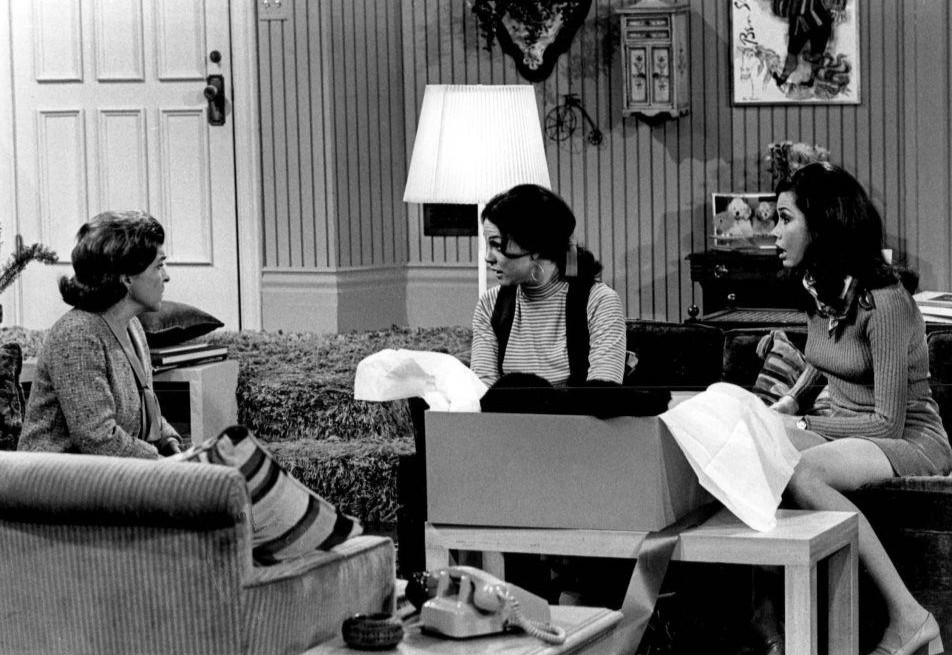
Was Mary Richards’s television station WJM real?
CBS Television. Public domain. Original photograph retained without compositing. Responsive versions resize the photograph.


Nancy Walker as Ida, Mary Tyler Moore as Mary and Valerie Harper as Rhoda in 1970.
Read the story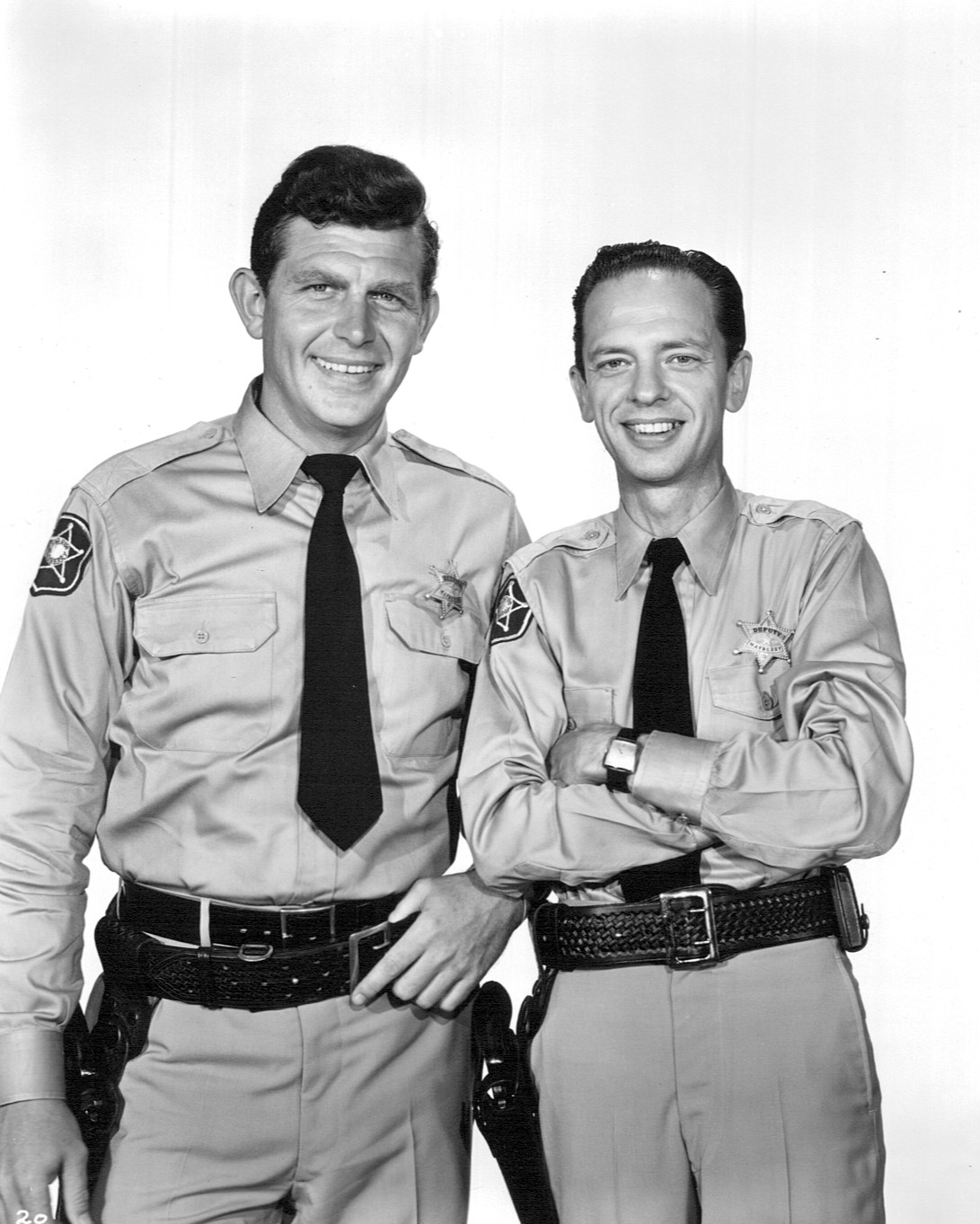
Who whistled The Andy Griffith Show theme? Earle Hagen’s role
Rogers & Cowan, Beverly Hills-publicity agency / Wikimedia Commons. Public domain. Original photograph retained without visual alteration; responsive copies resized and compressed.


Andy Griffith and Don Knotts in a publicity photograph from 1960.
Read the story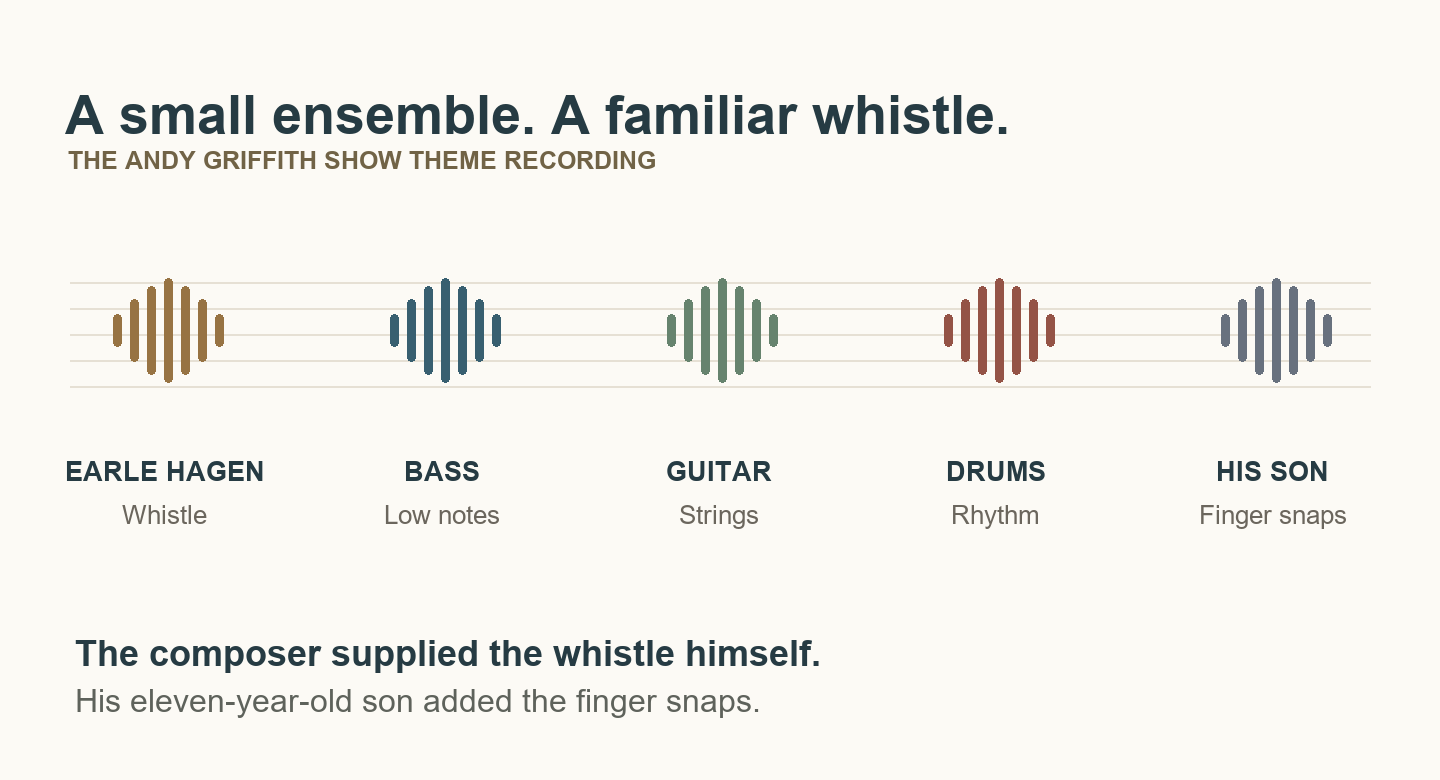
Who whistled The Andy Griffith Show theme? Earle Hagen’s role
Original explanatory graphic by Back When Daily.
Earle Hagen’s whistle led a small ensemble; his son supplied the finger snaps.
Read the story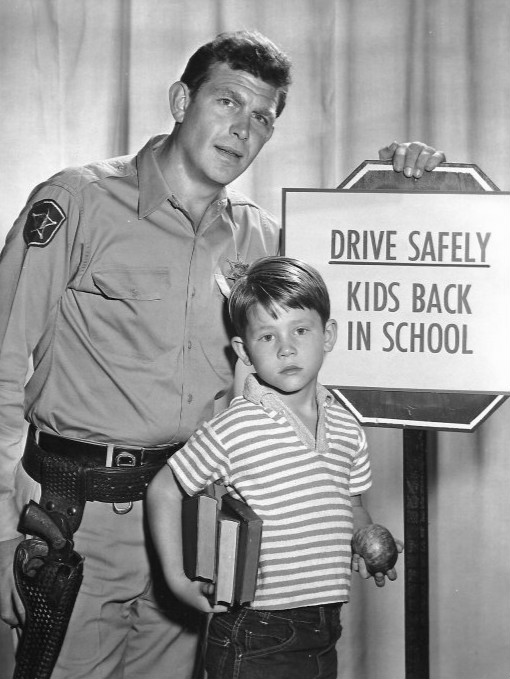
Who whistled The Andy Griffith Show theme? Earle Hagen’s role
CBS Television / Wikimedia Commons. Public domain. Original photograph retained without visual alteration; responsive copies resized and compressed.


Andy Griffith and Ron Howard in a 1961 school-safety publicity photograph.
Read the story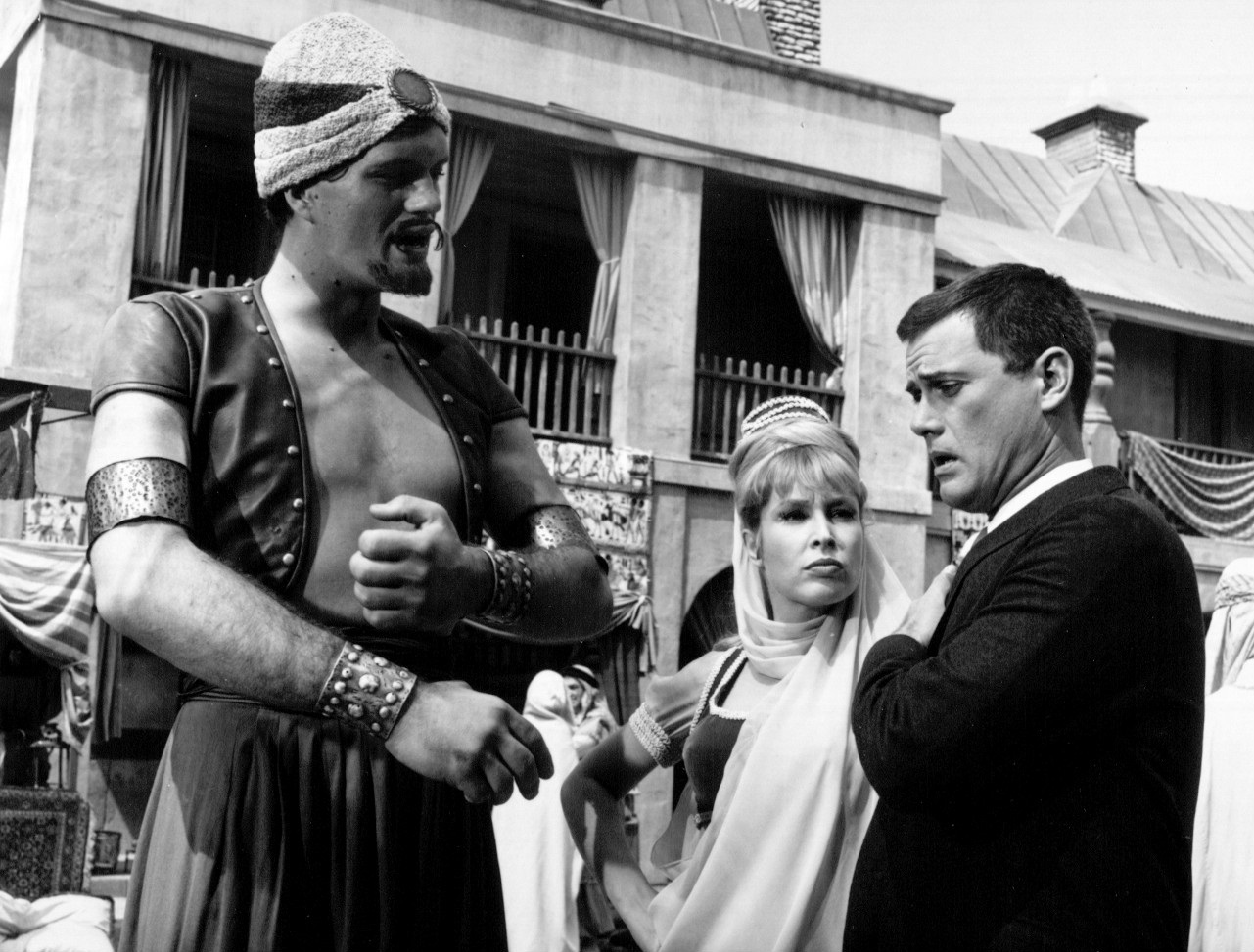
I Dream of Jeannie: the blink that turned Tony Nelson’s day upside down
NBC Television / Wikimedia Commons. Public domain. Original photograph retained without visual alteration; responsive copies resized and compressed.


Richard Kiel, Barbara Eden and Larry Hagman in a 1965 publicity photograph for “My Hero?”
Read the story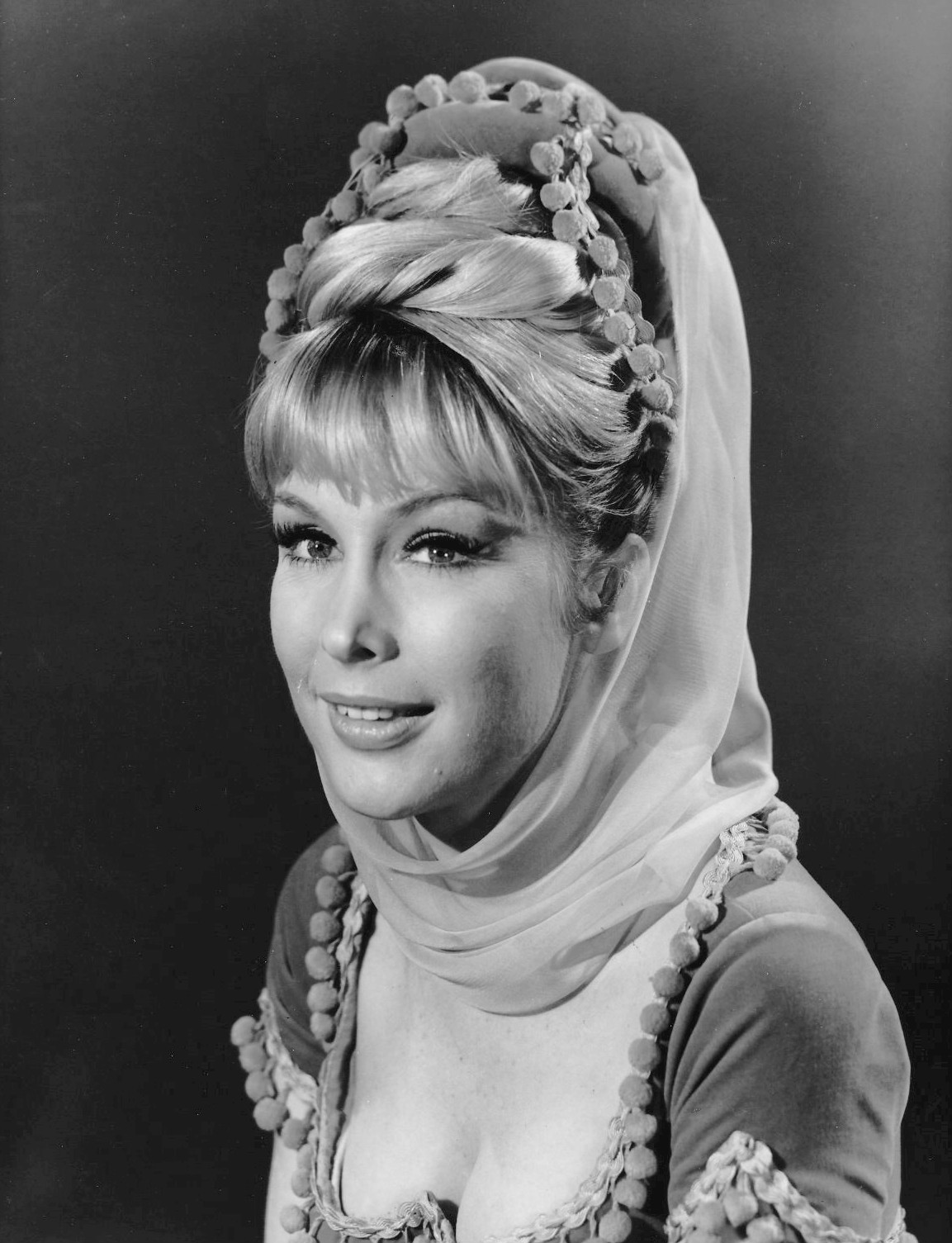
I Dream of Jeannie: the blink that turned Tony Nelson’s day upside down
NBC Television Uploaded by We hope at en.wikipedia / Wikimedia Commons. Public domain. Original photograph retained without visual alteration; responsive copies resized and compressed.


Barbara Eden as Jeannie in a publicity photograph circulated in 1966.
Read the story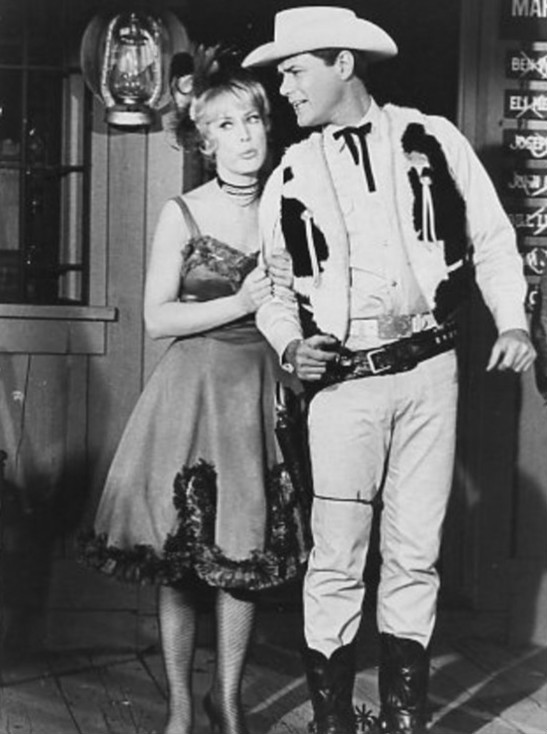
I Dream of Jeannie: the blink that turned Tony Nelson’s day upside down
NBC Television Uploaded by We hope at en.wikipedia / Wikimedia Commons. Public domain. Original photograph retained without visual alteration; responsive copies resized and compressed.


Eden and Hagman in a publicity photograph for the 1966 episode “Fastest Gun in the East.”
Read the story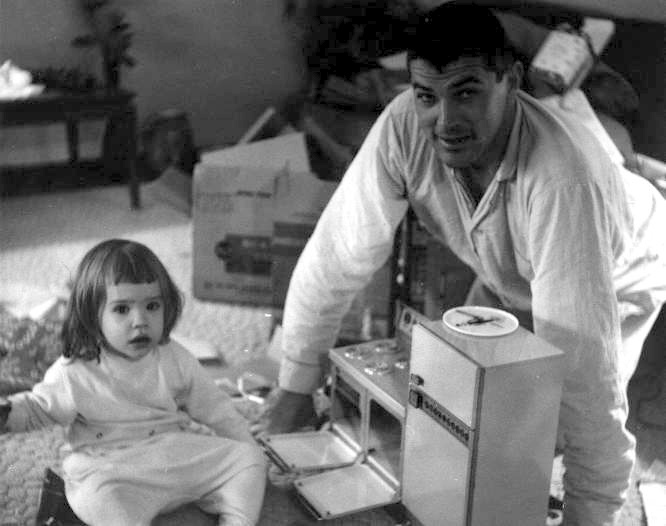
How did an Easy-Bake Oven bake with light bulbs?
Father of JGKlein, used with permission / Wikimedia Commons. Public domain. Original photograph retained without visual alteration; responsive copies resized and compressed.


A father and daughter with an early Easy-Bake Oven in 1963.
Read the story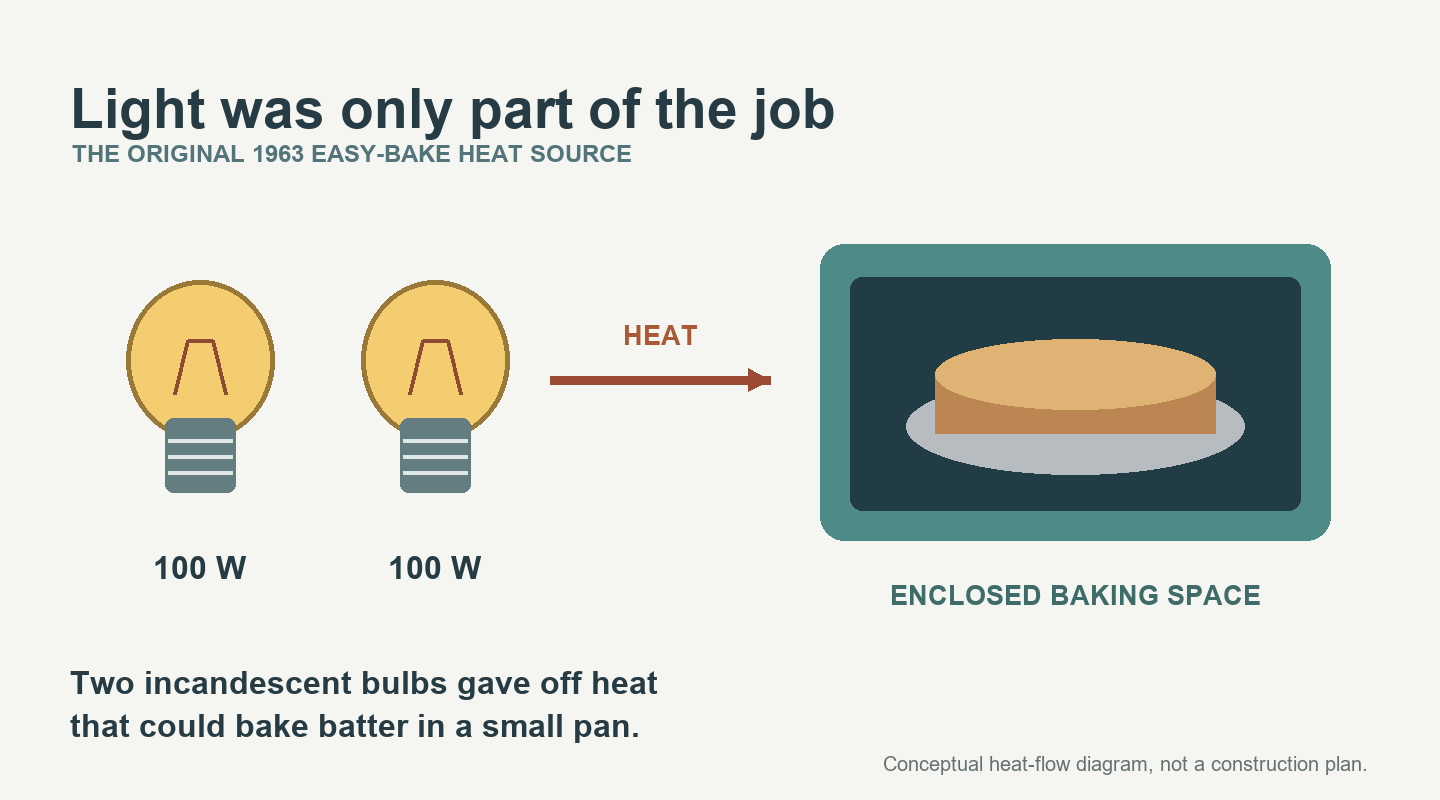
How did an Easy-Bake Oven bake with light bulbs?
Original explanatory graphic by Back When Daily.
The original design used two 100-watt bulbs. This diagram explains the heat flow, not the internal layout of a particular model.
Read the story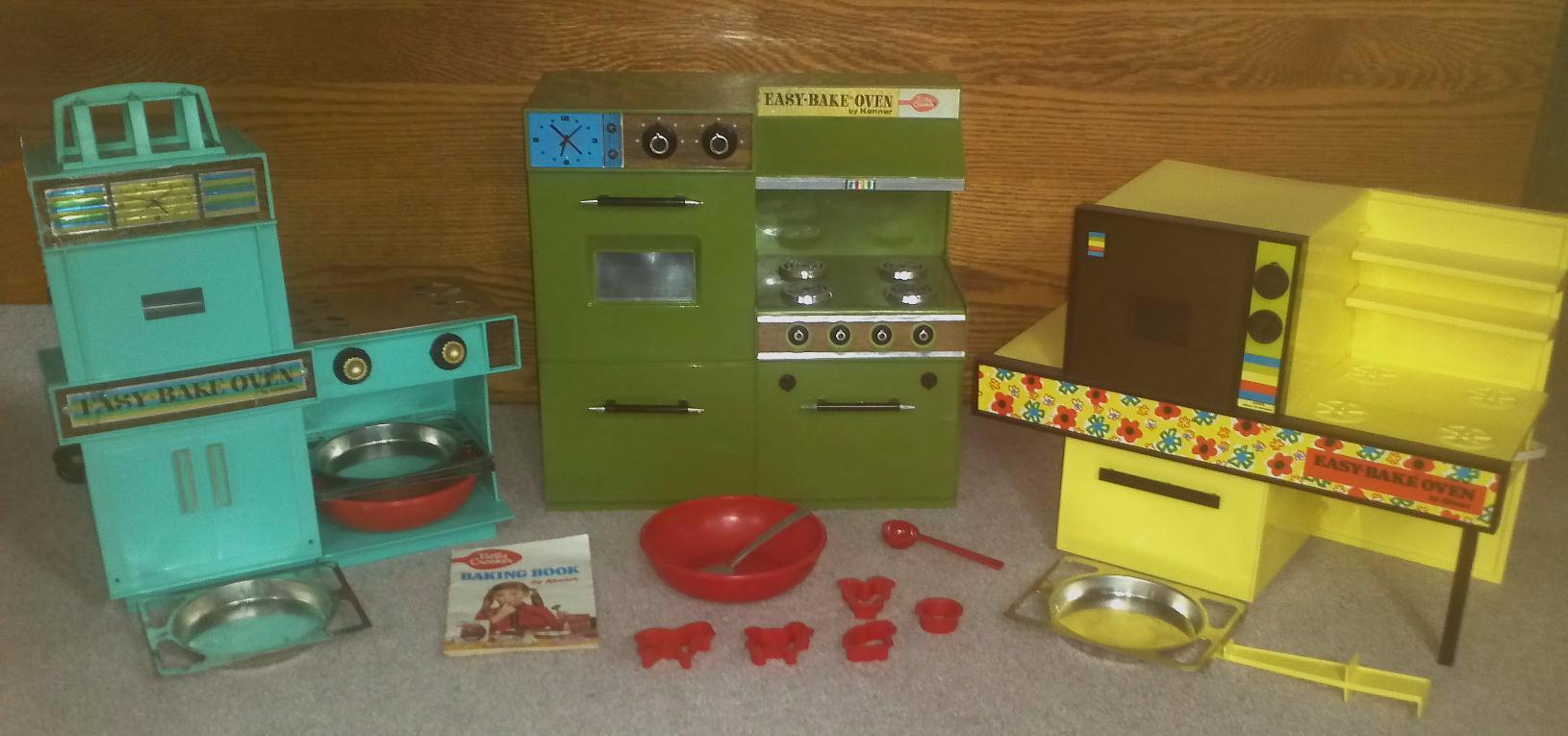
How did an Easy-Bake Oven bake with light bulbs?
Bradross63 / Wikimedia Commons. CC BY-SA 4.0. Original photograph retained without visual alteration; responsive copies resized and compressed.

The 1963 Regular, 1969 Premier and 1971 Mod models, photographed in 2015.
Read the story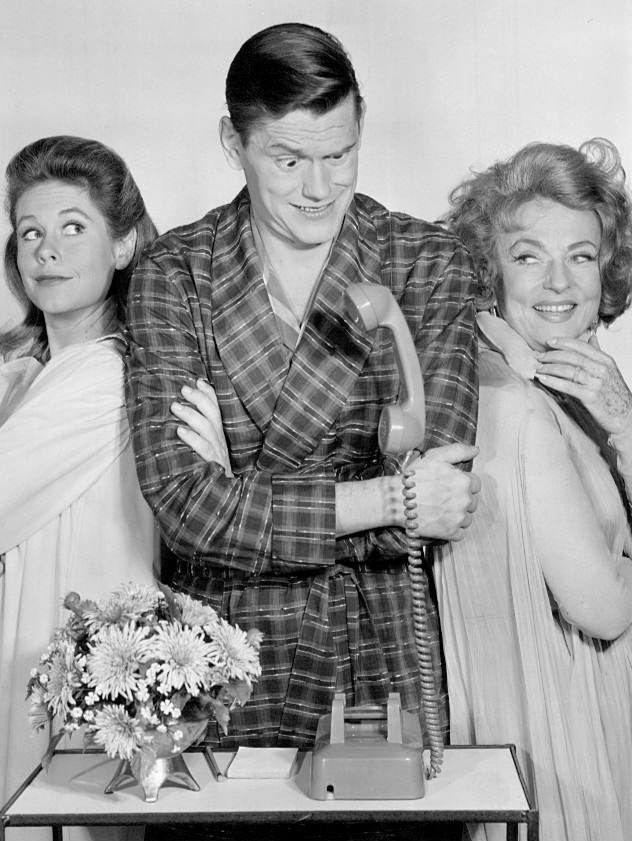
The ordinary suburban world that made Bewitched funny
ABC Television / Wikimedia Commons. Public domain. Original photograph retained without visual alteration; responsive copies resized and compressed.


Elizabeth Montgomery, Dick York and Agnes Moorehead in a 1964 cast photograph.
Read the story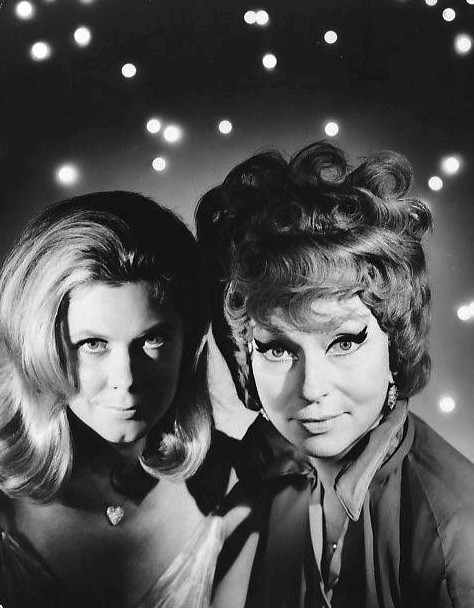
The ordinary suburban world that made Bewitched funny
Screen Gems / Wikimedia Commons. Public domain. Original photograph retained without visual alteration; responsive copies resized and compressed.


Samantha and Endora, portrayed by Elizabeth Montgomery and Agnes Moorehead, in a 1966 publicity photograph.
Read the story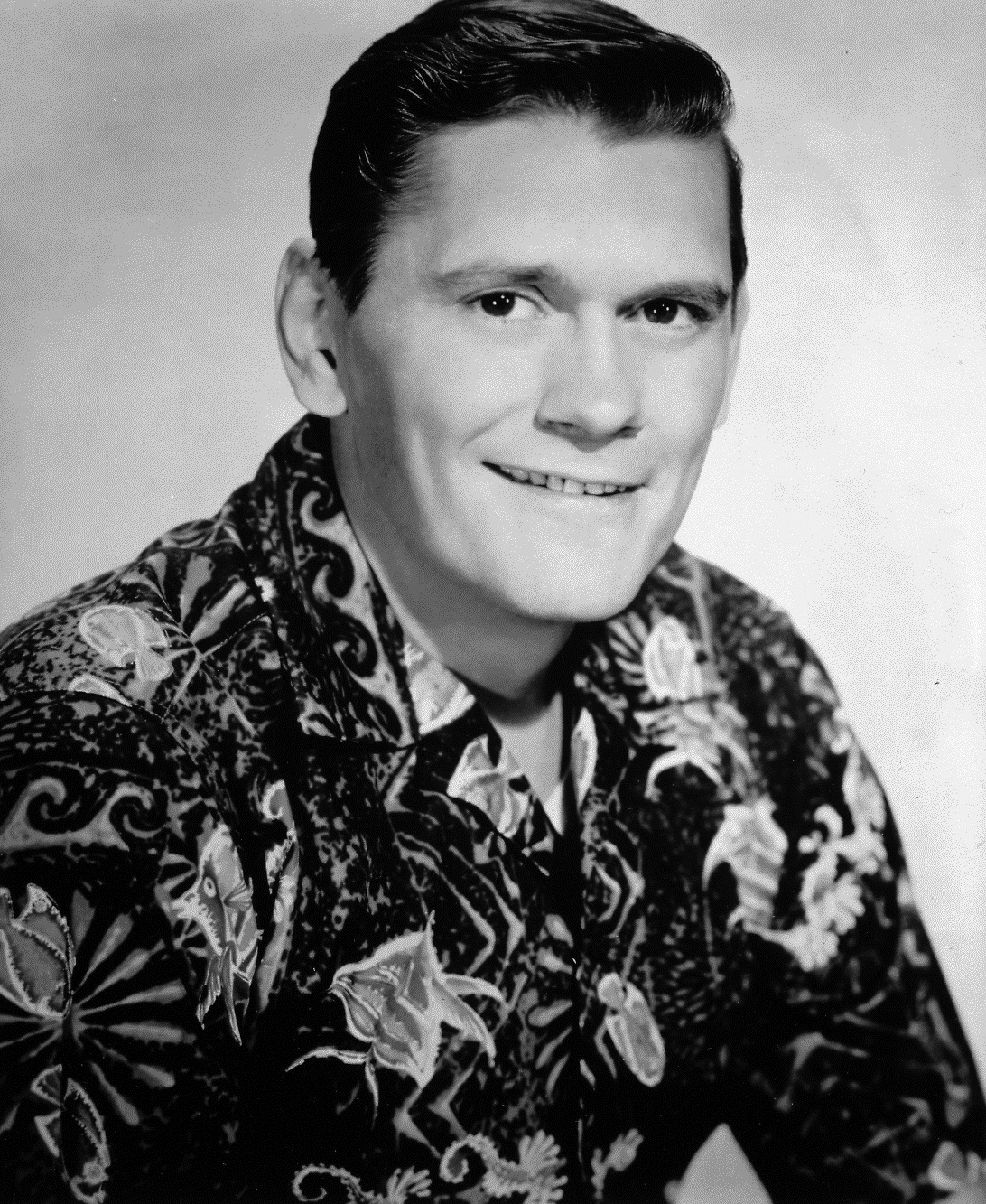
The ordinary suburban world that made Bewitched funny
McDermott Company (public relations) / Wikimedia Commons. Public domain. Original photograph retained without visual alteration; responsive copies resized and compressed.


Dick York, the first actor to play Darrin Stephens, in 1965.
Read the story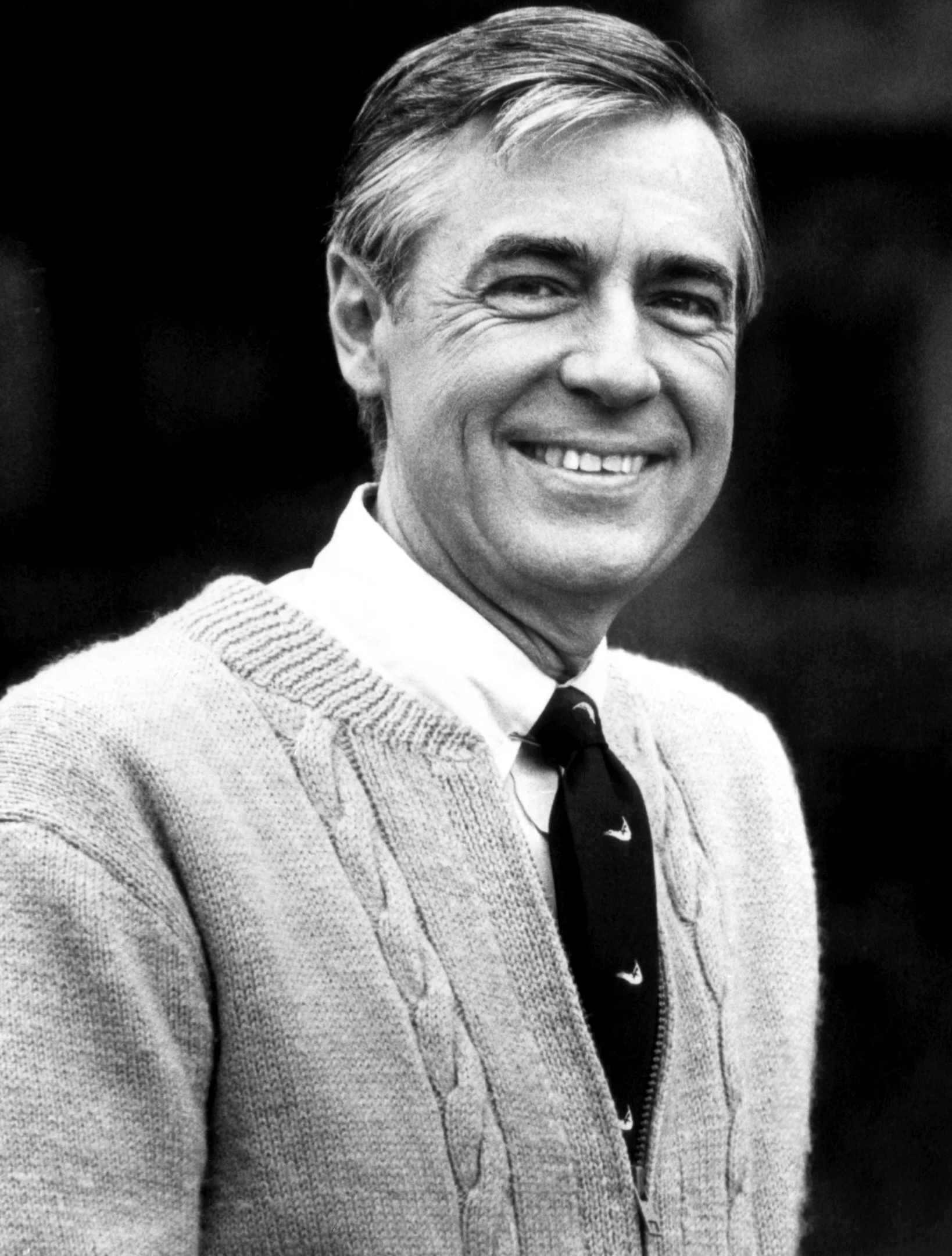
Why did Mister Rogers change his sweater and shoes?
Terry Arthur (given in "eBay (v1)") / Wikimedia Commons. Public domain. Original photograph retained without visual alteration; responsive copies resized and compressed.


Fred Rogers in a publicity portrait published by 1982.
Read the story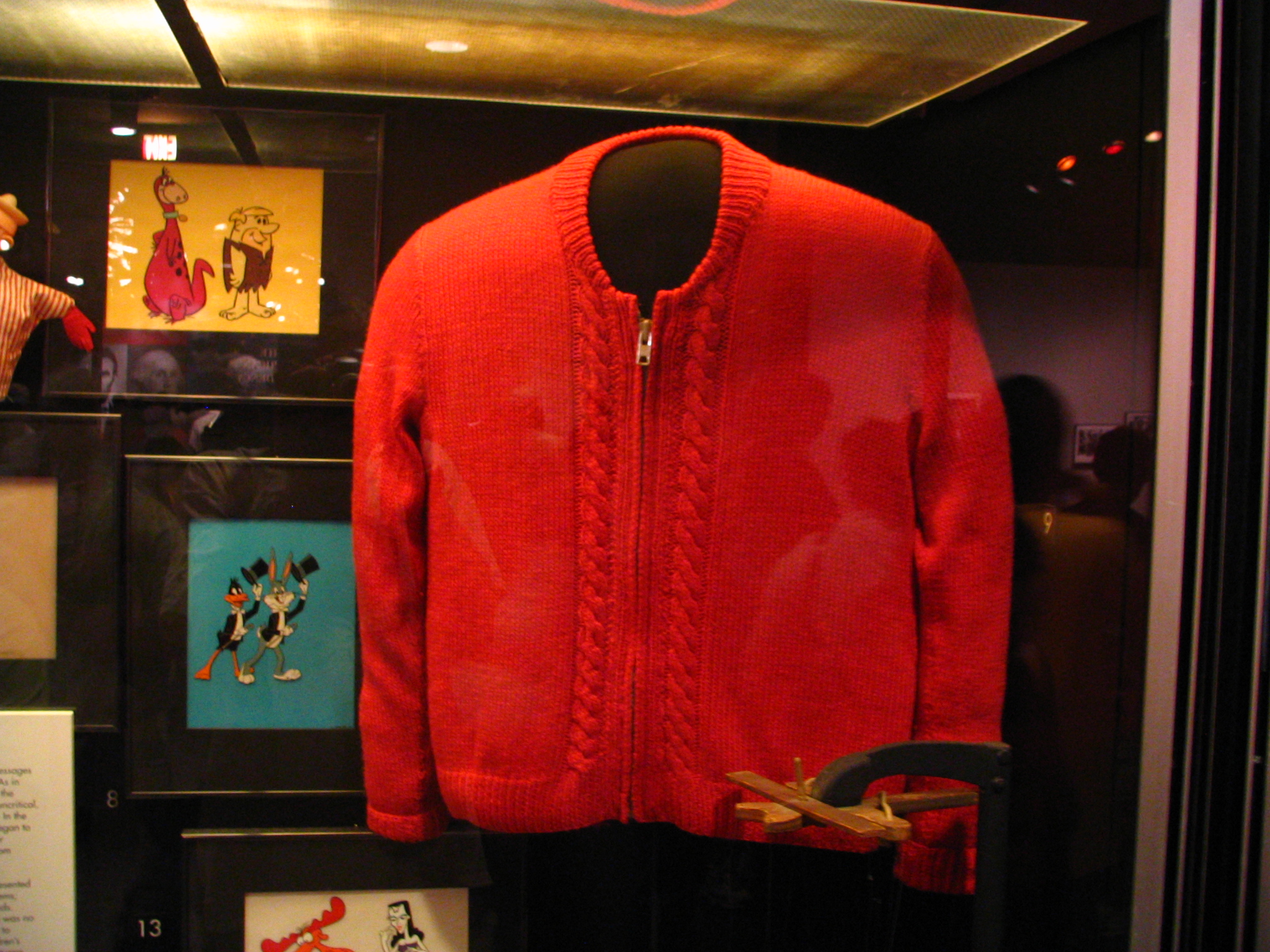
Why did Mister Rogers change his sweater and shoes?
Rudi Riet / Wikimedia Commons. CC BY-SA 2.0. Original photograph retained without visual alteration; responsive copies resized and compressed.

A red cardigan from the program, photographed at the Smithsonian in 2006.
Read the story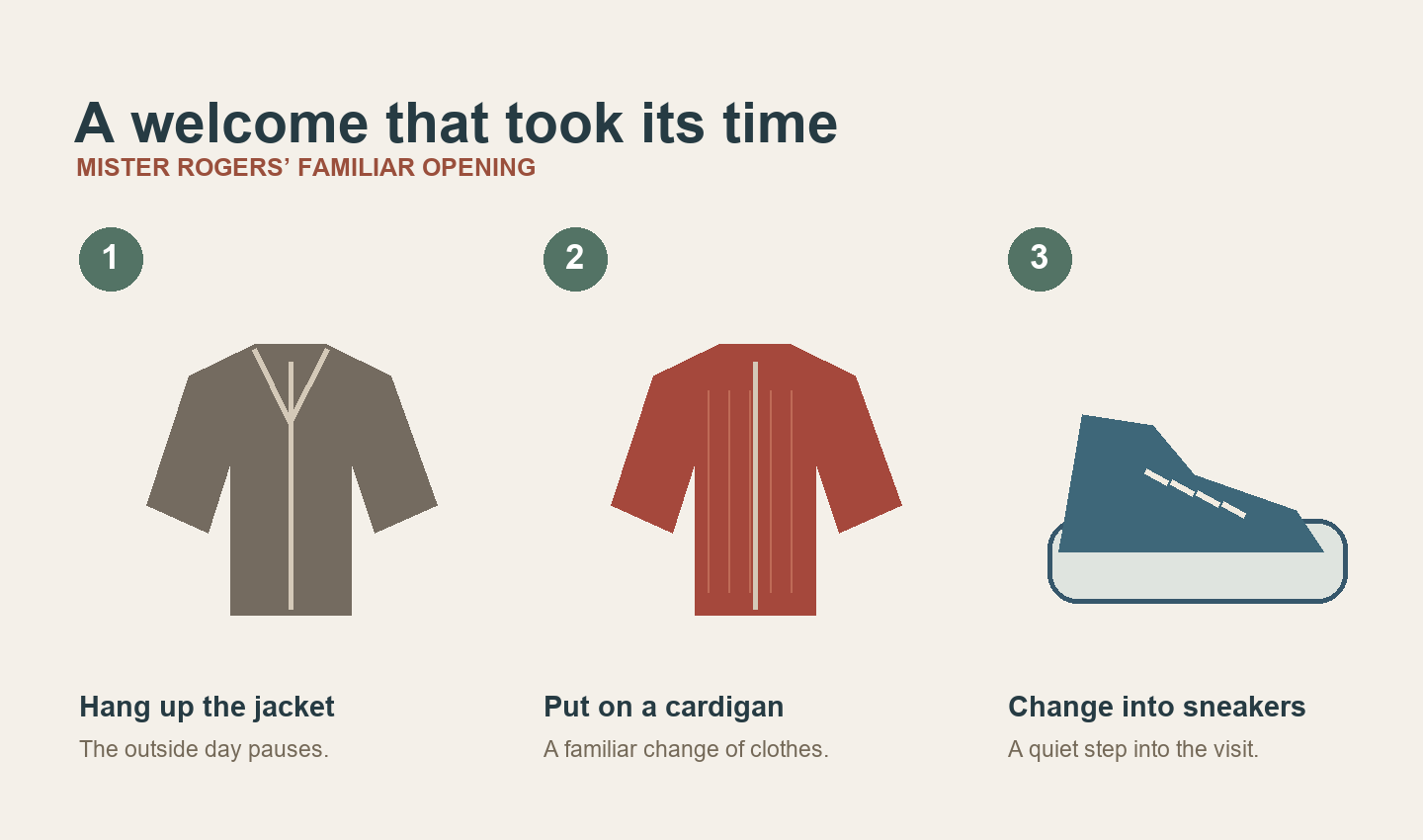
Why did Mister Rogers change his sweater and shoes?
Original explanatory graphic by Back When Daily.
The opening gave viewers time to follow a familiar change of clothes.
Read the story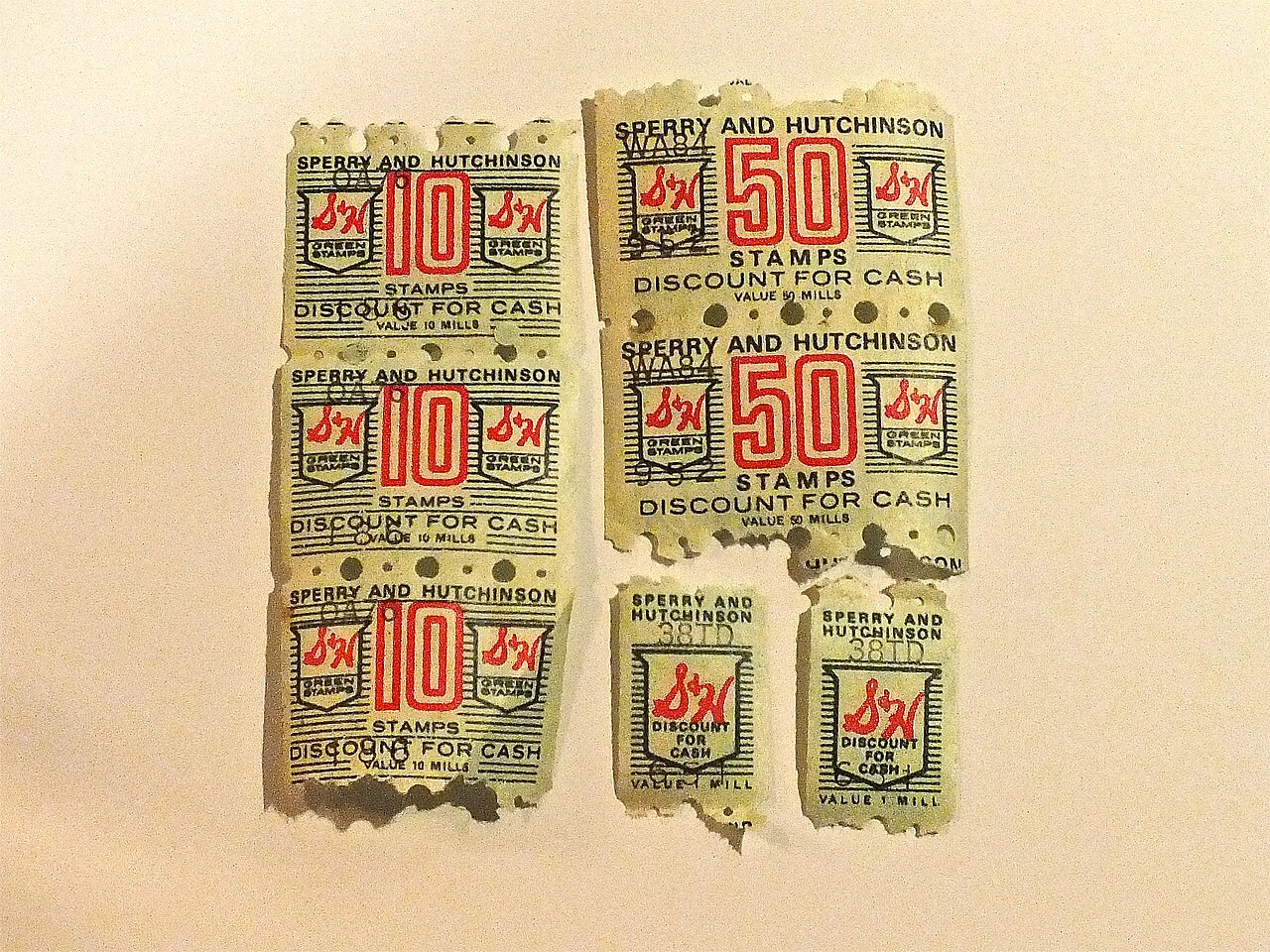
How Did S&H Green Stamps Turn Shopping Into Rewards?
Cayobo / Wikimedia Commons. CC BY 2.0. Original photograph retained without visual alteration; responsive copies resized and compressed.

S&H Green Stamps in several denominations, photographed in 2013.
Read the story
How Did S&H Green Stamps Turn Shopping Into Rewards?
Original explanatory graphic by Back When Daily.
The booklets connected an ordinary shopping trip with a later reward.
Read the story
How Did S&H Green Stamps Turn Shopping Into Rewards?
frankieleon / Wikimedia Commons. CC BY 2.0. Original photograph retained without visual alteration; responsive copies resized and compressed.

An S&H Green Stamps sign, photographed in 2011.
Read the story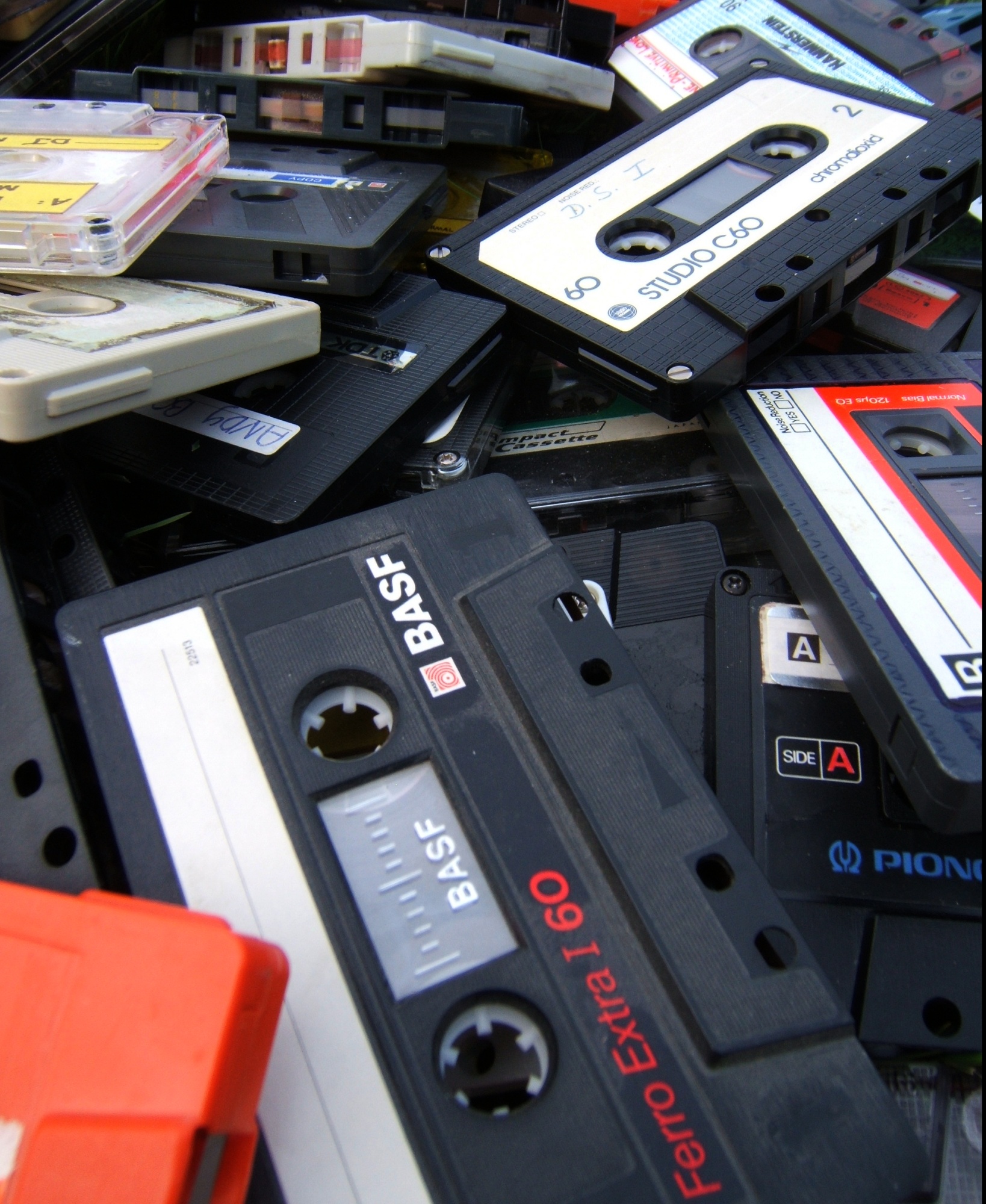
Why Making a Mixtape Meant Planning Two Sides
Hmvh. Public domain. Source image retained unchanged; displayed responsively.


A collection of audio cassettes, photographed in 2009. Their labels leave room for a title and track information.
Read the story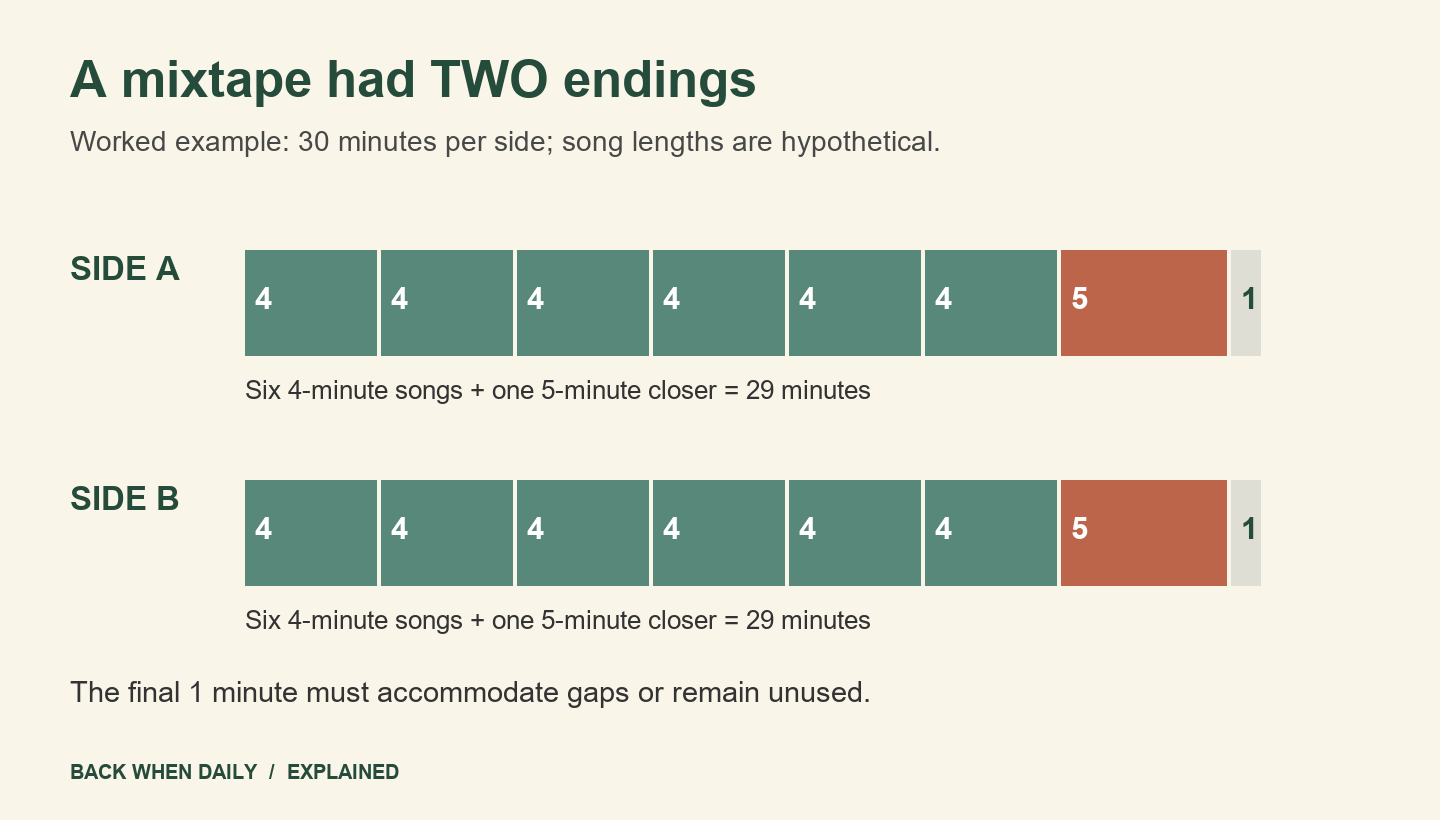
Why Making a Mixtape Meant Planning Two Sides
Original explanatory graphic by Back When Daily.
A worked example, not an actual track list: two 30-minute sides each leave one minute after 29 minutes of songs.
Read the story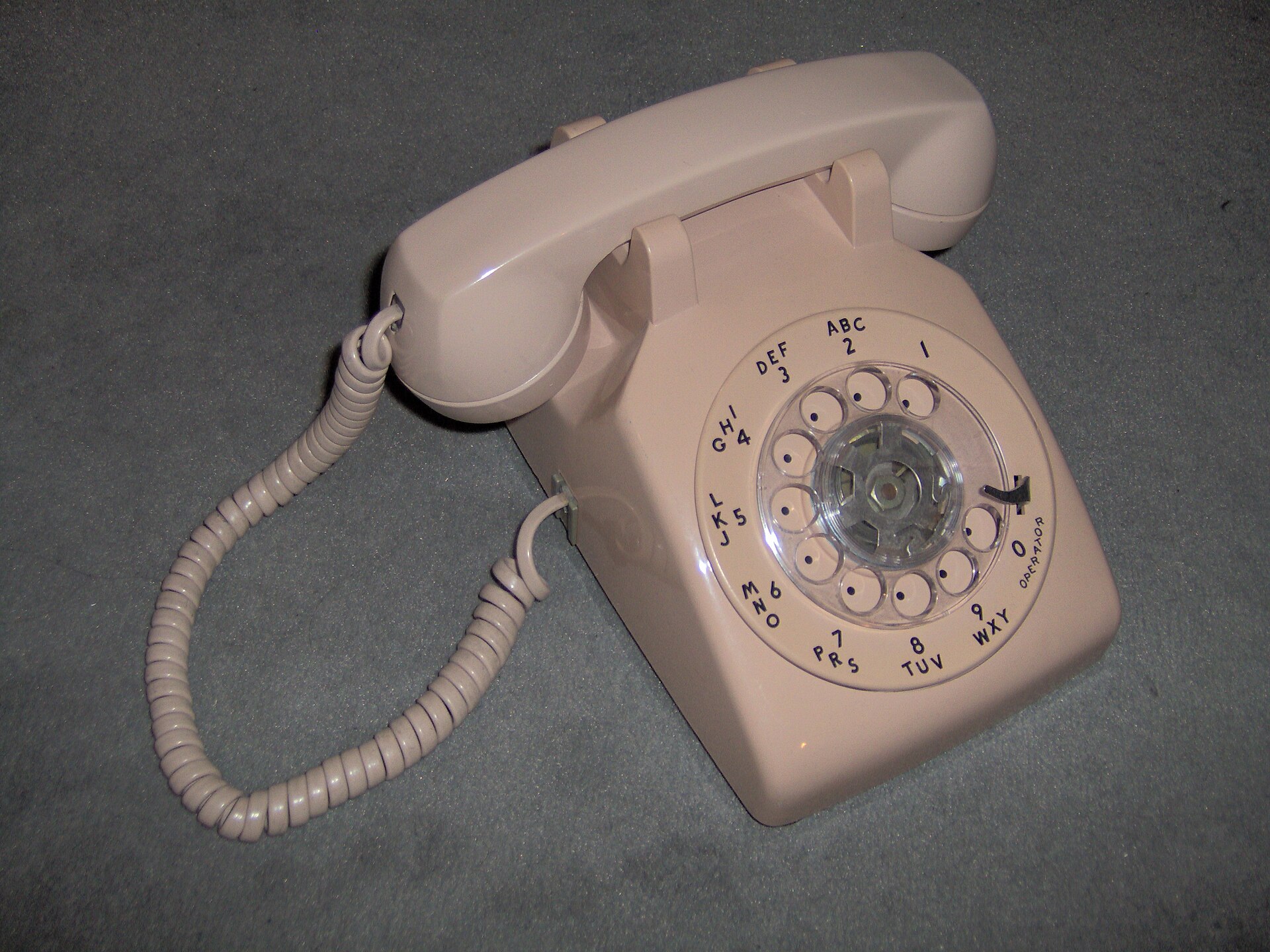
What Changed When the Family Telephone Became Personal?
ProhibitOnions. Public domain. Source image retained unchanged; displayed responsively.


A Western Electric Model 500 rotary telephone. The dial identifies a mechanism, not how many people shared its number.
Read the story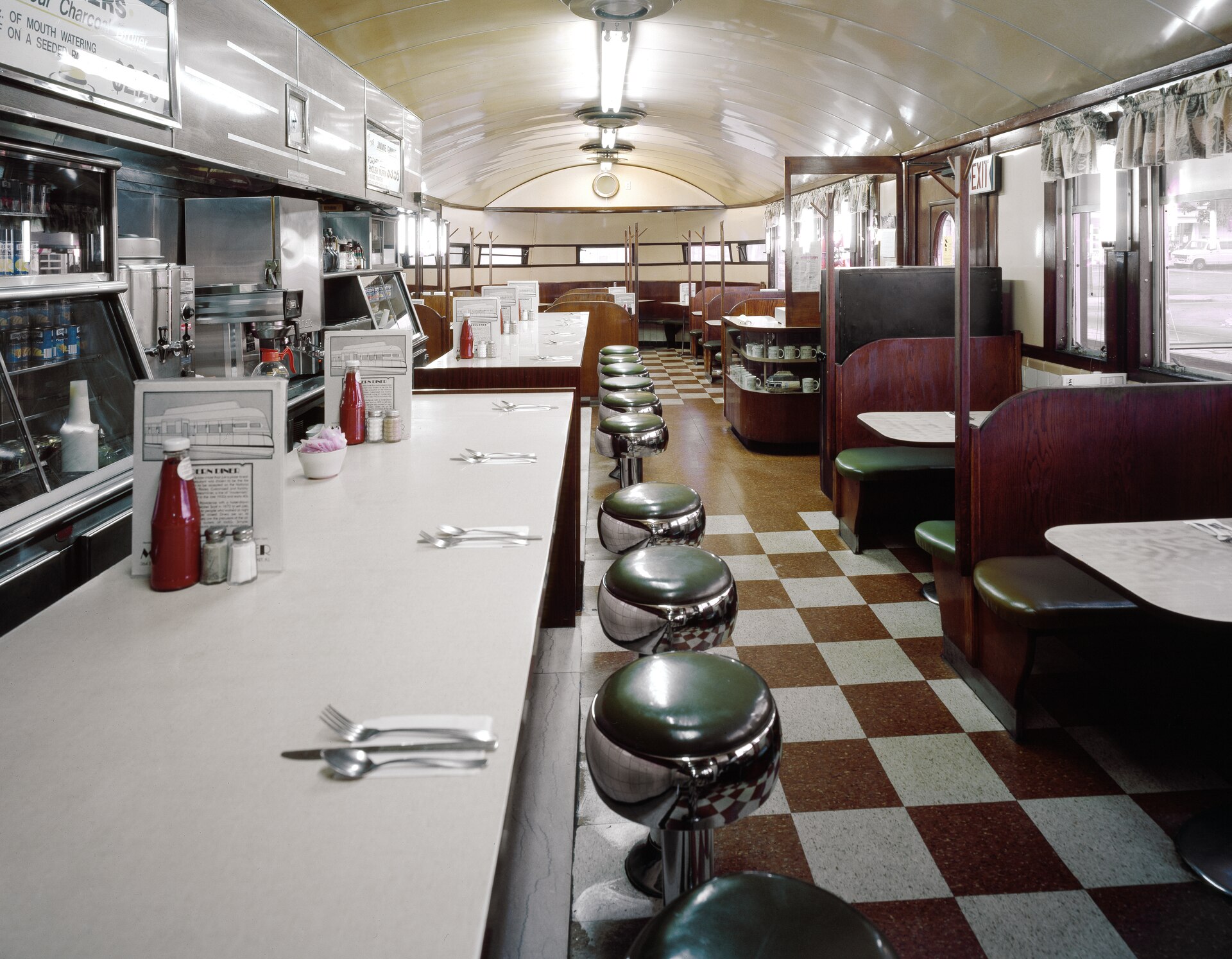
Why Some American Diners Look Like Railway Cars
Carol M. Highsmith. Public domain. Source image retained unchanged; displayed responsively.
Inside the Modern Diner in Pawtucket, Rhode Island, photographed by Carol M. Highsmith.
Read the story
What Made Southdale Different From an Outdoor Shopping Center?
Carol M. Highsmith. Public domain. Source image retained unchanged; displayed responsively.
An enclosed shopping-center interior photographed by Carol M. Highsmith in the 1980s. This is a comparison image, not an identified view of Southdale.
Read the story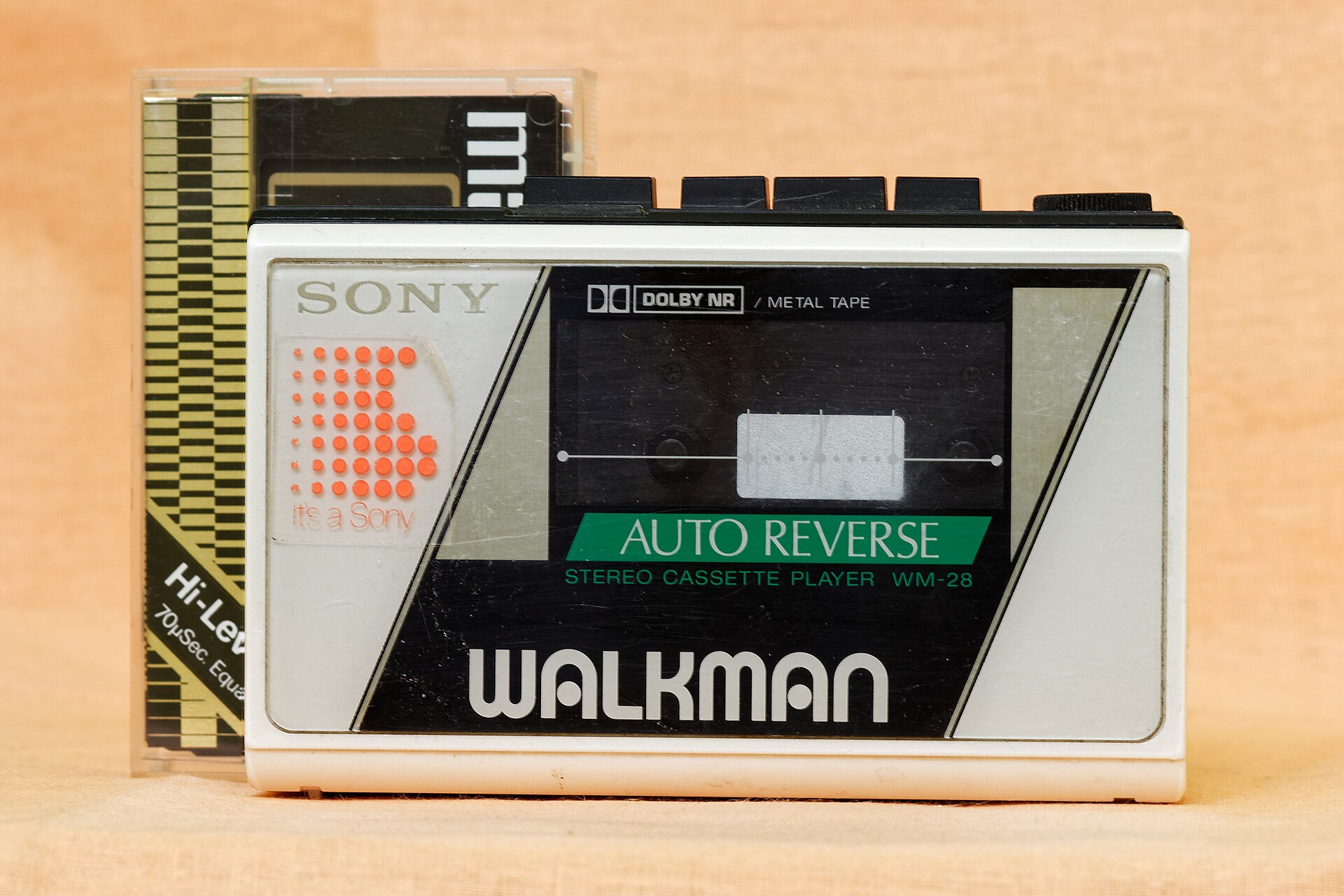
Why the First Sony Walkman Left Out the Record Button
Retired electrician. CC0. Source image retained unchanged; displayed responsively.

A later Sony WM-28 cassette player, photographed in 2019. It is not the original 1979 TPS-L2 discussed below.
Read the story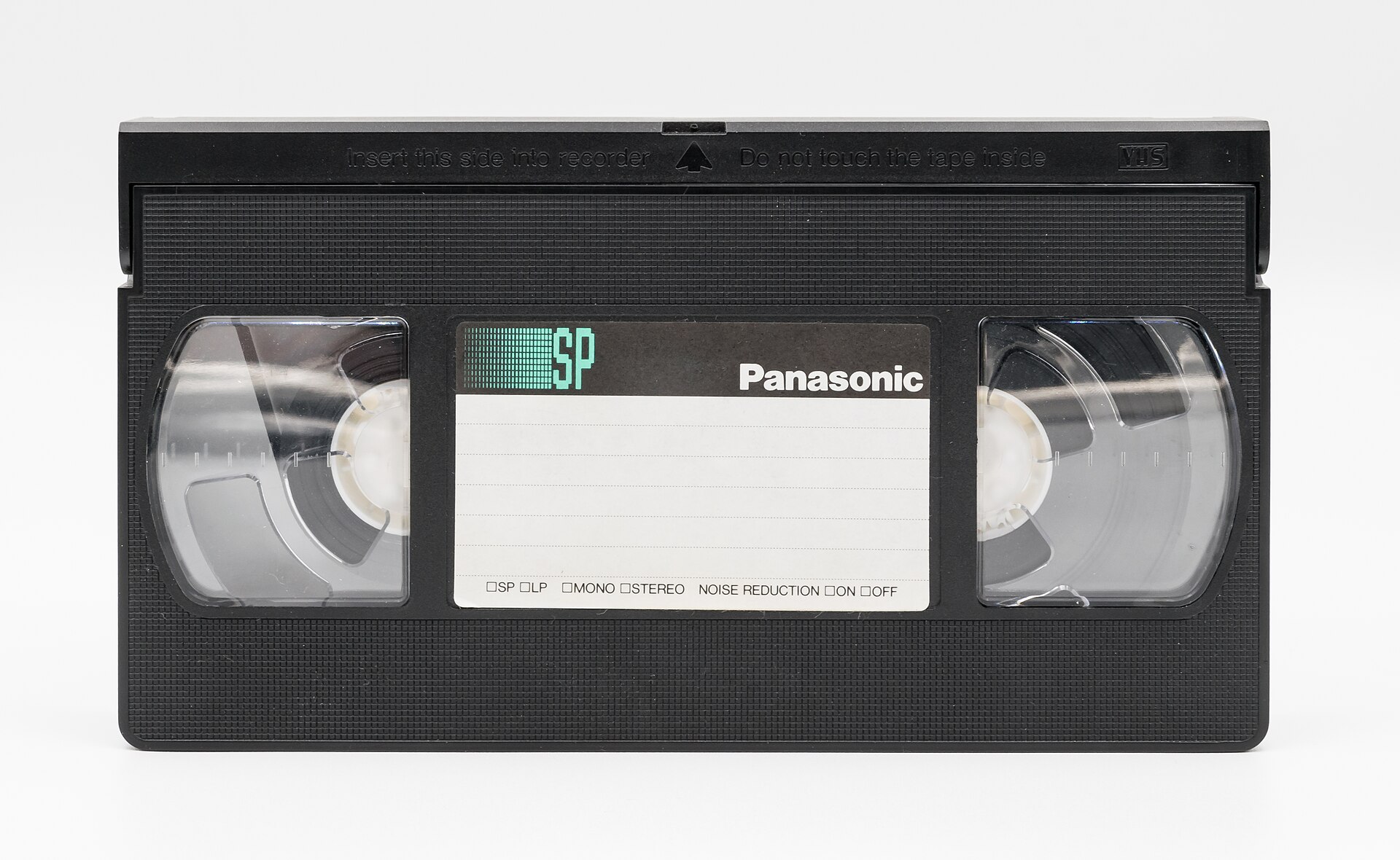
Why Did Rental Videotapes Need Rewinding?
Jacek Halicki. CC BY-SA 4.0. Source image retained unchanged; displayed responsively.

A VHS cassette photographed in 2023. Its two reels hold a single length of magnetic tape.
Read the story
What Was Floppy About a Floppy Disk?
Jacek Halicki. CC BY-SA 4.0. Source image retained unchanged; displayed responsively.

A 3½-inch floppy disk photographed in 2023. Its rigid outer shell protects the flexible recording disk inside.
Read the story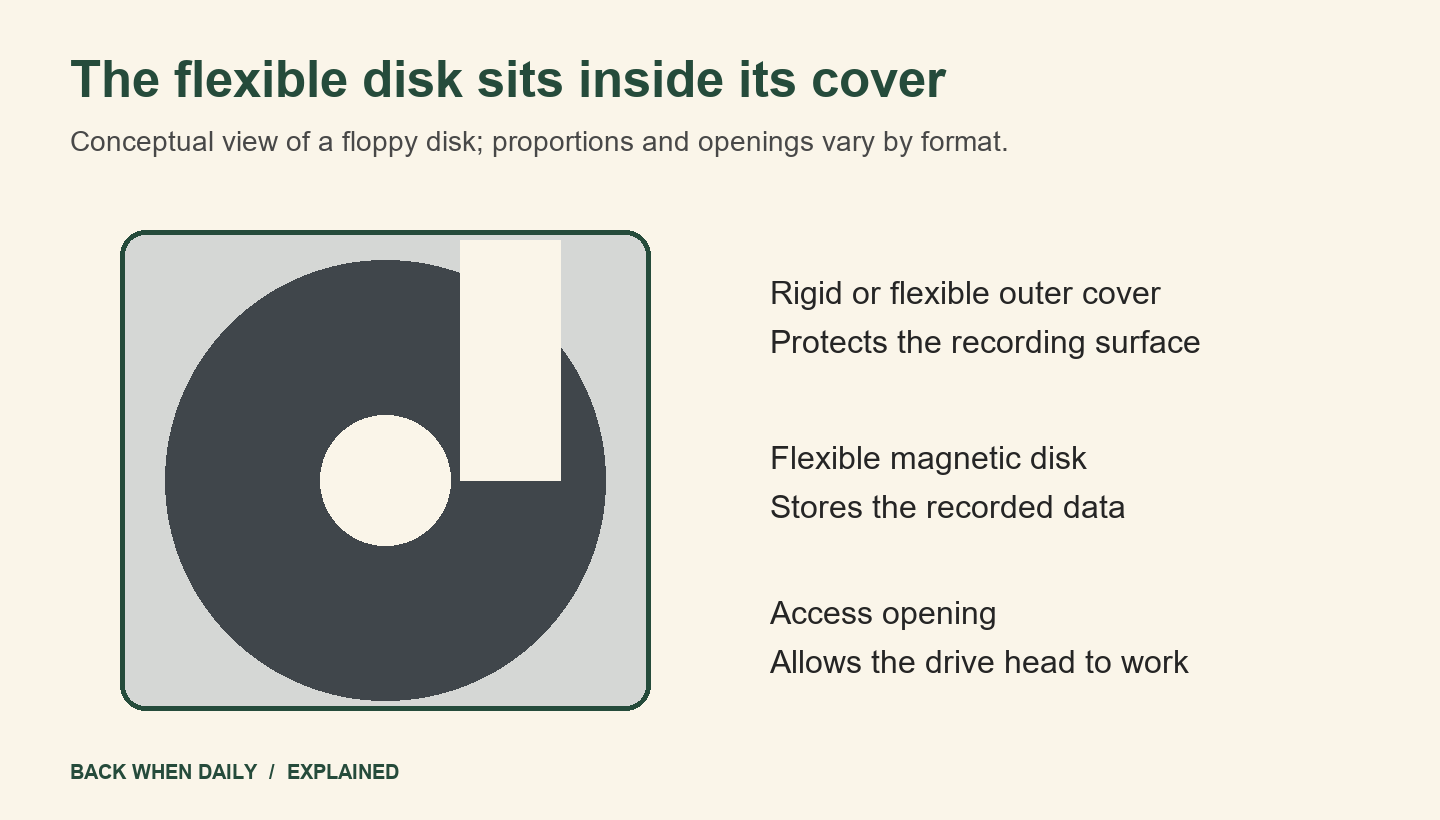
What Was Floppy About a Floppy Disk?
Original explanatory graphic by Back When Daily.
The cover and recording disk do different jobs. This schematic is conceptual, not a repair guide or a scale drawing.
Read the story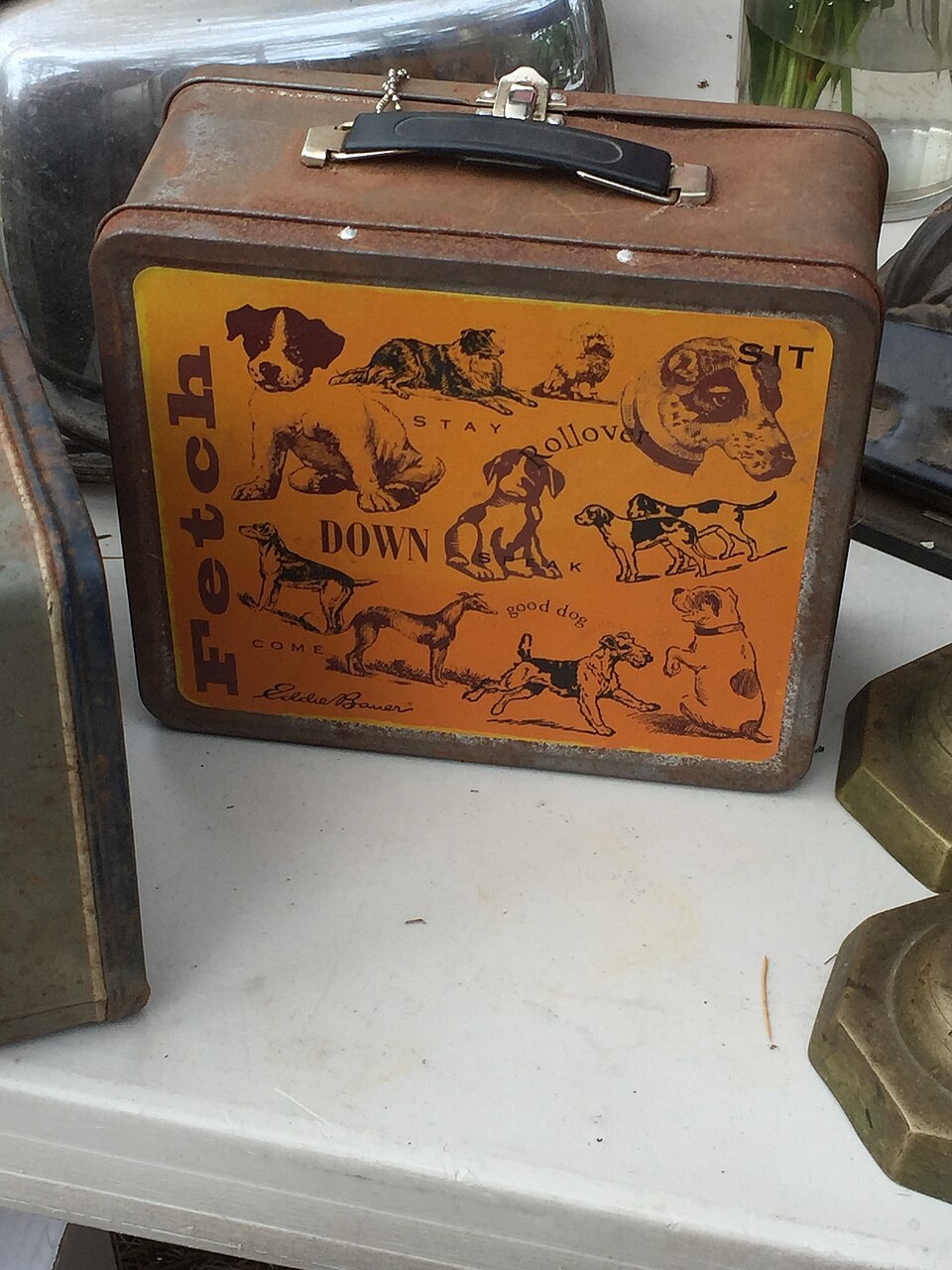
How TV Characters Turned Lunchboxes Into Something to Choose
DrStew82. CC BY-SA 4.0. Source image retained unchanged; displayed responsively.

A decorated metal lunchbox photographed at an antiques fair in 2018. It illustrates the format, not the specific Hopalong Cassidy box discussed below.
Read the story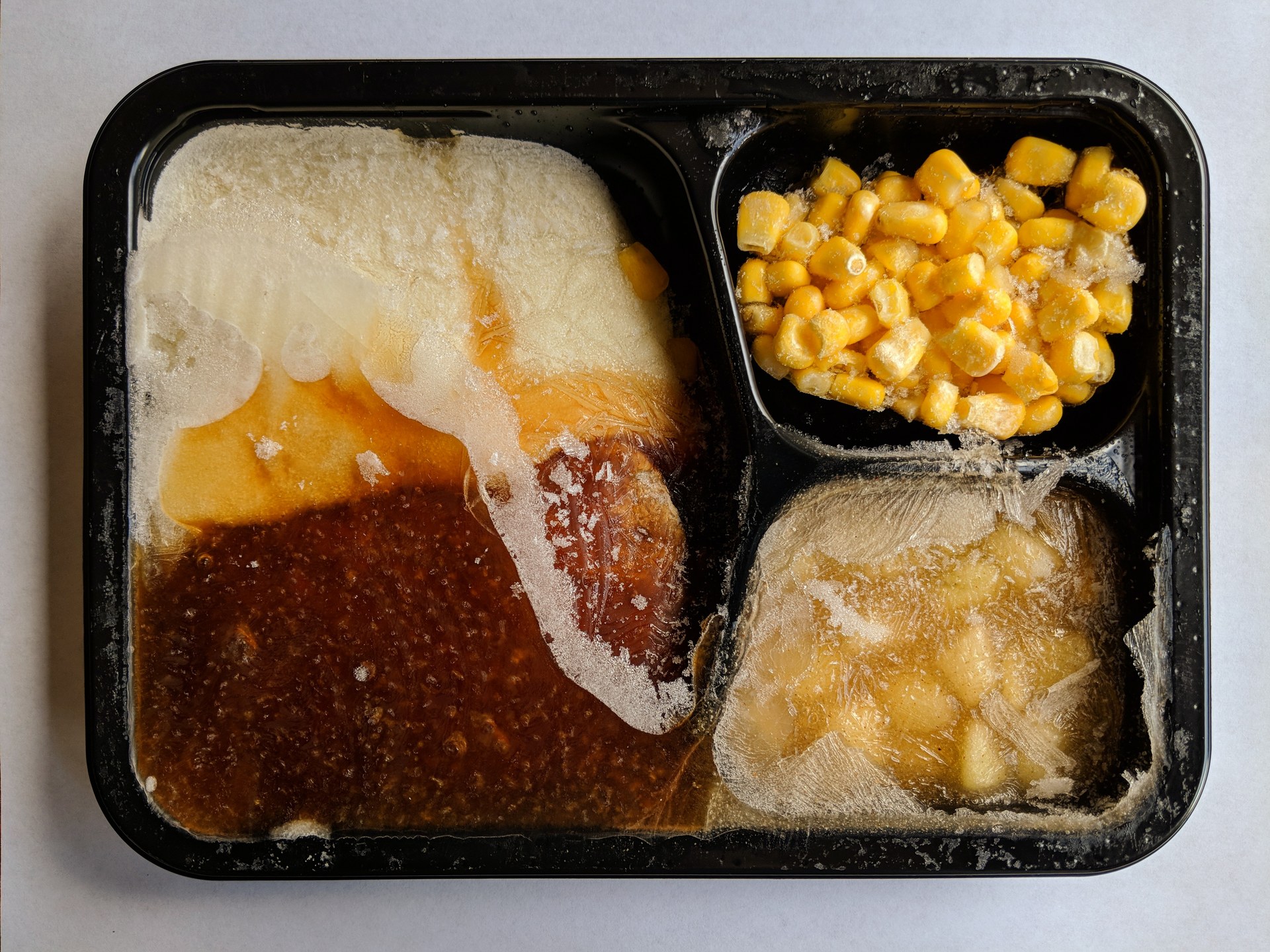
Did Swanson Invent the TV Dinner? The Earlier Meals Matter
Sir Beluga. CC0 1.0. Source image retained unchanged; displayed responsively.

A later frozen meal in a divided tray, photographed in 2018. It is not an original Swanson package.
Read the story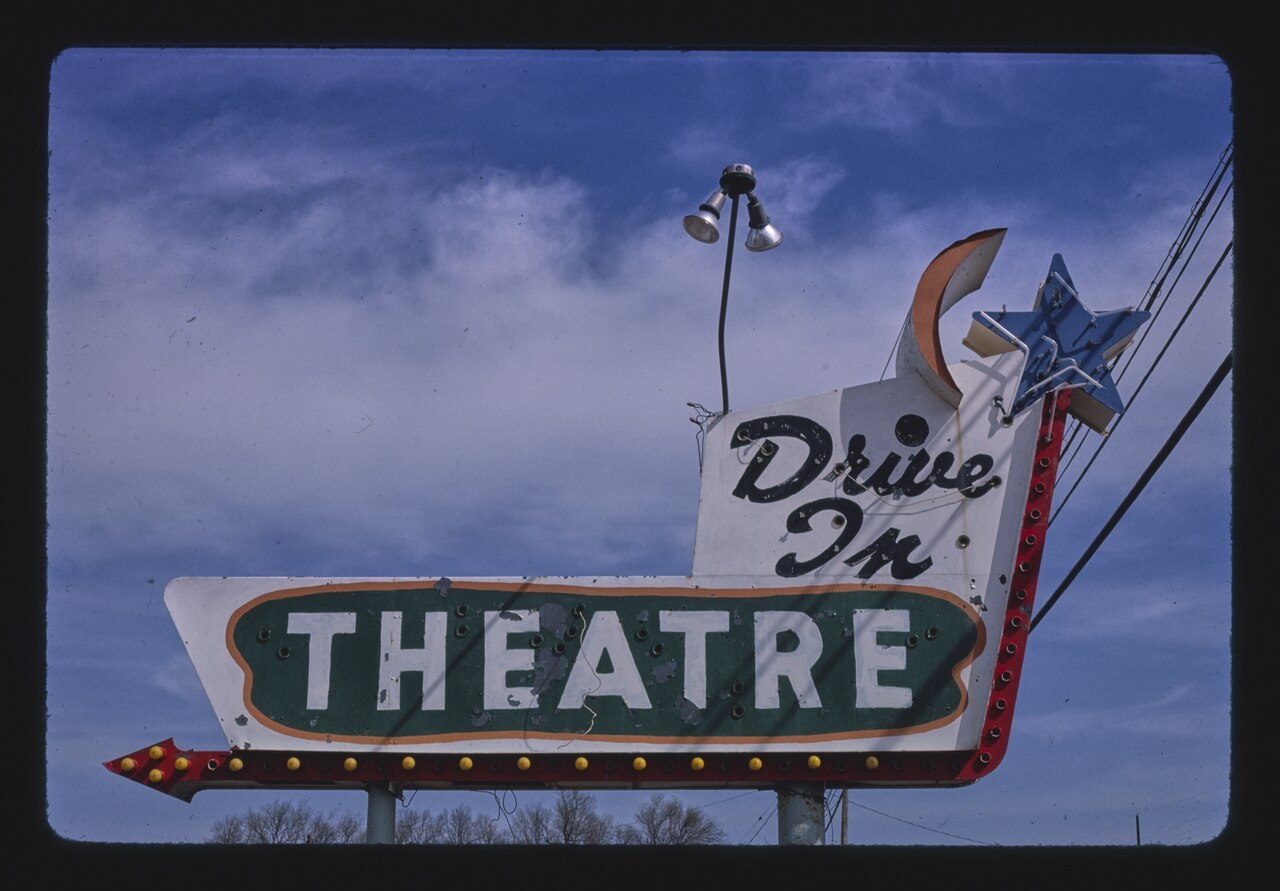
How a Drive-In Turned a Parking Lot Into a Movie Theater
John Margolies. Public domain / no known copyright restrictions (Library of Congress). Source image retained unchanged; displayed responsively.
The Star-Lite Drive-In sign in Cheyenne, Wyoming, photographed by John Margolies in 1980. The Carthage theater discussed below is a separate site.
Read the story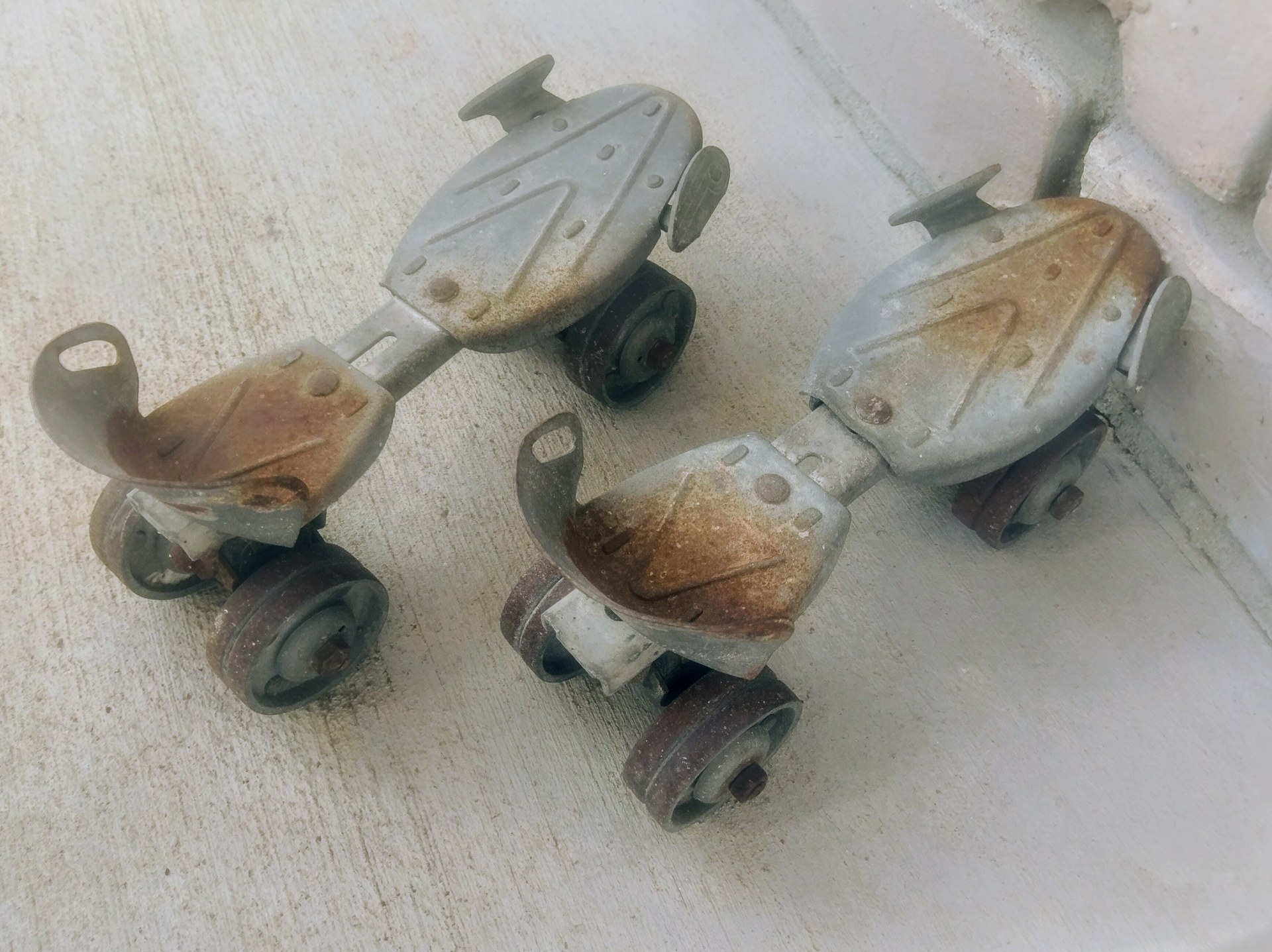
Roller-Skate Rentals Were a Business Long Before Disco
Jim Heaphy (Cullen328). CC BY-SA 3.0. Source image retained unchanged; displayed responsively.

An adjustable pair of overshoe roller skates. This later style differs from the nineteenth-century catalog example discussed below.
Read the story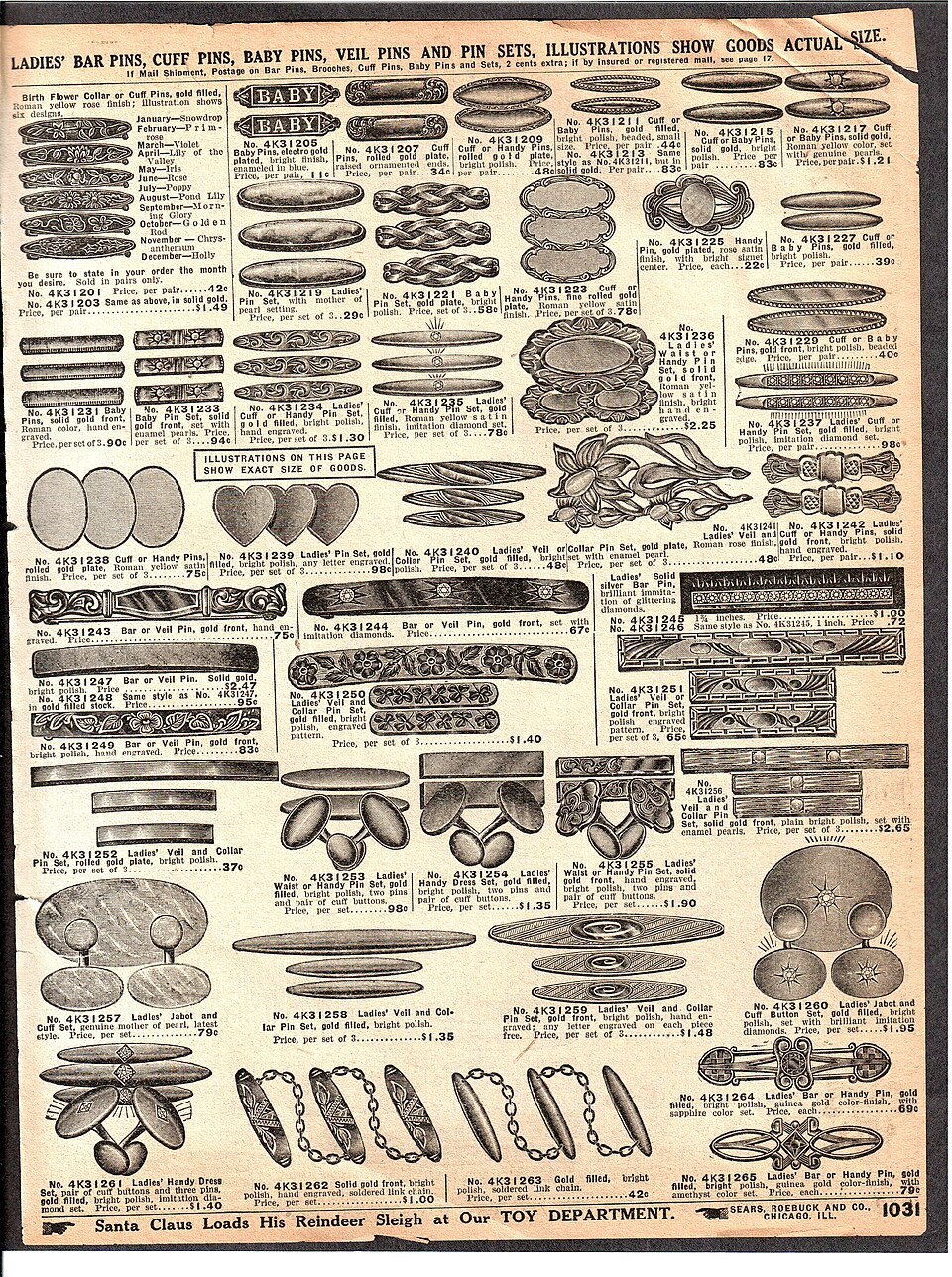
How to Read an Old Sears Catalog Beyond the Toy Pages
HA! Designs - Artbyheather. CC BY 2.0. Source image retained unchanged; displayed responsively.

A page identified as a 1912 Sears catalog shows merchandise presented through product illustrations, descriptions and prices.
Read the story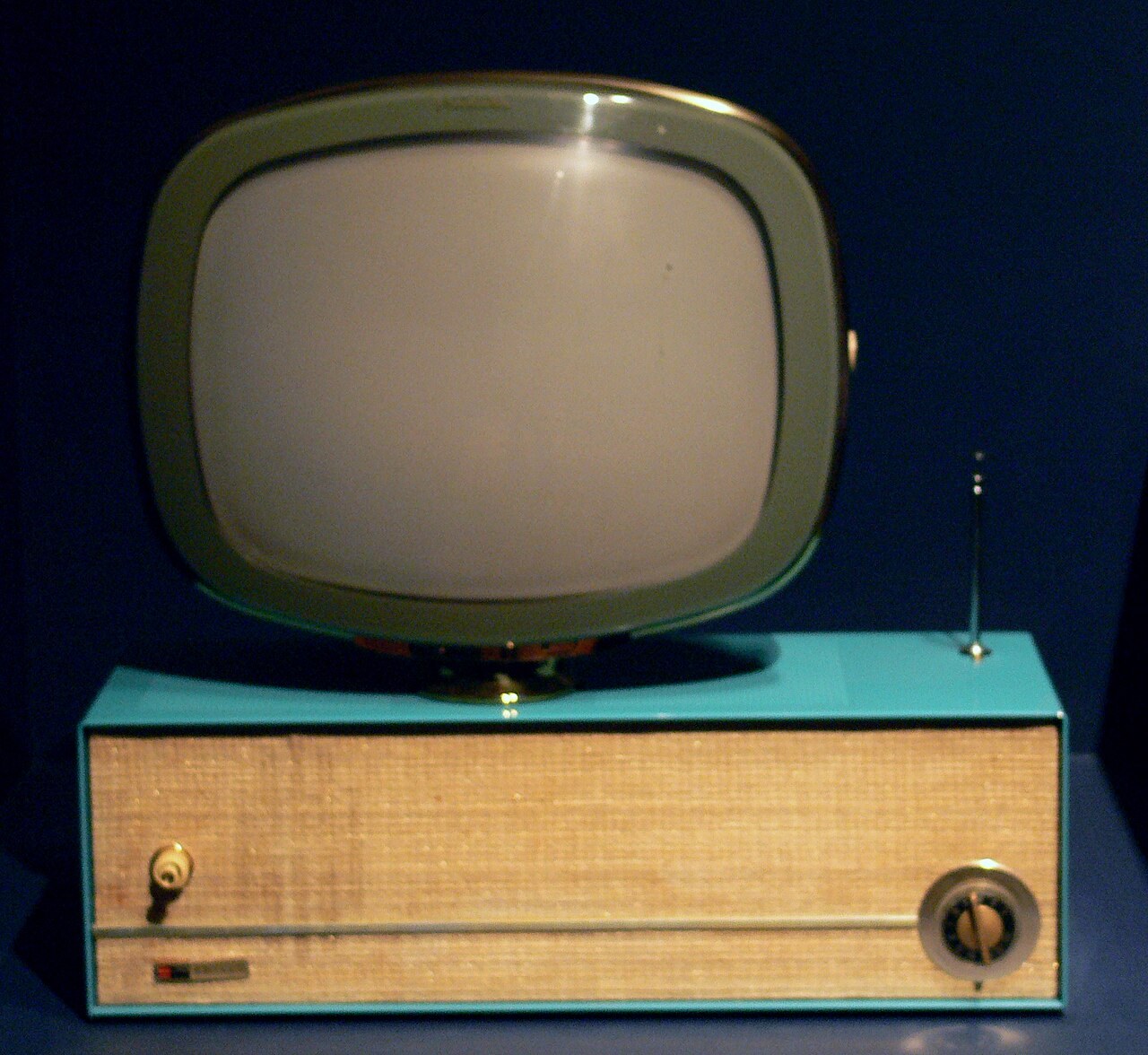
Was The Flintstones Originally a Saturday-Morning Cartoon?
FA2010. Public domain (released by photographer). Source image retained unchanged; displayed responsively.

A Philco Predicta television of the late 1950s, photographed as a museum object. The set does not establish which program its owners watched.
Read the story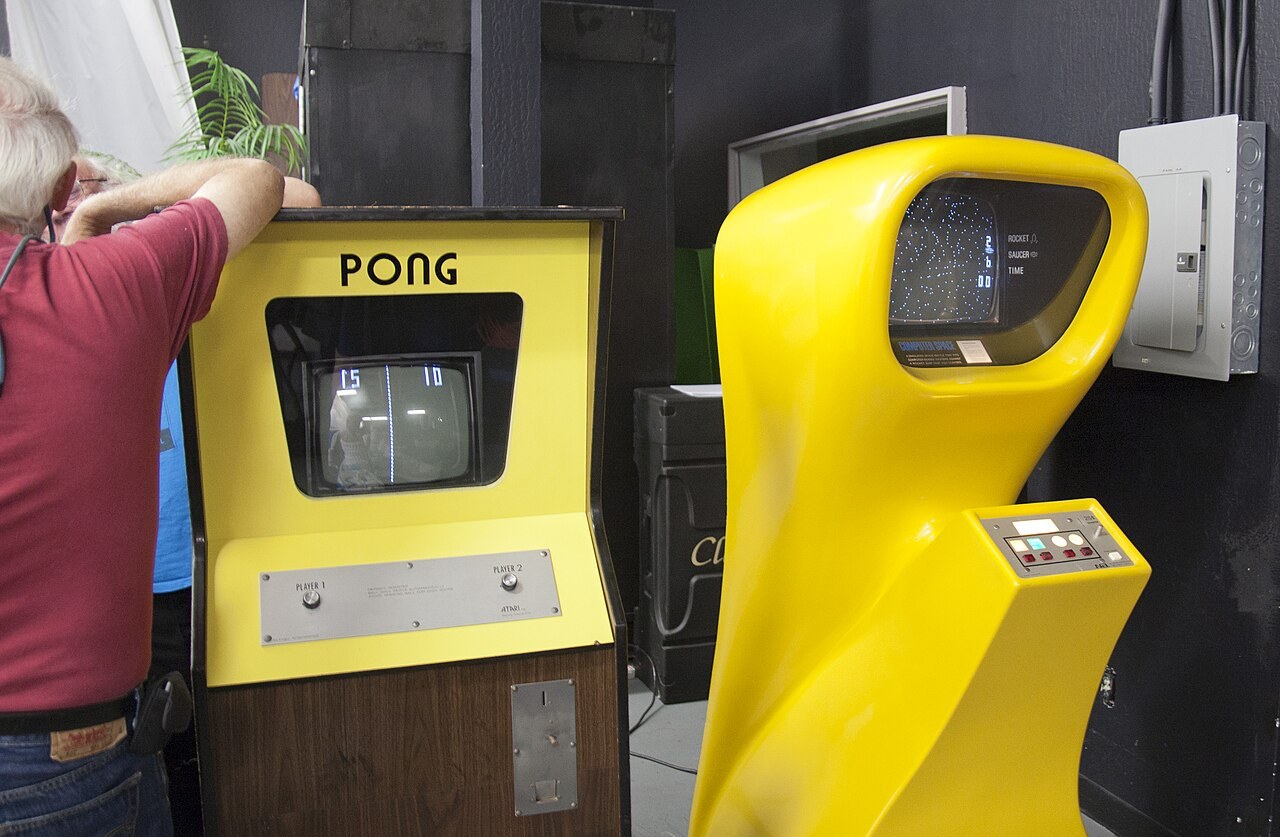
What the First Pong Machine Reveals About Arcade Quarters
Digital Game Museum. CC BY 2.0. Source image retained unchanged; displayed responsively.

Pong and Computer Space arcade cabinets photographed at the Digital Game Museum in 2012.
Read the story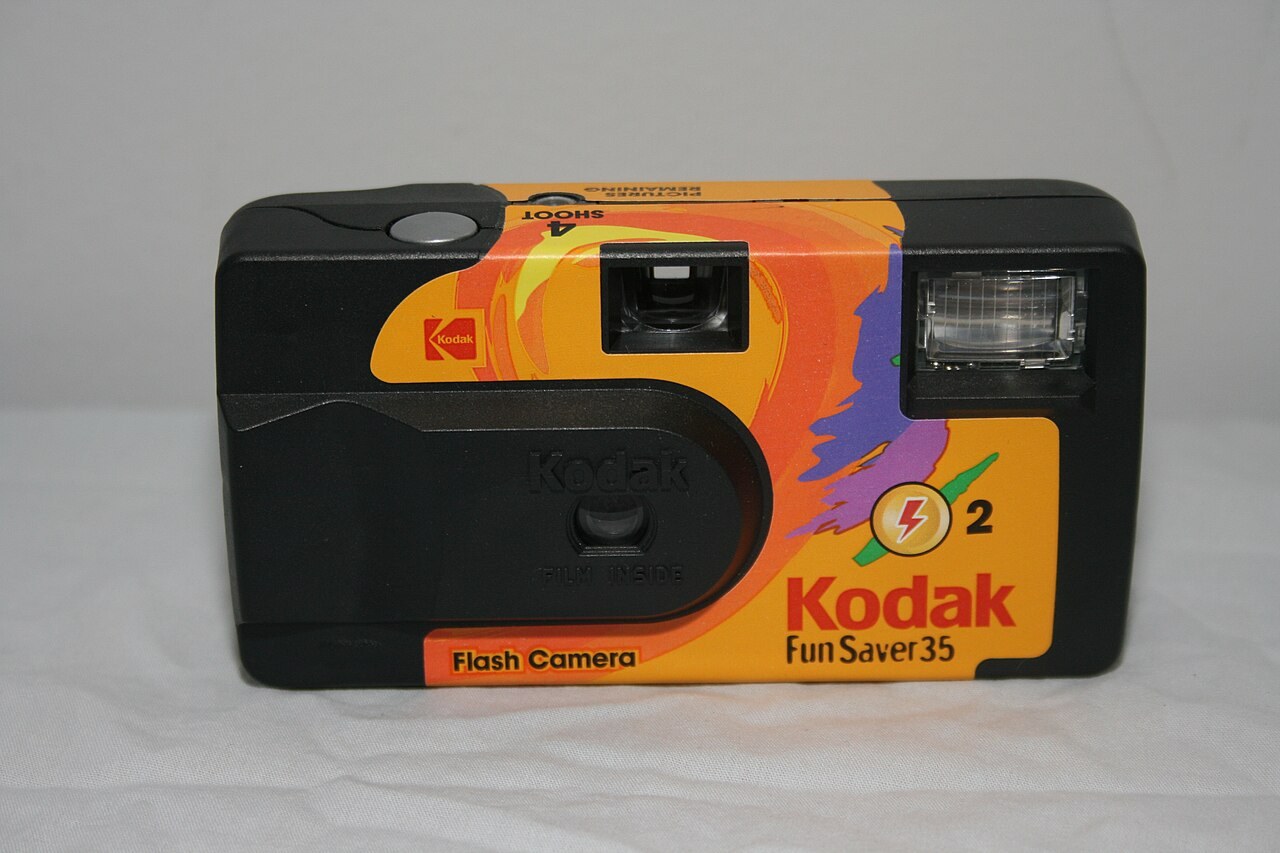
Why Film Photos Needed Developing Before You Could See Them
Terri Monahan. CC BY-SA 2.0. Source image retained unchanged; displayed responsively.

A Kodak FunSaver camera photographed in 2009. The Fujifilm launch dates below concern a different maker’s QuickSnap range.
Read the story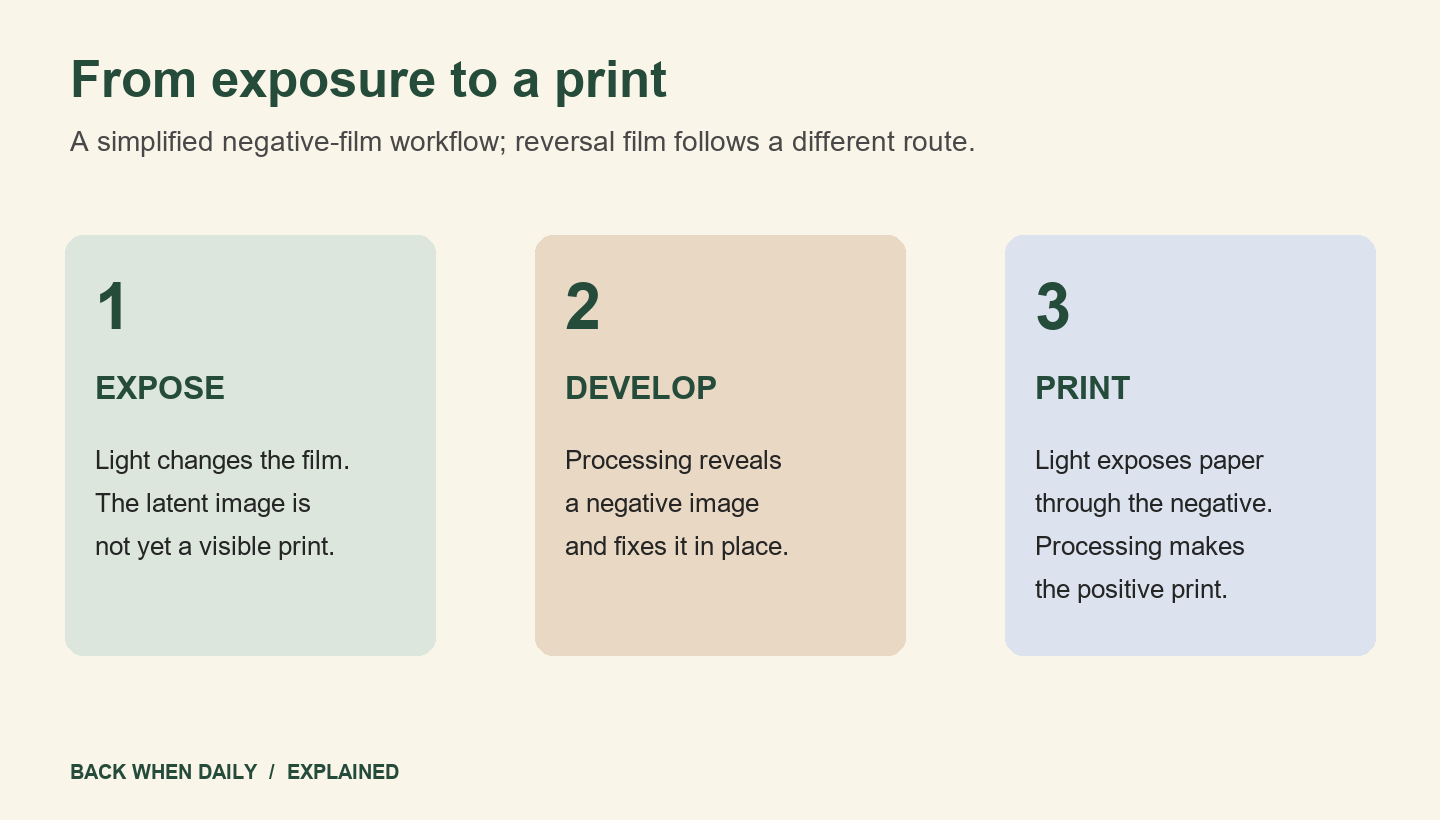
Why Film Photos Needed Developing Before You Could See Them
Original explanatory graphic by Back When Daily.
Exposure, development and printing are different stages. This simplified diagram shows a negative-film process.
Read the story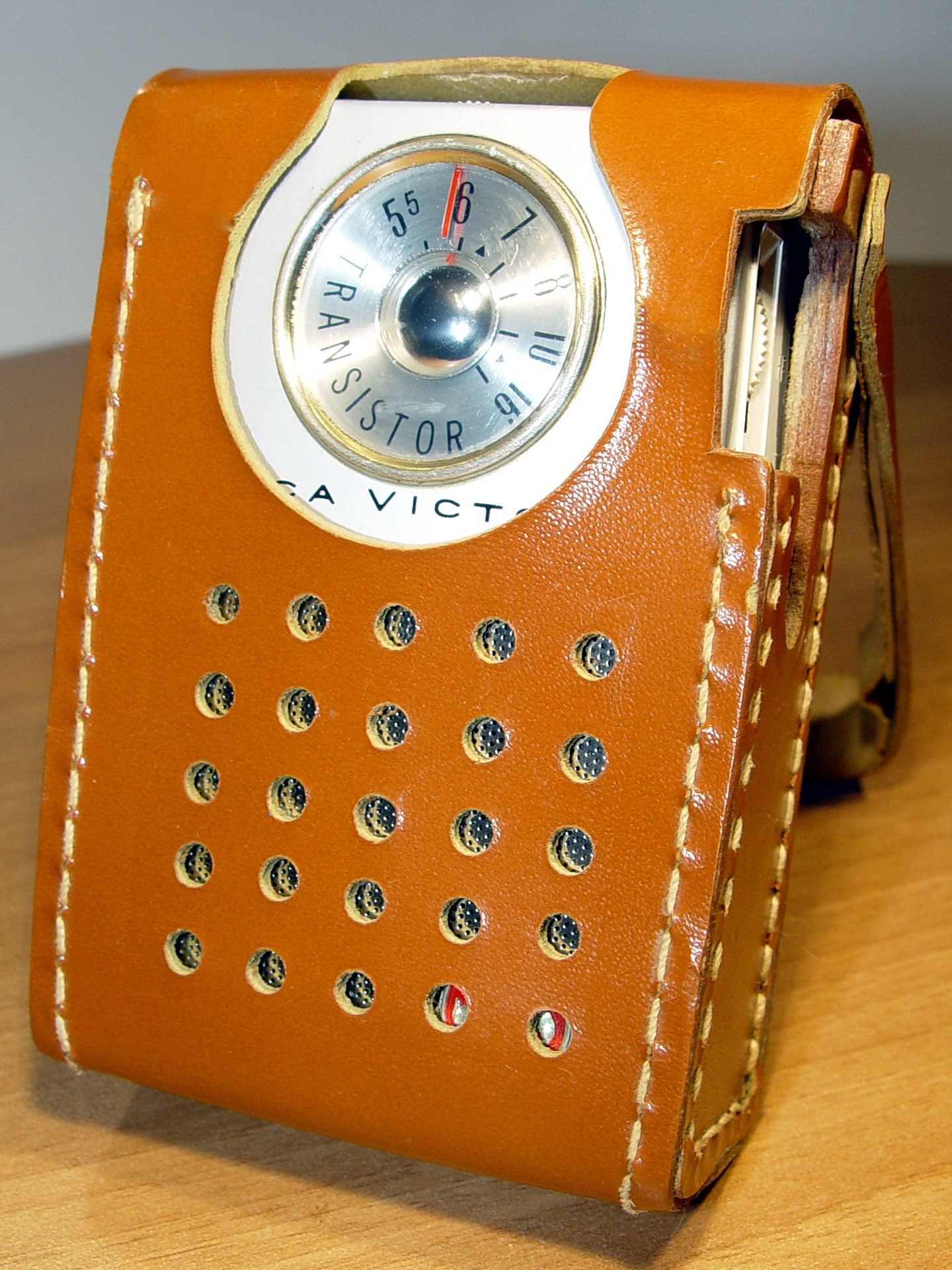
What Did the Transistor Change About a Portable Radio?
Mister rf. CC BY-SA 4.0. Source image retained unchanged; displayed responsively.

An RCA Pockette transistor radio from 1960. The earlier Regency TR-1 discussed below reached stores in 1954.
Read the story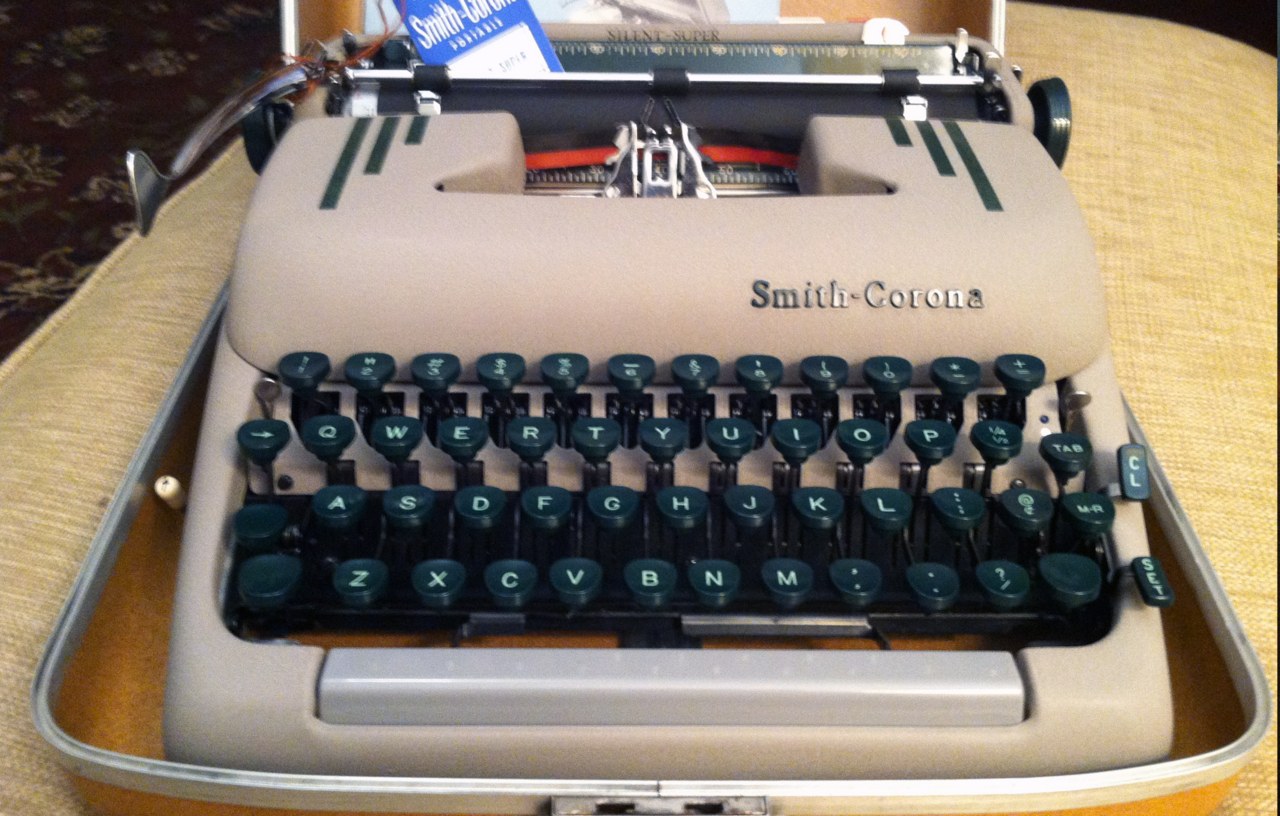
Why Did a Manual Typewriter Need a Carriage Return?
P. Musgrave. CC BY-SA 3.0. Source image retained unchanged; displayed responsively.

A 1958 Smith-Corona Silent-Super manual typewriter, photographed in 2013.
Read the story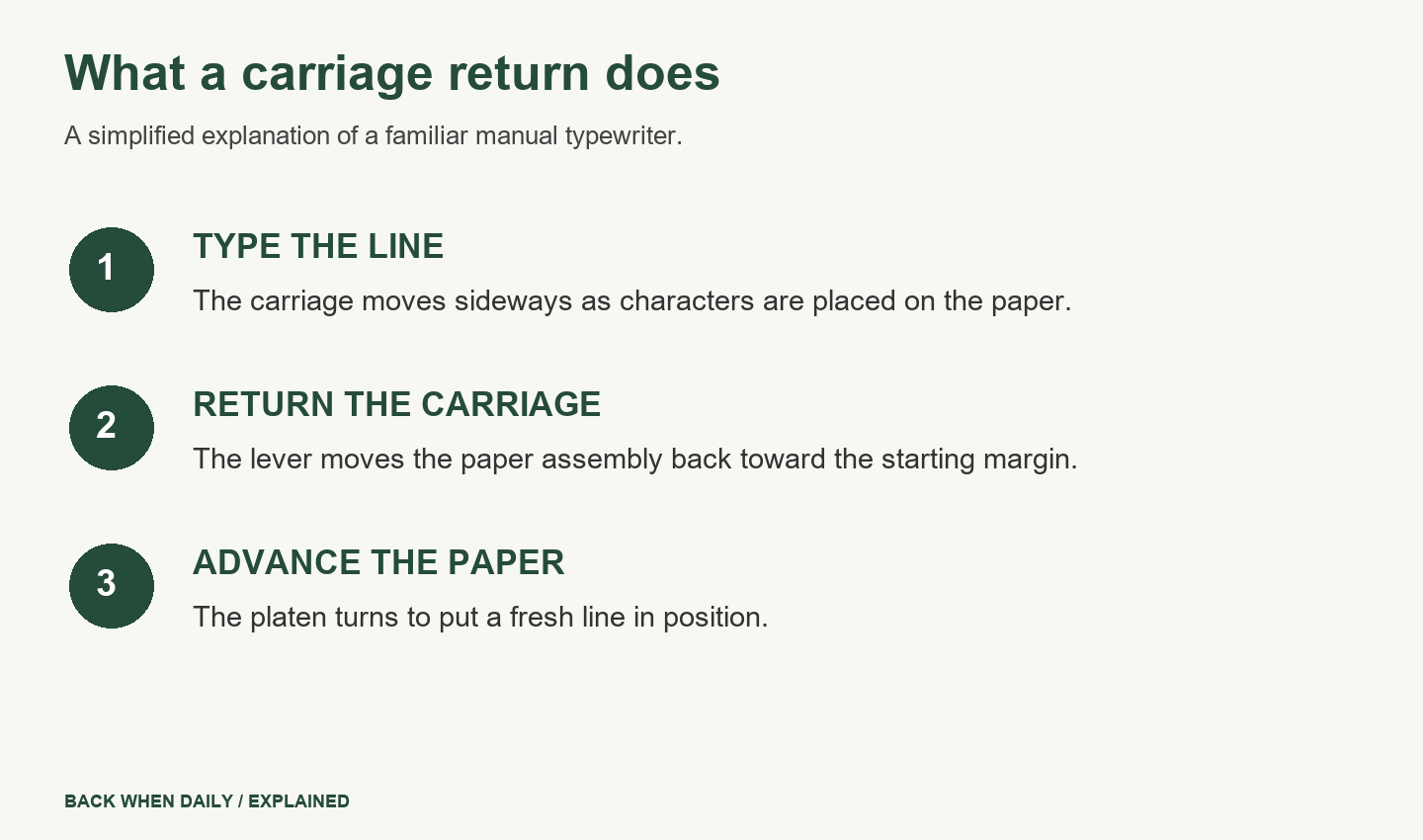
Why Did a Manual Typewriter Need a Carriage Return?
Original explanatory graphic by Back When Daily.
A carriage return repositions the paper horizontally and advances it for the next line. The diagram explains the actions, not one model’s repair procedure.
Read the story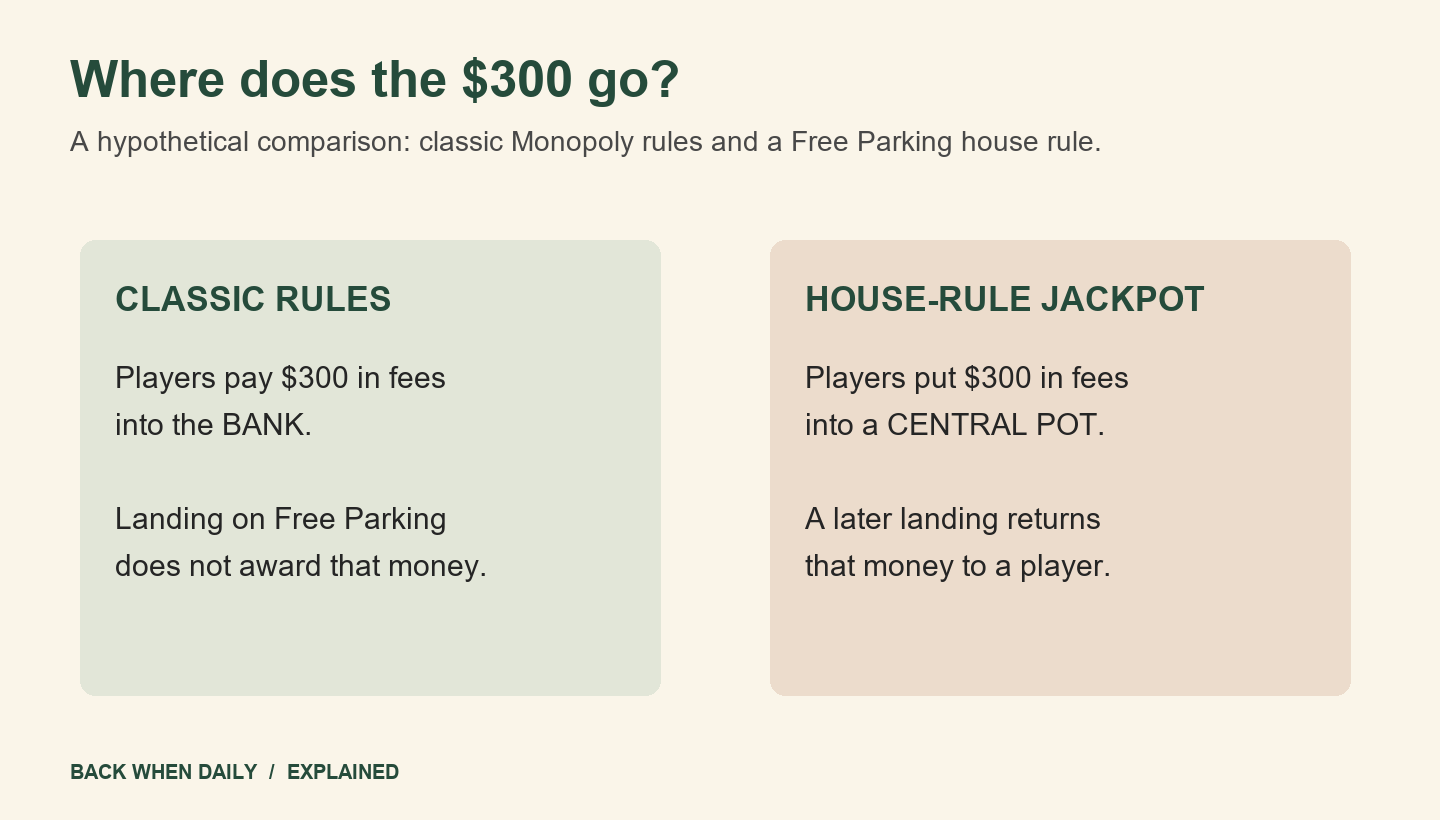
Was Free Parking Supposed to Pay Out in Monopoly?
Original explanatory graphic by Back When Daily.
The $300 is a worked example. This diagram compares money flows; it does not reproduce a Monopoly board or instruction sheet.
Read the story
Was Free Parking Supposed to Pay Out in Monopoly?
Original explanatory graphic by Back When Daily.
A simplified sequence from the linked classic rules. Check the instructions for your edition.
Read the story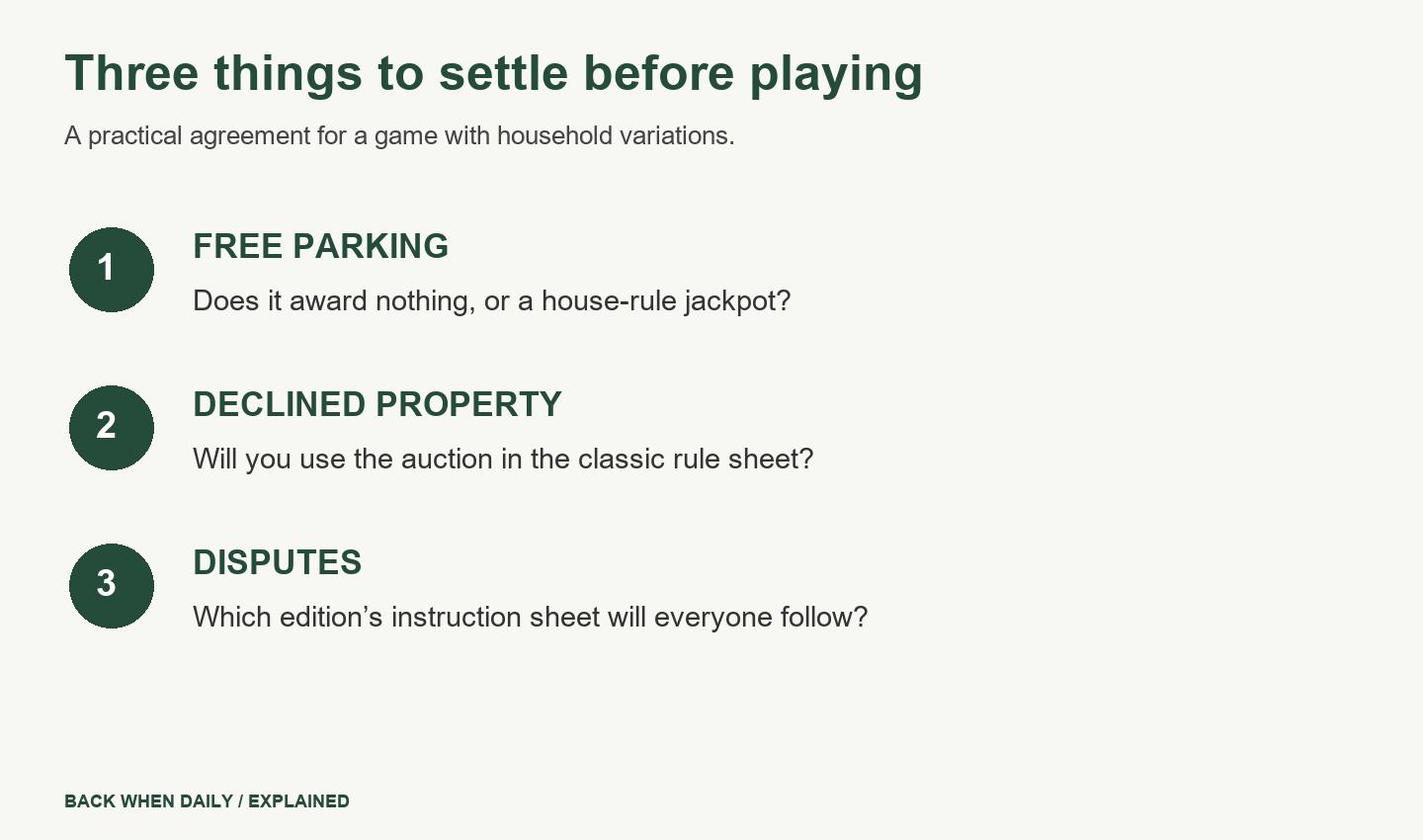
Was Free Parking Supposed to Pay Out in Monopoly?
Original explanatory graphic by Back When Daily.
Agreeing on the rules makes a house variation a shared choice. This checklist is our editorial suggestion.
Read the story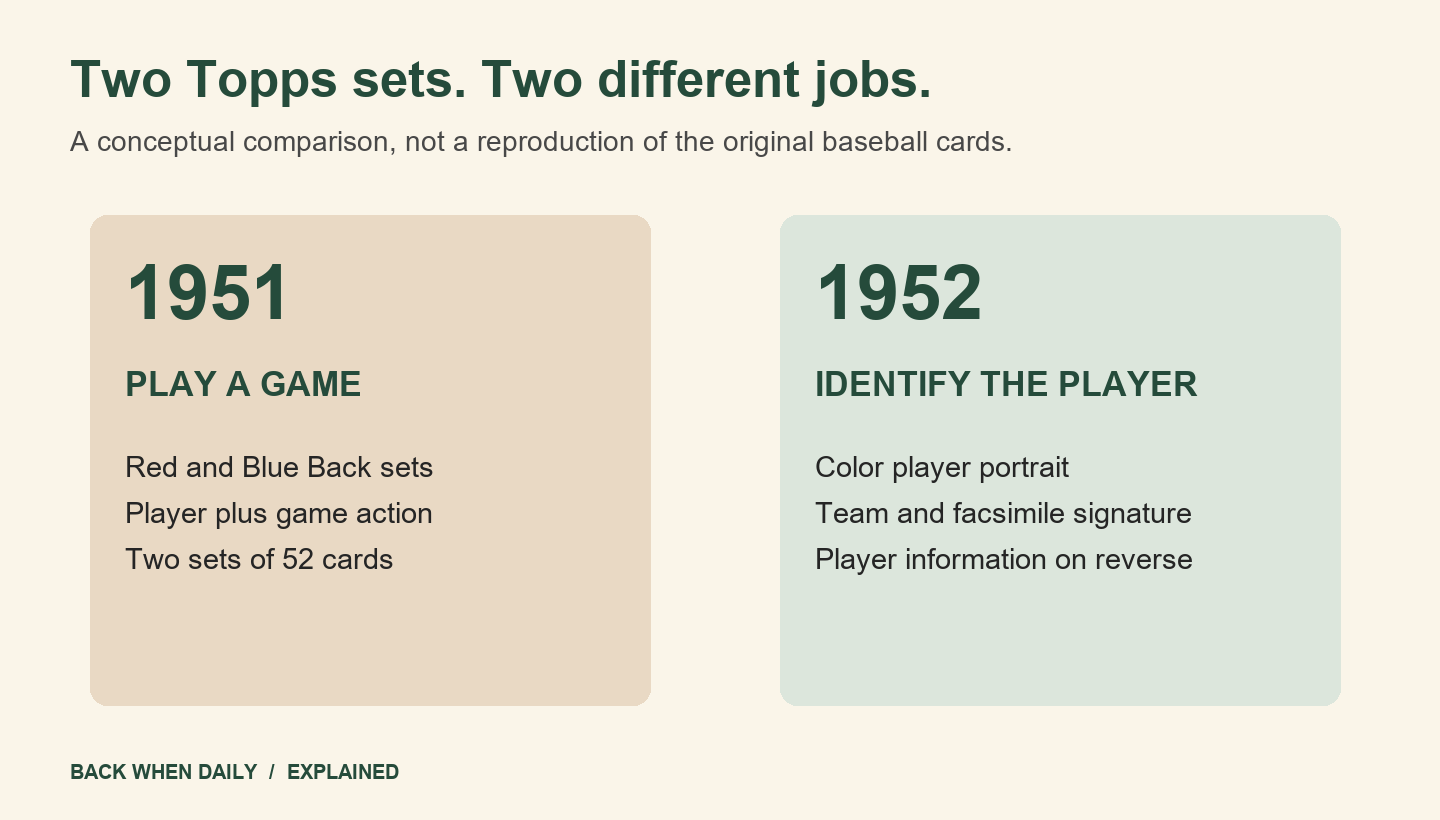
Why Topps’ 1951 Baseball Cards Look Different From the 1952 Set
Original explanatory graphic by Back When Daily.
An original comparison of what the two sets asked a card to do. The panels are explanatory graphics, not historical card designs.
Read the story
Why Topps’ 1951 Baseball Cards Look Different From the 1952 Set
Original explanatory graphic by Back When Daily.
Player identity, issue and physical condition answer different questions. This checklist does not authenticate or value a card.
Read the story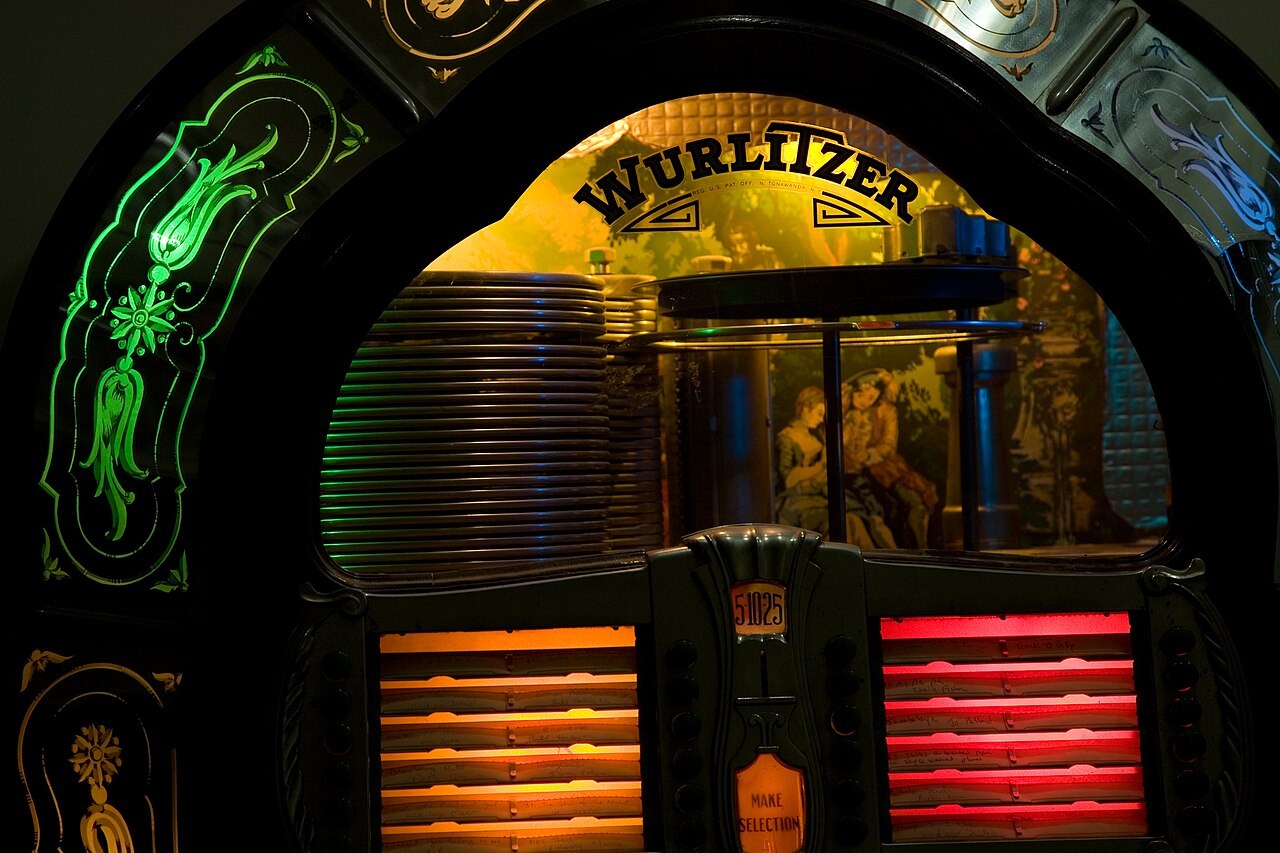
How Many Choices Did a Classic Wurlitzer Jukebox Offer?
Paulo Philippidis. CC BY 2.0. Source image retained unchanged; displayed responsively.

A 1947 Wurlitzer 1080 jukebox photographed in 2008. The 24-record example in the article concerns the earlier 1015 model.
Read the story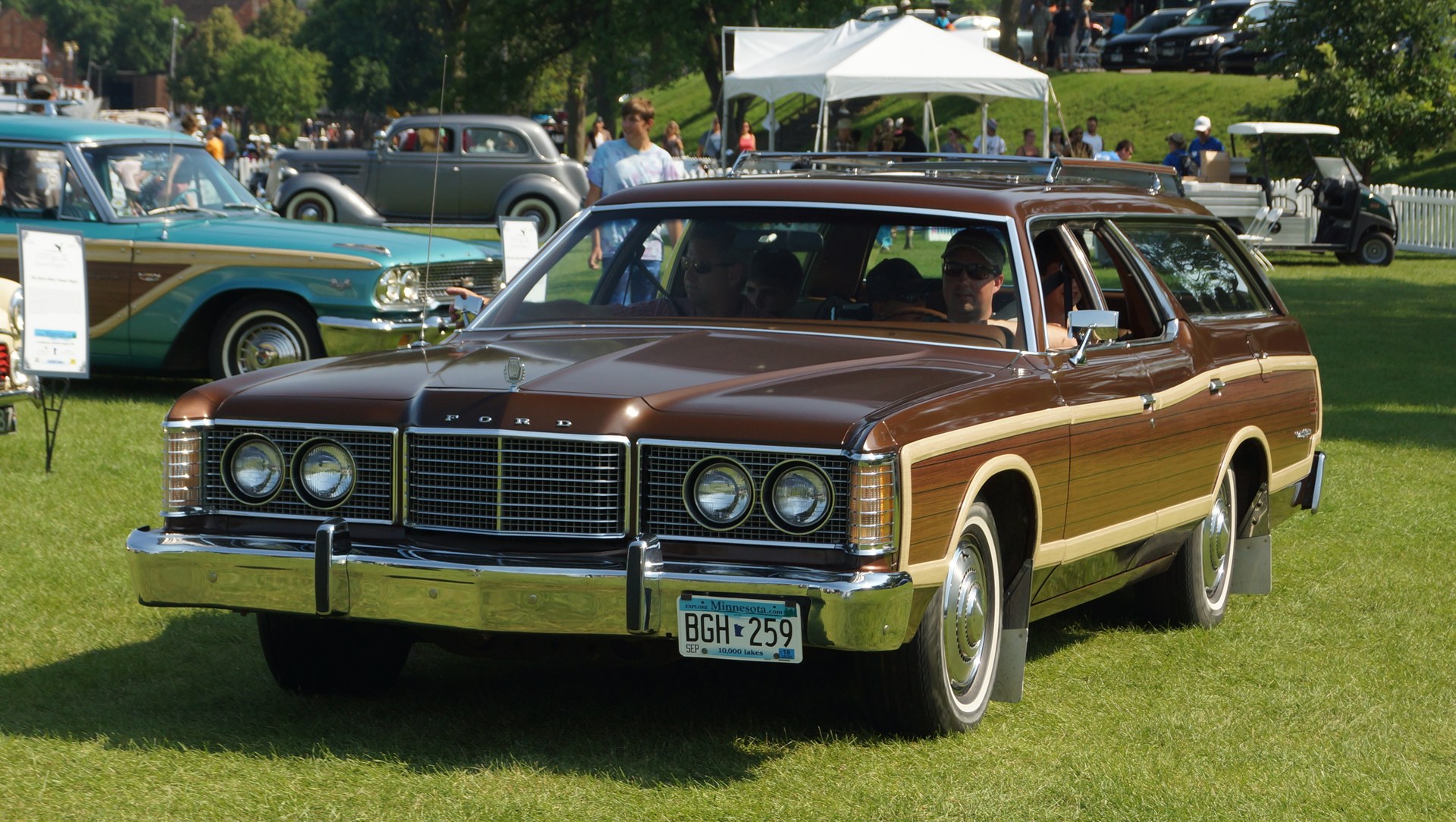
Why Did Station Wagons Have Wood on the Sides?
Greg Gjerdingen. CC BY 2.0. Source image retained unchanged; displayed responsively.

A 1974 Ford Country Squire photographed in 2018. Its wood-look side treatment differs from the structural timber of earlier wagons.
Read the story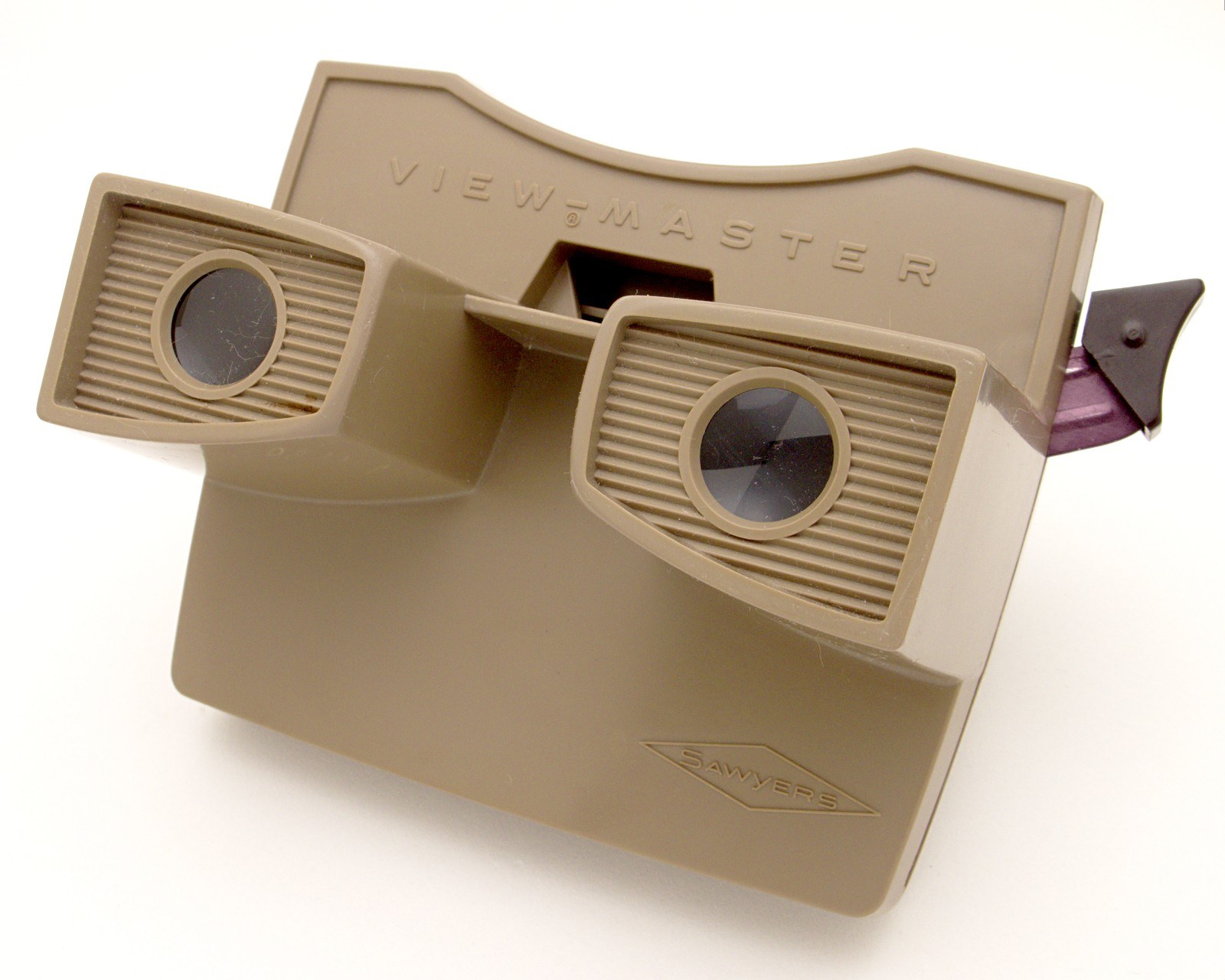
How Did a View-Master Make Flat Pictures Look Three-Dimensional?
Junkyardsparkle. CC0 1.0. Source image retained unchanged; displayed responsively.

A beige View-Master Model G viewer. Each eye looks through a separate opening at one image of a stereo pair.
Read the story