.jpg)
A familiar street feels different with the right song playing. The walk is the same length, the bus takes the same turns, and the scenery has not changed. But music gives the trip a private mood. A portable cassette player made that little transformation something you could carry with you.
A personal soundtrack
Sony released the first Walkman, the TPS-L2, on July 1, 1979. It was not the beginning of all portable music: radios and other portable players already existed. Its place in this story is the particular combination so many listeners remember—a small cassette machine, headphones, and music chosen for a journey.
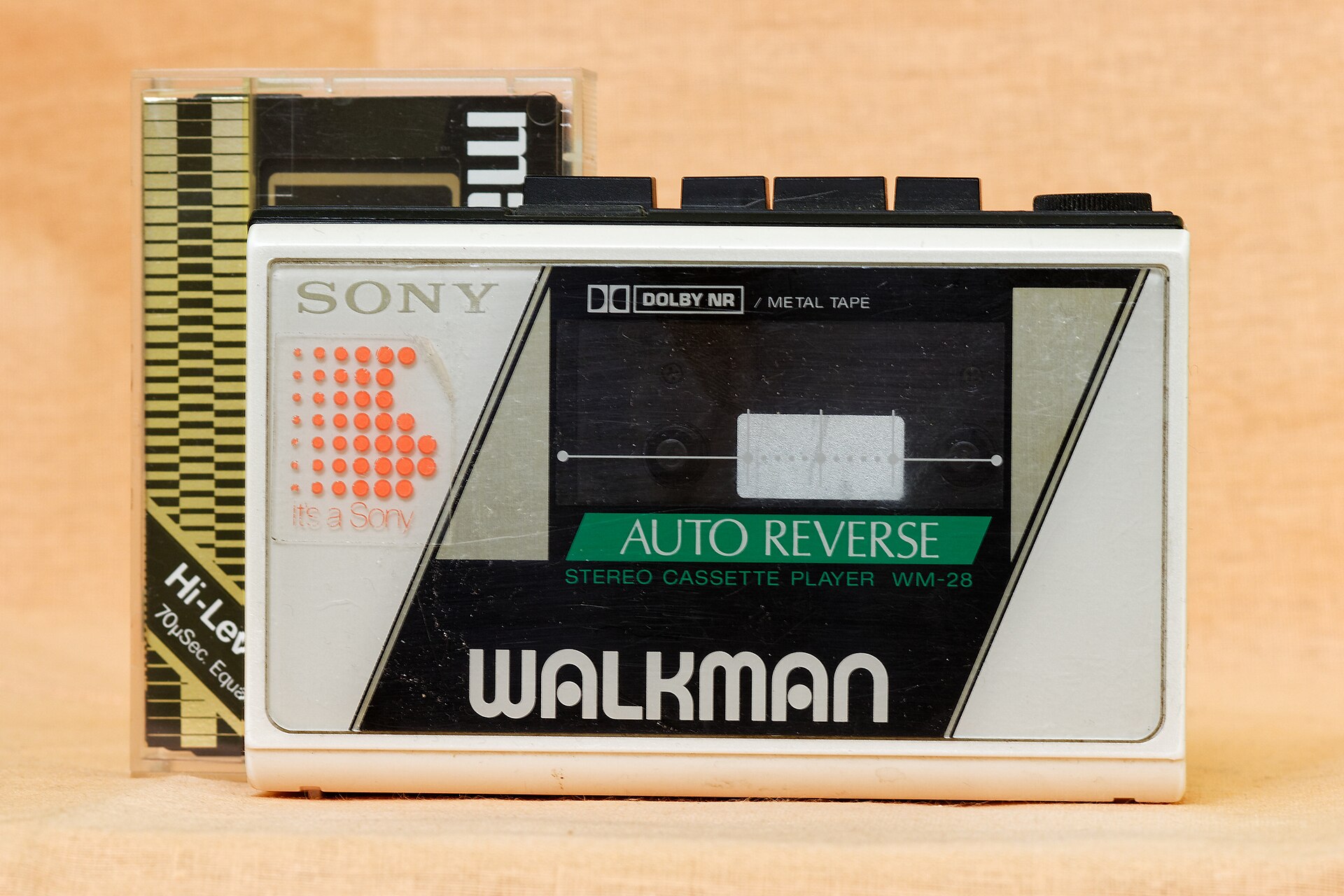
The model in our photograph is a later WM-28, identified by its source as a European-market version. It illustrates the portable-cassette idea without pretending to be the first device or the exact player everyone owned.
A pocket-sized set of choices
Going out with cassettes meant deciding what to take. One tape could carry a whole mood; a spare offered an escape if that mood changed. There were practical considerations, too: batteries, headphone wires, and whether the tape was already at the beginning of the side you wanted.
The buttons made those choices physical. Press play. Stop. Turn the tape over. Rewind and try again. Listening could be absorbed in the music and attentive to the machine at the same time, especially when you were waiting for a favorite track.
The song remembers the route
Years later, a song may bring back more than its melody. It can recall a seat on a bus, the weather on a particular walk, or the anticipation of arriving somewhere. The player gave you a way to take music into the day. Memory sometimes works in the other direction: the music brings a piece of that day back to you.
Which cassette would you have taken on a long bus ride?
Sources & further reading
Written with AI assistance. Historical details checked against the linked sources. Our editorial approach