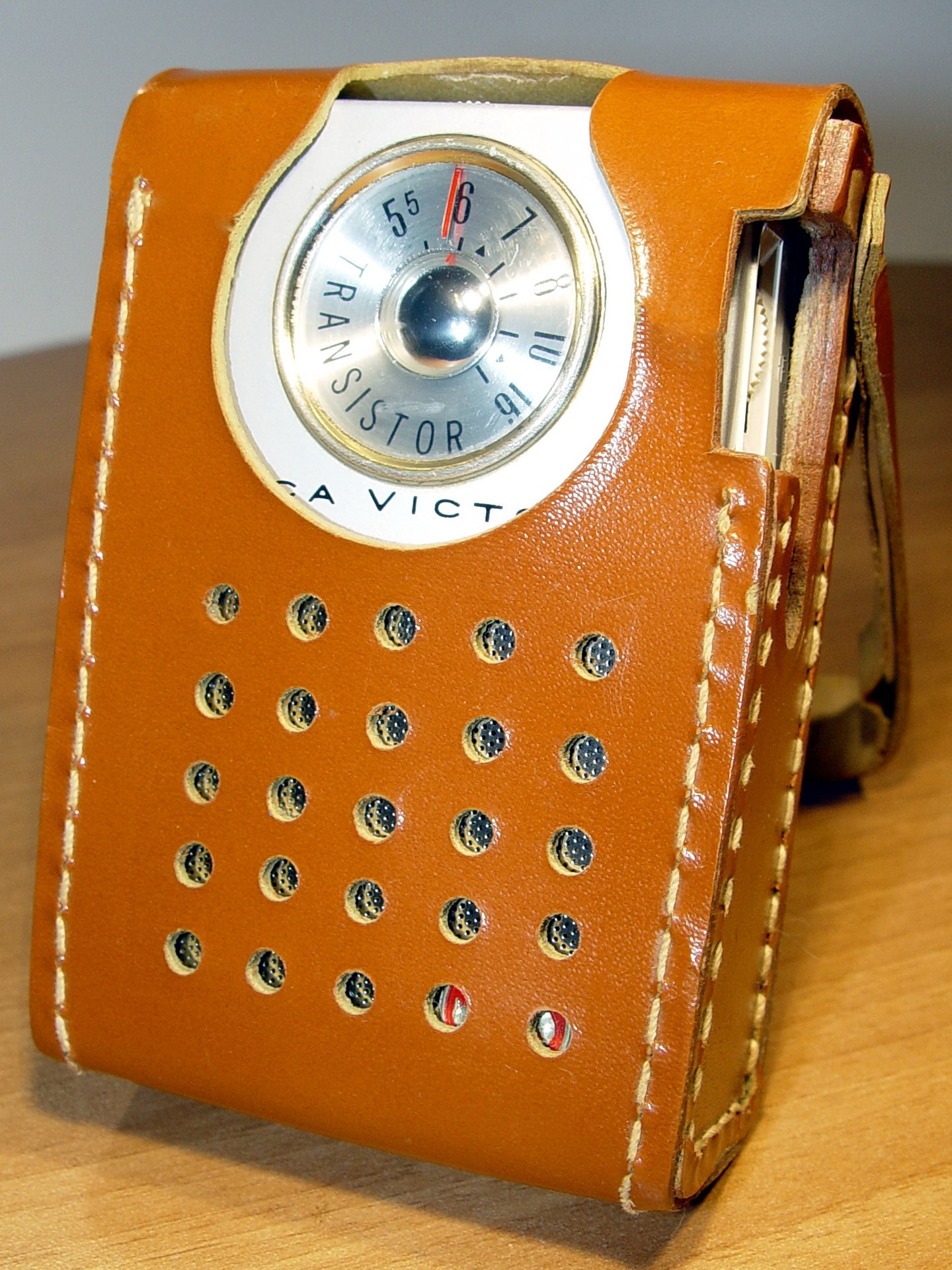

A small radio offered a particular kind of freedom. You could move away from the household’s main set and still bring voices and music with you. The program was being made somewhere else, but deciding where to listen became your own choice. A window ledge, a porch, or a quiet corner could become a listening place.
A familiar technology became portable
The Smithsonian’s account of transistor radios describes how teenagers embraced the portable sets as prices fell and rock-and-roll broadcasting expanded in the late 1950s. Its collection includes a Regency TR-1 from 1954. The significance was not simply smaller equipment; portability helped make listening a more individual part of everyday life.
A dial also made discovery physical. Turn slowly, hear a fragment, move again, and return to something promising. The numbers on the scale became connected with particular stations. A frequently used position could become as familiar as a favorite place in a room, even before the announcer identified where the sound was coming from.
You could not choose the next song
Broadcast listening included anticipation. A song might arrive unexpectedly, or you might wait through several others in the hope of hearing it. The station supplied the order. That lack of control could be frustrating, but it also gave an ordinary listening session the possibility of a small surprise.
An announcer’s voice helped connect one recording to the next. Weather, local references, and familiar phrases gave a station a personality beyond its music. The radio could make a person feel alone with the sound and connected to a larger place at the same time. Someone elsewhere was hearing that same sequence as it happened.
The object found its own places
A portable set often developed a practical geography. There was somewhere it was stored, somewhere it sounded good, and somewhere it tended to be left when another activity interrupted. Its small size made it easy to carry, but also easy to associate with one especially familiar setting.
The photograph of an old radio can therefore prompt more than a memory of music. It may recall the person who owned it, the way they adjusted the controls, or the sound coming from another room. A device used for listening becomes part of the background of somebody else’s life, recognizable even to a person who rarely chose the station.
Modern listening offers extraordinary choice. The small broadcast radio offered a different balance: control over your location, less control over what arrived next. Its appeal survives in that combination of independence and company. You could take it somewhere quiet, turn the dial, and let a voice from beyond the room keep you connected to the day.
Was there a station everyone in your house recognized?
Sources & further reading
Written with AI assistance. Historical details checked against the linked sources. Our editorial approach
Keep a little yesterday close